Last updated: October 3, 2026
Dog Weight Guides
Fat Dog? How to Tell If Your Dog Is Overweight
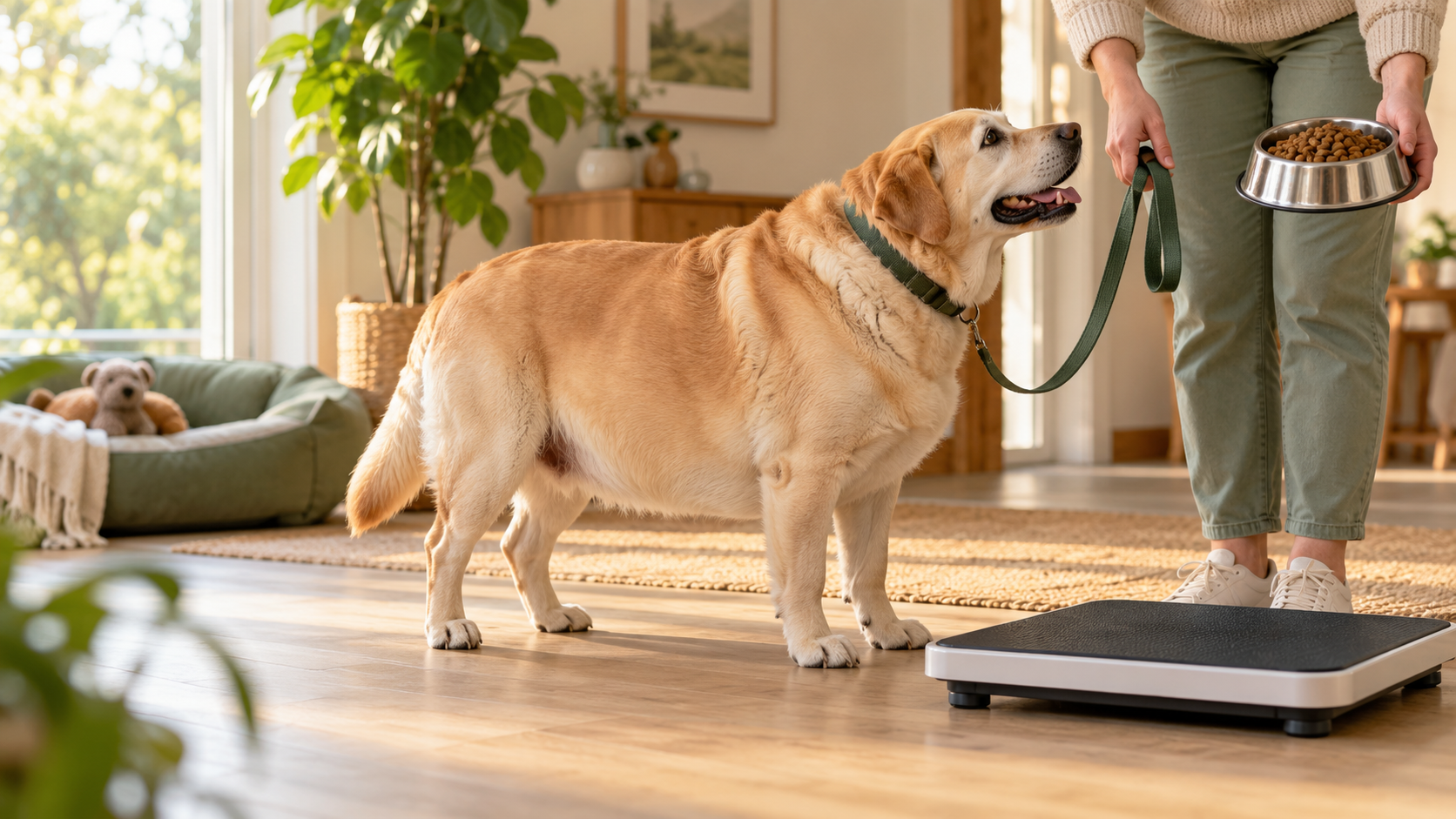
If you have caught yourself wondering whether your dog is getting a little round, you are already doing the right thing. Extra weight creeps up slowly and is easy to miss. This guide shows you how to check your dog at home, why it matters for their health, and the safe, practical steps that help a fat dog get back to a healthy weight.
This guide is general information, not veterinary advice. Every dog is different. Before starting any diet or weight loss plan, check in with your veterinarian, who can confirm a healthy target weight, rule out underlying causes, and tailor the amount of food to your individual dog.
How to Tell If Your Dog Is Overweight
Three quick hands-on checks you can do at home, plus the behavior signs to watch
The Rib Check
Run both hands gently along your dogs rib cage. In a dog at a healthy weight you should feel the ribs easily under a thin layer of fat, similar to feeling the bones on the back of your hand. If you have to press firmly to find the ribs, or cannot feel them at all, there is too much fat over them.
The Waist From Above
Stand over your dog and look straight down. A healthy dog has a visible waist that narrows in behind the rib cage, giving a gentle hourglass shape. If the body looks like a straight-sided oval or bulges out past the ribs, the waist has been lost to excess weight.
The Tummy Tuck From the Side
View your dog from the side at their level. The belly should tuck up from the bottom of the rib cage toward the hind legs. If the underline runs flat, or sags down below the chest, that hanging belly is a sign of stored fat rather than muscle.
Behavior and Everyday Signs
Weight also shows in how a dog moves. Tiring quickly on walks, reluctance to jump onto the sofa or into the car, heavier breathing, overheating in warm weather, or a general drop in playfulness can all point to excess weight. These signs alongside the physical checks tell a fuller story.
Health Risks of Excess Weight in Dogs
Carrying extra weight is not just a cosmetic issue. Canine obesity puts real strain on the whole body, and the effects add up over time. The main risks to be aware of are:
- Joints and arthritis. Every extra pound loads the joints, speeding up wear and worsening arthritis. Overweight dogs are far more likely to develop painful joint disease and to slow down as they age.
- Diabetes. Excess fat affects how the body handles blood sugar and raises the risk of diabetes, a lifelong condition that needs daily management.
- Heart and circulation. A heavier body makes the heart and circulation work harder, adding cardiovascular strain over the years.
- Breathing and heat tolerance. Fat around the chest and abdomen restricts the lungs, making breathing harder and reducing tolerance for exercise and hot weather. This hits flat-faced breeds especially hard.
- Anesthesia and surgery risk. Overweight dogs face higher risks under anesthesia and slower recovery from procedures.
- A shorter life. Research following dogs over their lifetimes has found that those kept lean lived meaningfully longer than their overweight littermates, and stayed comfortable for more of that time.
The encouraging part is that these risks respond to change. Even losing a modest amount of excess weight eases joint stress, improves stamina, and helps your dog feel better day to day. If you want a fuller picture of where your dog sits, our dog BMI calculator and dog body condition score guide are good next steps.
Dog Body Condition Score (BCS) Reference
The 9-point body condition score is the tool vets use to judge weight. It relies on what you can see and feel, not just the number on the scale, so it works for every breed and frame.
| Score range | What it means | What you feel and see |
|---|---|---|
| Underweight (BCS 1 to 3) | Too thin. Ribs, spine, and hip bones are easy to see with little or no fat over them. | Ribs stand out sharply with no fat cover. An obvious waist and a very tucked up belly. In a 1 to 2 dog, muscle loss may also be visible. |
| Ideal (BCS 4 to 5) | A healthy weight. This is the target for most dogs. | Ribs are easy to feel with only a thin layer of fat over them. A clear waist behind the ribs when seen from above, and a gentle tummy tuck from the side. |
| Overweight (BCS 6 to 7) | Carrying extra weight. A good time to act before it becomes obesity. | Ribs are hard to feel under a layer of fat. The waist is faint or missing from above, and the tummy tuck is reduced. Fat may be building over the lower back. |
| Obese (BCS 8 to 9) | Significantly overweight, with real health risks. Vet guidance is important. | Ribs cannot be felt under heavy fat. No waist at all, a rounded or sagging belly, and fat deposits over the back, base of the tail, and chest. |
Most dogs should sit at a 4 or 5. A score of 6 or 7 is a signal to make changes now, and an 8 or 9 is a reason to plan a vet-guided weight loss program. Compare your reading against breed norms with our dog weight calculator.
How Much to Feed an Overweight Dog
The goal is steady, sustainable loss, not a crash diet. A safe pace is roughly one to two percent of body weight per week. That sounds slow, and it is meant to be. Losing weight too fast can cost your dog muscle and cause other health problems, so patience genuinely pays off here.
A few principles keep a feeding plan safe and effective:
- Feed for the target weight, not the current weight. Work out the calories your dog needs at a healthy weight, then feed toward that goal.
- Measure everything. Use a kitchen scale or a proper measuring cup rather than eyeballing scoops, and weigh food for the day so portions stay honest.
- Count the treats. Treats and table scraps add up fast. Keep treats to a small share of daily calories and choose low-calorie options. Our dog training treats guide has lighter ideas that still reward.
- Avoid crash dieting. Never slash food drastically or skip meals to force quick results. Gradual reduction under vet guidance is the safe route.
To turn this into real numbers, start with our dog weight loss calculator to set a target and a daily calorie goal, then use the dog feeding calculator to translate that into portions of your dogs food. For a deeper look at balanced intake, the dog nutrition calculator helps you check the plan meets their needs. Confirm the final amounts with your vet, who may also suggest a therapeutic weight loss food that keeps your dog feeling full on fewer calories.
Exercise and Lifestyle Tips
Diet does most of the heavy lifting for weight loss, but movement builds muscle, lifts mood, and keeps the pounds off once they are gone. Build up gradually, especially if your dog has been inactive, and stop if they seem sore or overly winded.
- Add walks slowly. Start with shorter, more frequent walks and lengthen them over the weeks. Two moderate walks a day are gentler on joints than one long push.
- Play with purpose. Fetch, tug, and chase games burn energy and strengthen the bond. Even indoor play on rainy days counts.
- Use food for enrichment. Puzzle feeders and slow bowls make meals last longer and add mental work, which helps a hungry dieter feel satisfied.
- Mind the joints and the weather. For heavier or older dogs, low-impact options like swimming can be kinder on sore joints. Avoid hard exercise in heat, since overweight dogs overheat more easily.
- Keep everyone consistent. Agree the plan with the whole household so no one undoes it with extra snacks. Consistency is what makes it stick.
When to Involve Your Vet
A vet visit is worthwhile at the very start of any weight loss plan, and it becomes important if things do not go as expected. Reach out to your veterinarian when:
- You are ready to begin, so your vet can set a realistic target weight and confirm a safe calorie level for your dog.
- Your dog is gaining or holding weight despite careful, measured feeding. When the food is genuinely controlled and the scale will not move, an underlying condition may be at play.
- You notice other changes such as a poor coat, low energy, drinking more than usual, or a pot-bellied look, which can accompany hormonal problems.
Medical causes of weight gain do exist. An underactive thyroid (hypothyroidism) slows the metabolism, and Cushings disease affects how the body stores fat. Both are diagnosed with a simple veterinary work-up and are very treatable, so they are worth ruling out before you assume a plateau is just stubbornness. If tummy troubles are part of the picture during a diet change, our bland diet for dogs guide can help settle things while you work with your vet.
Frequently Asked Questions About Overweight Dogs
Common questions about spotting, feeding, and safely slimming down a fat dog
How can I tell if my dog is fat?
The quickest home check has three parts. Feel along the rib cage: in a healthy dog you should feel the ribs easily under a thin layer of fat, a bit like the back of your hand. Look down at your dog from above: there should be a visible waist that narrows behind the ribs. Look from the side: the belly should tuck up from the chest toward the hips rather than hanging level or sagging. If ribs are hard to find, the waist has disappeared, and the tummy tuck is gone, your dog is likely overweight. Our dog body condition score guide walks through each step.
What health problems does being overweight cause in dogs?
Excess weight is linked to a long list of problems, including arthritis and joint pain, a higher risk of diabetes, heart and breathing strain, reduced heat tolerance, and a greater risk during anesthesia and surgery. Studies have found that dogs kept at a lean, healthy weight can live meaningfully longer than overweight dogs of the same breed. The good news is that even modest, steady weight loss can reduce joint stress and improve energy and comfort.
How much should I feed my overweight dog?
Rather than guessing, start from your dogs target weight, not their current weight, and feed for that. Many overweight dogs do well with a moderate calorie reduction under vet guidance, aiming for gradual loss of roughly one to two percent of body weight per week. Avoid crash dieting, which can be dangerous. Use our dog weight loss calculator and dog feeding calculator to get a starting daily amount, then have your vet confirm it and adjust based on real progress.
How fast should a dog lose weight safely?
Slow and steady is safest. A common target is around one to two percent of body weight per week, which usually means a noticeable change over a couple of months rather than a couple of weeks. Rapid weight loss can cause muscle loss and other health issues, so resist the urge to cut food drastically. Weigh your dog every two to four weeks and adjust the plan with your vet if progress stalls or moves too quickly.
My dog is not losing weight even on a diet. What now?
First, double check the maths: measure food with a scale or proper cup, count every treat and table scrap, and make sure no one else in the house is feeding extra. If intake is genuinely controlled and weight still will not budge, see your vet. Conditions such as an underactive thyroid (hypothyroidism) or Cushings disease can make weight loss difficult and need diagnosis and treatment. A stubborn plateau is a good reason for a vet visit rather than cutting food further on your own.
Build Your Dog's Weight Loss Plan
Set a healthy target and a safe daily amount, then check your dog's condition with our free tools.
Free dog printables
Keep these dog care guides handy
A rotating selection of practical dog guides chosen from our free printable library.Puppy Calorie Guide
Calorie targets by breed size and age.
Dog Body Condition Chart
A printable 1–9 body condition reference.
Dog Feeding Guide
Portion guidance by weight, age, and life stage.