
Last updated: October 3, 2026
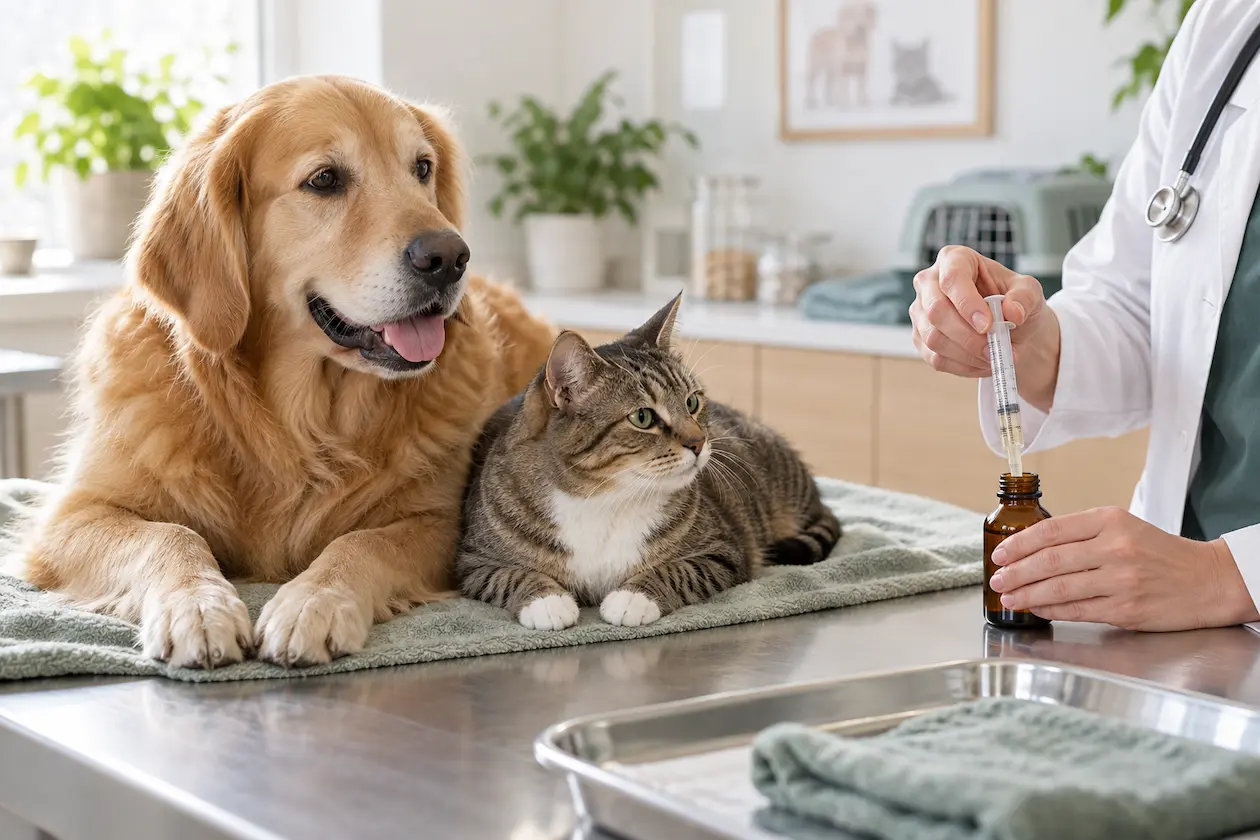
How To Use
Look up estimated OTC medication dosages for dogs and cats based on weight. This tool is for informational purposes only — always confirm dosing with your veterinarian before giving any medication to your pet.
Quick Steps
- 1 Select your Pet Type (dog or cat).
- 2 Enter your pet's Weight in pounds.
- 3 Select the Medication from the list.
- 4 Click Calculate to see the estimated dose.
Pet Medication Dosage Calculator
Fill Out The Fields Below
⛔ Never Give These to Pets
Ibuprofen (Advil, Nurofen)
Severe kidney failure and gastrointestinal bleeding. NEVER give to dogs or cats.
Acetaminophen / Paracetamol (Tylenol, Panadol)
Causes liver failure in dogs and red blood cell damage in cats. NEVER give to pets.
Naproxen (Aleve)
Highly toxic to both dogs and cats. Causes stomach ulcers and kidney failure.
Decongestants (pseudoephedrine, phenylephrine)
Found in many cold/allergy tablets. Causes rapid heart rate, tremors, and seizures.
Xylitol
Sugar substitute in many human products (gum, melatonin, peanut butter). Causes life-threatening hypoglycaemia in dogs.
Pepto-Bismol (for cats)
Bismuth subsalicylate is toxic to cats — causes salicylate poisoning. Dogs only.
Meloxicam / NSAIDs (for cats, long-term)
Cats are highly sensitive to NSAID toxicity. Long-term use without strict vet monitoring can cause kidney failure.
How to Use the Pet Medication Dosage Calculator
Getting an estimated dose takes less than a minute. The calculator uses your pet's body weight and published veterinary dosing guidelines to work out a starting figure. Follow these steps for the most reliable result:
- Select your pet type. Choose dog or cat. Cats metabolize many drugs very differently from dogs, so this choice changes both the dose and the safety warnings shown.
- Enter an accurate weight. Weigh your pet in pounds. Small pets can be weighed by holding them on a bathroom scale and subtracting your own weight; most vet clinics also have a walk-on floor scale. Convert from kilograms if needed (1 kg = 2.2 lbs).
- Choose the medication. Pick the drug from the dropdown. Prescription medications are clearly labelled, and you should only administer them with a valid vet prescription.
- Review the result and warnings. The calculator returns an estimated dose, dosing frequency, and any safety flags. Always confirm the final dose with your veterinarian before giving anything.
Accurate weight is the single most important input. An out-of-date or guessed weight is the most common cause of dosing errors, so weigh your pet fresh rather than relying on their last vet visit.
Common Dog and Cat Medication Dosages by Weight
The table below summarizes typical dosing guidelines for medications covered by this calculator. These are general reference figures only. Your vet may adjust the dose based on your pet's health, other medications, and the specific condition being treated.
| Medication | Common Use | Typical Dose | Type |
|---|---|---|---|
| Benadryl (diphenhydramine) | Allergies, itching, mild motion sickness | ~1 mg/lb, up to 50 mg/dose | OTC |
| Famotidine (Pepcid) | Acid reflux, stomach upset | 0.25–0.5 mg/lb every 12–24 h | OTC |
| Trazodone | Situational anxiety, post-surgery rest | 1–1.6 mg/lb, max 300 mg/dose | Prescription |
| Prednisone/Prednisolone | Inflammation, immune conditions | ~0.25 mg/lb (anti-inflammatory) | Prescription |
| Cephalexin | Skin, wound, urinary infections | ~5 mg/lb every 8–12 h | Prescription |
| Meloxicam (Metacam) | Pain, arthritis inflammation | 0.09 mg/lb day 1, then ~0.045 mg/lb | Prescription |
| Gabapentin | Chronic pain, pre-visit anxiety | 2–4.5 mg/lb every 8–12 h | Prescription |
| Amoxicillin | Bacterial infections | ~5 mg/lb every 12 h | Prescription |
For pets managing a specific condition, pair dosing with our other health tools such as the Dog BMI Calculator to track body condition alongside treatment.
Medications and Substances That Are Toxic to Pets
Many common household medicines are dangerous, even fatal, to dogs and cats. Dosing "a little" of a human product is one of the leading causes of pet poisoning emergencies. Never give any of the following without explicit veterinary direction:
- Ibuprofen (Advil, Motrin): Causes stomach ulcers and kidney failure in both dogs and cats, even at small doses.
- Acetaminophen (Tylenol, paracetamol): Especially deadly to cats, which cannot process it, leading to liver failure and blood cell damage.
- Naproxen (Aleve): Extremely potent in pets and a frequent cause of severe gastrointestinal and kidney injury.
- Xylitol: A sweetener found in sugar-free gum, some Benadryl liquids, and toothpaste that causes life-threatening blood sugar crashes and liver failure in dogs.
- Pepto-Bismol in cats: Contains salicylate (aspirin-like compound) that cats cannot safely process.
If your pet has swallowed any of these, treat it as an emergency. Call your veterinarian, an emergency animal hospital, or the ASPCA Animal Poison Control Center at 1-888-426-4435 (a consultation fee may apply) right away.
How Weight-Based Medication Dosing Works
Almost all pet medication doses are calculated per unit of body weight, expressed as milligrams per pound (mg/lb) or milligrams per kilogram (mg/kg). This is why a 5 lb cat and an 80 lb dog need very different amounts of the same drug. The basic formula is simple:
Total dose = pet's weight × dose per unit weight
For example, a drug dosed at 1 mg/lb given to a 30 lb dog works out to a 30 mg dose. In practice, several factors modify this baseline:
- Dose ranges: Many drugs have a range (for example 2–4.5 mg/lb), and your vet chooses where within it to aim based on severity.
- Maximum ceilings: Some medications, like Benadryl and Trazodone, cap out at a maximum per-dose amount regardless of weight.
- Available tablet sizes: Real doses are rounded to whole or half tablets, so the practical dose is often near, not exactly at, the calculated figure.
- Species differences: Cats often need lower per-pound doses and longer intervals because their livers clear many drugs more slowly.
This is why the calculator's number is a starting estimate rather than a final prescription. Your vet accounts for organ function, age, and drug interactions that no weight-based formula can capture.
Worked Example: Benadryl Dose for a 40 lb Dog
Suppose you have a 40 lb Beagle with seasonal itching and your vet has approved plain diphenhydramine (Benadryl). Using the standard guideline of roughly 1 mg per pound:
- Calculated dose: 40 lb × 1 mg/lb = 40 mg per dose.
- Practical tablet: Standard Benadryl tablets are 25 mg, so this is closest to one and a half tablets, and many vets would round to a convenient amount.
- Frequency: Typically every 8 to 12 hours as needed.
- Ingredient check: Confirm the product contains only diphenhydramine, with no added decongestants, acetaminophen, or xylitol.
The same 1 mg/lb rule caps at 50 mg per dose, so a 70 lb dog would still receive a maximum of 50 mg rather than 70 mg. This ceiling is exactly the kind of adjustment the calculator applies automatically.
OTC vs Prescription Pet Medications
Some medications on this calculator are available over the counter, while others require a veterinary prescription. Understanding the difference matters for safety and legality:
- Over-the-counter (OTC): Drugs like Benadryl, Famotidine, and Dramamine can be bought without a prescription, but "available" does not mean "always safe." Confirm the product formulation and dose with your vet first, especially for cats.
- Prescription only: Trazodone, Prednisone, Cephalexin, Meloxicam, Gabapentin, and Amoxicillin require a diagnosis and a valid prescription. Giving these without veterinary oversight risks incorrect dosing, dangerous interactions, and masking a serious underlying illness.
Even for OTC products, a quick call to your clinic is worthwhile. Vets can confirm the medication is appropriate for your pet's symptoms and will not interfere with anything else they are taking.
Safety Tips for Giving Your Pet Medication
Correct dosing is only half the job. Giving medication safely and consistently is just as important for getting a good outcome:
- Read the full label. Combination products often hide toxic extras. Look for a single active ingredient whenever possible.
- Never share medications between species. A dose that is fine for a dog can be lethal for a cat, and vice versa.
- Follow the full course. For antibiotics like Cephalexin or Amoxicillin, finish the entire prescription even if your pet seems better, to prevent resistant infections.
- Give NSAIDs with food. Meloxicam and similar drugs should be given with a meal to reduce stomach upset, and never combined with other NSAIDs or steroids.
- Watch for reactions. Vomiting, diarrhea, lethargy, or loss of appetite after a new medication warrant an immediate call to your vet.
- Store safely. Keep all medications out of reach; many pet poisonings happen when a curious dog chews through a pill bottle.
When in doubt, ask. A short conversation with your veterinary team is always cheaper than an emergency visit for an overdose or reaction.
FAQs
Frequently Asked Questions
What medications does this calculator cover?
This calculator covers a wide range of commonly used dog and cat medications including Benadryl (diphenhydramine), Famotidine (Pepcid), Melatonin, Pepto-Bismol, Dramamine (dimenhydrinate), Trazodone, Prednisone/Prednisolone, Cephalexin, Meloxicam (Metacam), Gabapentin, Amoxicillin, and Aspirin. Prescription medications are clearly labelled — always have a valid vet prescription before administering these.
What is the correct Trazodone dose for dogs?
The typical Trazodone dose for dogs is approximately 1–1.6 mg per pound (2.5–3.5 mg/kg), with a maximum of 300 mg per dose. It is commonly prescribed for situational anxiety, post-surgical confinement, and noise phobia. Trazodone is a prescription medication — do not use without a valid vet prescription. Our dog Trazodone dose calculator above will give you the estimated dose by weight.
How much Prednisone should I give my dog?
The standard anti-inflammatory Prednisone dose for dogs is approximately 0.25 mg per pound (0.5 mg/kg) once daily. Immune-suppressive doses are higher and must be directed by your vet. Prednisone is a prescription corticosteroid — never start or stop it without veterinary guidance, as abrupt stopping can cause Addisonian crisis.
What is the Cephalexin dose for dogs?
The typical Cephalexin dose for dogs is 5 mg per pound (10–15 mg/kg) given every 8–12 hours. It is a prescription antibiotic commonly used for skin, wound, and urinary tract infections. Our Cephalexin dosage calculator for dogs above calculates the dose by your dog's weight.
How is Metacam (Meloxicam) dosed for dogs?
The initial Metacam/Meloxicam dose for dogs is 0.09 mg per pound (0.2 mg/kg) on day one, followed by a maintenance dose of approximately 0.045 mg/lb (0.1 mg/kg) daily. It must be given with food. Metacam is a prescription NSAID — do not combine with other NSAIDs, aspirin, or steroids. Metacam is not safe for long-term use in cats.
What is the Gabapentin dose for dogs and cats?
For dogs, Gabapentin is typically dosed at 2–4.5 mg per pound (5–10 mg/kg) every 8–12 hours for pain, or as a single pre-visit dose for anxiety. For cats, it is used similarly and is very commonly prescribed as a pre-vet-visit anxiolytic at 50–100 mg. Gabapentin requires a prescription.
Is Benadryl safe for dogs?
Plain diphenhydramine (Benadryl) is generally safe for most dogs at approximately 1 mg per pound, up to 50 mg per dose. However, many Benadryl products contain additional ingredients like xylitol, decongestants, or acetaminophen that are toxic to dogs. Always check the full ingredient list.
Is this tool a substitute for veterinary advice?
No. This tool provides general dosing guidelines based on published veterinary references. It is intended for reference purposes only and is NOT a substitute for professional veterinary advice. Always consult your vet before giving any medication — especially prescription drugs.
What medications should I NEVER give my pet?
Never give ibuprofen (Advil), acetaminophen/paracetamol (Tylenol), or naproxen (Aleve) to dogs or cats — these cause kidney failure, liver failure, or death. Never give Pepto-Bismol to cats. Avoid any product containing xylitol. In an emergency, call the ASPCA Animal Poison Control Center at 1-888-426-4435.
Other Calculators for Dogs
Dog Calorie Calculator by Breed — Free Daily Calorie & Feeding Tool
Free dog calorie calculator by breed. Find out exactly how many calories your dog needs per day by weight, breed, age, and activity level. Get instant kcal and feeding portions for Labradors, German Shepherds, Chihuahuas, and every breed in between. Try it now.

Puppy Calorie Calculator | Puppy Nutrition Calculator by Breed - Free Tool
Free puppy calorie calculator and nutrition tool. Calculate your puppy

Senior Dog Calorie Calculator - Free Daily Calorie Tool
Free senior dog calorie calculator. Calculate your older dog\
Other Pet Health Calculators
Cat BMI Calculator - Check Your Cat
Free cat BMI calculator. Check your cat
How Long Are Cats Pregnant? Cat Pregnancy Calculator & Due Date Tool
How long are cats pregnant? Cat pregnancy averages 63–65 days (about 9 weeks). Use our free cat pregnancy calculator to find the estimated due date, current week, and a week-by-week kitten care guide.
Cat Quality of Life Calculator, Free HHHHHMM Scale for Cats | Senior Cat QoL Tool
Free cat quality of life calculator using the HHHHHMM scale. Assess your senior cat
Free dog printables
Keep these dog care guides handy
A rotating selection of practical dog guides chosen from our free printable library.Dog Feeding Guide
Portion guidance by weight, age, and life stage.
Dog Quality of Life Checklist
Track the HHHHHMM quality-of-life measures.
Free cat printables
Keep these cat care guides handy
A rotating selection of practical cat guides chosen from our free printable library.Cat Body Condition Chart
A printable body condition reference for cats.
Kitten Calorie Guide
Calorie targets by kitten age and weight.