
Last updated: October 3, 2026
Coping & Understanding Grief
Signs You’re Grieving a Pet
Grief shows up in more ways than tears. It can touch your mood, your body, and your daily habits. Recognizing the signs can help you understand what you are going through and be kinder to yourself.

Grief affects the whole person
Losing a pet is not only an emotional event. It can ripple through your sleep, your appetite, your focus, and your energy. None of this means you are coping badly. It means grief is real, and it asks a lot of you. Below are common signs, grouped to help you make sense of them.
Common signs of pet grief
Emotional signs
- • Deep sadness or crying spells
- • Guilt or replaying “what ifs”
- • Anger or irritability
- • Numbness or feeling detached
- • Loneliness and emptiness
- • Anxiety about the future
Physical signs
- • Fatigue and low energy
- • Changes in appetite
- • Trouble sleeping or sleeping too much
- • A heavy or tight chest
- • Headaches or aches
- • Difficulty concentrating
Behavioral signs
- • Withdrawing from others
- • Losing interest in usual activities
- • Avoiding or seeking reminders of your pet
- • Restlessness or searching habits
- • Crying at routine moments
These signs are normal
Experiencing several of these at once, or swinging between them, is a normal response to loss. They typically ease over time, especially with rest, gentle self-care, and support from people who understand. If you want reassurance that what you feel is normal, our guide on whether it’s normal to grieve a pet this much may help.
When to seek extra support
Pay attention if the signs are severe, do not ease over a long period, or stop you from functioning, or if you feel hopeless. These can point to depression rather than ordinary grief, and they are worth bringing to a doctor or counselor. If you ever have thoughts of harming yourself, please contact a mental health professional or a local crisis line right away.
This article offers general support and is not a substitute for professional medical or mental health advice.
Signs of Pet Grief: Common Questions
Understanding how grief shows up in mind and body.
What are the most common signs of pet grief?
Common signs include deep sadness, guilt, fatigue, appetite and sleep changes, difficulty concentrating, and withdrawing from others. Grief affects the mind and the body, so a wide mix of emotional and physical symptoms is normal.
Can grief cause physical symptoms?
Yes. Grief is physically demanding and can cause tiredness, a tight chest, appetite changes, headaches, and disrupted sleep. These usually ease over time. If physical symptoms are severe or persistent, see your doctor to rule out other causes.
Is it normal to feel nothing at all?
Yes. Numbness is a common early response to loss, a way the mind protects you from pain that is too big to absorb at once. Feeling detached does not mean you did not love your pet. The feelings usually surface in their own time.
When should grief symptoms prompt me to get help?
Reach out if symptoms are severe, do not ease over a long period, or stop you from functioning, or if you feel hopeless or have thoughts of harming yourself. A doctor, counselor, or crisis line can help. Asking for support is a strength.
Be gentle with yourself
What you are feeling is grief, and you deserve care and support.
Free printable support
Choose the resource that helps today
Each book is a free, 10-page A4 PDF designed to print and complete by hand.Pet Grief Journal
Ten gentle pages for memories, grief waves, letters, support, and carrying the bond forward.
Complete Pet Loss Guide
Compassionate guidance for grief reactions, children, surviving pets, aftercare, and support.
What to Do After a Pet Dies
A calm checklist for the first hours, provider questions, aftercare, records, and memorial choices.
Printable companion · Printable PDF
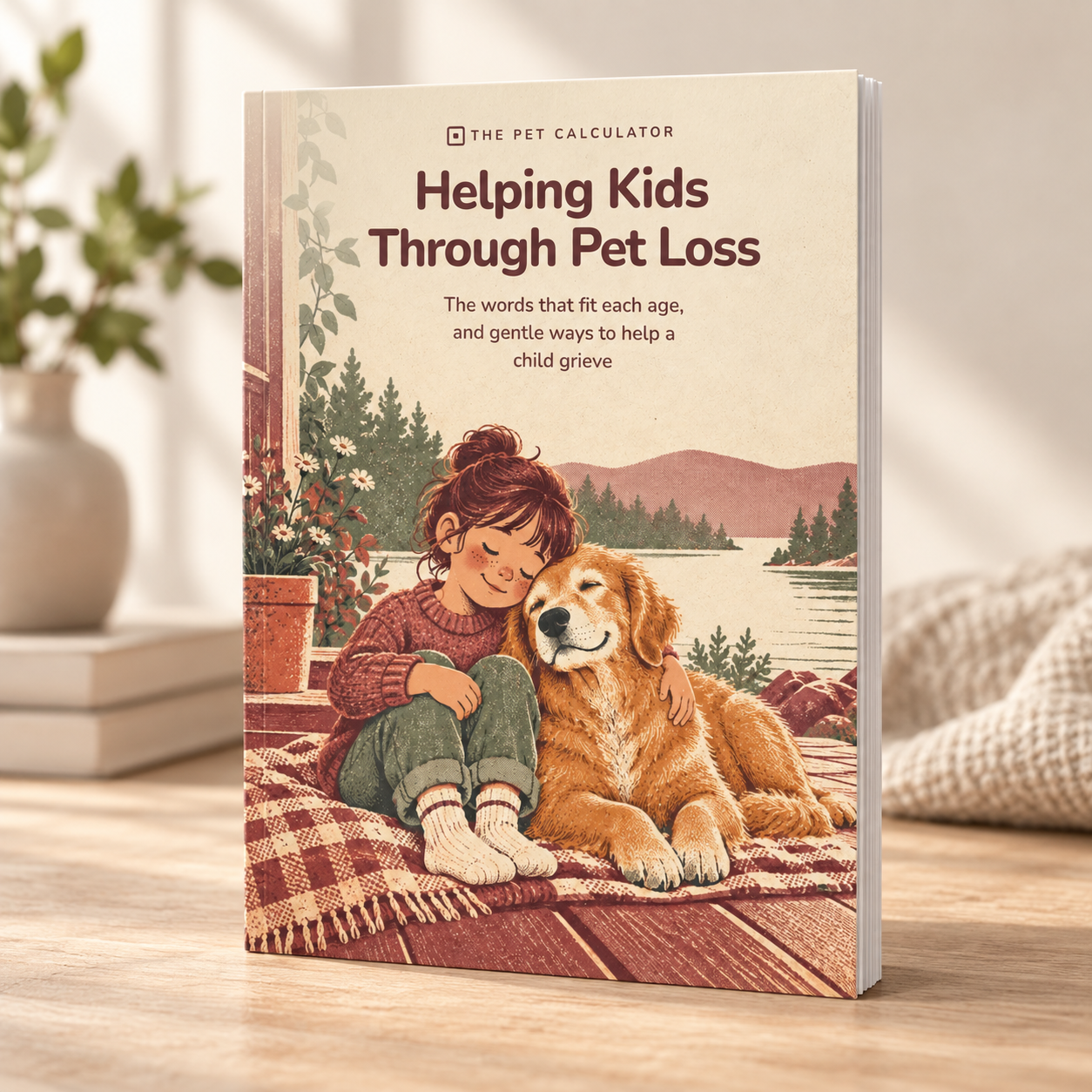
Helping Kids Through Pet Loss
A gentle memory book for children and families.
A draw-and-write keepsake that helps children remember a beloved pet, express difficult feelings, and move through grief at their own pace.