
Last updated: October 3, 2026
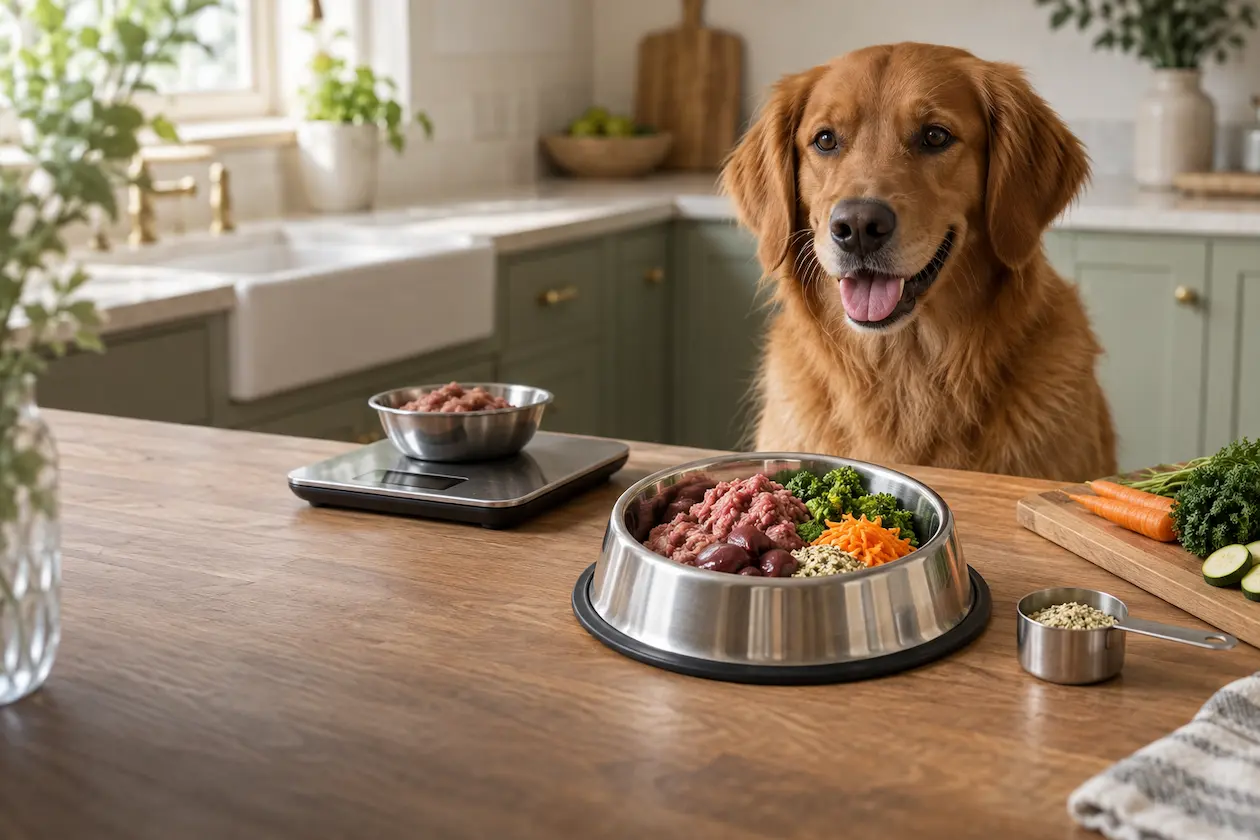
How To Use
Enter your dog's weight and life stage to calculate their ideal daily raw food portions using the 80/10/10 BARF model.
Quick Steps
- 1 Enter your dog's current weight in pounds.
- 2 Select their Life Stage (puppy, active adult, etc.).
- 3 Select their Size Category.
- 4 Click Calculate to see daily raw food portions broken down by meat, bone, and organ.
Raw Dog Food Calculator
Fill Out The Fields Below
About the 80/10/10 Raw Diet
The 80/10/10 BARF (Biologically Appropriate Raw Food) model is the most widely used framework for raw feeding dogs. It aims to mimic the natural diet of wild canines: 80% muscle meat, 10% raw meaty bone, and 10% organ meat (half of which should be liver). This calculator uses your dog's body weight and life stage to determine total daily food amount, then breaks it down into each component.
Raw feeding requires variety across protein sources over time to achieve nutritional balance. No single protein provides everything — rotate between chicken, beef, turkey, lamb, pork, and oily fish throughout the week.
Our raw feeding calculator helps you work out exactly how much raw food your dog needs each day, then breaks that total down into muscle meat, raw bone, and organ using the 80/10/10 BARF model. Whether you are feeding a puppy, an active working dog, or a senior on a weight loss plan, the right portion comes down to body weight, life stage, and activity, and getting it right is the foundation of a balanced raw diet.
How the Raw Feeding Calculator Works
The calculator starts with your dog's current body weight and applies a daily feeding percentage based on life stage and activity. Most adult dogs eat 2 to 3 percent of their body weight in raw food per day, while puppies eat far more because they are still growing. Once it has the daily total, the tool divides it into the 80/10/10 ratio so you know how many ounces or grams of each component to serve.
Because the result is driven entirely by accurate weight, the most important step is weighing your dog properly rather than estimating. Recalculate whenever your dog's weight changes, and recalculate weekly for growing puppies whose portions climb quickly.
Understanding the 80/10/10 BARF Ratio
The 80/10/10 model is the backbone of most raw feeding plans. It is designed to mirror the proportions a wild canine would eat from whole prey, and it keeps calcium, phosphorus, and protein in a sensible balance.
- 80% muscle meat: the bulk of the diet, providing protein and amino acids. Examples include beef, chicken thigh, turkey, and lamb.
- 10% raw meaty bone: edible bone such as chicken necks or backs, supplying calcium and phosphorus and supporting dental health.
- 10% organ meat: split into 5 percent liver and 5 percent other secreting organ such as kidney or spleen, providing concentrated vitamins and minerals.
Rotating between several proteins over the week helps cover the full range of nutrients and prevents the diet from becoming repetitive or unbalanced.
Raw Feeding Amounts by Dog Weight
These figures show roughly how much an adult dog at maintenance (2.5 percent of body weight) would eat per day. Use the calculator above for an exact amount tailored to your dog's life stage and activity.
- 10 lb dog: about 4 oz of raw food per day
- 25 lb dog: about 10 oz of raw food per day
- 50 lb dog: about 1.25 lb (20 oz) of raw food per day
- 75 lb dog: about 1.9 lb (30 oz) of raw food per day
- 100 lb dog: about 2.5 lb (40 oz) of raw food per day
Active dogs sit nearer 3 percent, while less active or overweight dogs may do better at 2 percent. Puppies are the big exception, eating around 10 percent of their current weight per day.
Raw Feeding vs. Kibble: How They Compare
Owners often switch to raw hoping for better coat condition, smaller stools, and more control over ingredients. Kibble, by contrast, is convenient, shelf stable, and already balanced to recognised nutritional standards. Both can keep a dog healthy when done correctly.
- Balance: good kibble is formulated to a complete profile out of the bag, whereas raw needs variety and care to stay balanced.
- Cost and effort: raw usually costs more and takes preparation, sourcing, and freezer space.
- Hydration: raw food is high in moisture, while dry kibble is not, so raw fed dogs often drink less.
- Safety: raw carries bacterial and handling risks that kibble does not, so hygiene matters.
Example Raw Feeding Calculations
These worked examples show how weight and life stage change the daily amount and its breakdown. They are illustrative only, so use the calculator for your own dog.
- Bella, 20 lb adult, moderate activity (2.5%): about 8 oz per day, which is roughly 6.4 oz muscle meat, 0.8 oz raw bone, and 0.8 oz organ.
- Rex, 60 lb active adult (3%): about 29 oz per day, which is roughly 23 oz muscle meat, 2.9 oz raw bone, and 2.9 oz organ split between two meals.
- Luna, 15 lb puppy (10%): about 24 oz per day, recalculated weekly as she grows and split across three or four meals.
Transitioning Your Dog to a Raw Diet
Moving to raw works best as a gradual change rather than an overnight switch. A slow transition gives your dog's digestive system time to adapt and makes it easier to spot any protein that does not agree with them.
- Start with a single, easy protein such as chicken for the first one to two weeks.
- Feed the calculated daily portion and watch stool consistency. Firm, small, whitish stools are normal on raw.
- Introduce new proteins one at a time once the first protein is well tolerated.
- Add raw meaty bone and organ gradually, since too much organ too soon can loosen stools.
Common Raw Feeding Mistakes
Most problems with raw feeding come from a handful of avoidable errors. Keeping these in mind helps your dog get a balanced diet from day one.
- Feeding only muscle meat: skipping bone and organ leaves the diet short on calcium and key vitamins.
- Too much organ meat: more than 10 percent regularly can cause loose stools and nutrient excess.
- Never rotating proteins: a single protein long term makes it hard to cover all nutritional needs.
- Guessing portions: eyeballing amounts leads to over or underfeeding, so weigh portions on a kitchen scale.
- Feeding cooked bone: cooked bones splinter and are dangerous. Only ever feed raw bone.
Sourcing and Storing Raw Dog Food Safely
Safe handling is what keeps raw feeding low risk for both your dog and your household. Treat raw pet food with the same care you would give raw meat for human cooking.
- Buy from reputable suppliers and choose meat intended for pet consumption where possible.
- Freeze raw meat for around two weeks before feeding to reduce parasite risk.
- Thaw portions in the fridge, not on the counter, and use within a couple of days.
- Clean bowls, surfaces, and hands thoroughly after every meal to limit bacterial spread.
- Take extra care in homes with very young children, seniors, or anyone immunocompromised.
FAQs
Frequently Asked Questions
How much raw food should I feed my dog per day?
The standard raw feeding guideline is 2–3% of your dog's body weight per day for an adult dog. Active dogs need closer to 3%; less active or senior dogs 2%. Puppies need significantly more — around 10% of their current body weight per day, recalculated weekly. Use our raw dog food calculator above for a precise daily amount.
What is the 80/10/10 raw dog food model?
The 80/10/10 BARF (Biologically Appropriate Raw Food) model divides a dog's daily raw diet into 80% muscle meat, 10% raw meaty bone, and 10% organ meat (5% liver, 5% other secreting organ). This ratio is designed to mirror the natural prey diet of wild canines. Our raw feeding calculator for dogs uses this model.
What is a raw diet for dogs?
A raw diet (also called BARF or biologically appropriate raw food) consists of uncooked muscle meat, raw meaty bones, and organ meats. Some raw feeders also include vegetables, eggs, and dairy. The key principle is that dogs evolved eating whole prey animals, and a diet based on raw animal protein is biologically appropriate.
How do I start raw feeding my dog?
Transition slowly to avoid digestive upset. Start with a single protein source (chicken is most common) for 1–2 weeks. Feed the calculated daily portion and monitor stool consistency — firm, small, whitish stools are normal on raw. Introduce new proteins one at a time after the initial transition period.
Is raw feeding safe for dogs?
Raw feeding carries risks including bacterial contamination (Salmonella, Campylobacter) and nutritional imbalance if not done correctly. These risks are manageable with proper food hygiene, variety of proteins, and vet guidance. Freeze raw meat for 2 weeks before feeding to reduce parasite risk. Immunocompromised dogs, puppies under 8 weeks, and dogs in homes with young children or immunocompromised people require extra caution.
What raw bones can dogs eat?
ONLY raw bones — never cooked. Safe raw meaty bones include chicken necks, backs, and carcasses; turkey necks; lamb ribs; pork necks. These provide calcium and phosphorus and support dental health. Avoid large weight-bearing bones (like marrow bones) as these can fracture teeth. Never give cooked bones of any kind — they splinter and can cause intestinal perforations.
How do I calculate raw food for a puppy?
Puppies need approximately 10% of their current body weight in raw food per day, split into 3–4 meals. This drops to 5–7% at 4–5 months, and tapers to adult portions (2–3%) by 12 months. Our raw feeding puppy calculator above handles this — select "Puppy" as the life stage.
Do I need to add supplements to a raw dog food diet?
A well-balanced 80/10/10 raw diet with rotating proteins generally provides most nutrients without supplementation. However, many raw feeders add fish oil (omega-3), vitamin E, and kelp. A complete nutritional analysis should be done by a veterinary nutritionist if feeding raw long-term, particularly for puppies and seniors.
Other Calculators for Dogs
Dog Calorie Calculator by Breed — Free Daily Calorie & Feeding Tool
Free dog calorie calculator by breed. Find out exactly how many calories your dog needs per day by weight, breed, age, and activity level. Get instant kcal and feeding portions for Labradors, German Shepherds, Chihuahuas, and every breed in between. Try it now.
Puppy Calorie Calculator | Puppy Nutrition Calculator by Breed - Free Tool
Free puppy calorie calculator and nutrition tool. Calculate your puppy
Senior Dog Calorie Calculator - Free Daily Calorie Tool
Free senior dog calorie calculator. Calculate your older dog\
Other Pet Nutrition Calculators
Bird Nutrition & Feed Calculator | How Much Do Birds Eat?
Free bird nutrition and feed calculator. Find out how much your bird should eat a day, in grams and calories, based on weight, size, type, age, and feeding frequency. Works for budgies, cockatiels, parrots, and more.
Cat Food Carb Calculator | Free Carbohydrate Calculator for Cat Food
Free cat food carb calculator. Calculate carbohydrate content in wet and dry cat food from the guaranteed analysis label. Compare carbs on a dry matter basis. Essential for low-carb and diabetic cat diets.
Cat Calorie Calculator - Daily Calories & Feeding Amounts for Cats
Free cat calorie calculator. Enter your cat
Free dog printables
Keep these dog care guides handy
A rotating selection of practical dog guides chosen from our free printable library.Dog Quality of Life Checklist
Track the HHHHHMM quality-of-life measures.
Dog Feeding Guide
Portion guidance by weight, age, and life stage.
Dog Body Condition Chart
A printable 1–9 body condition reference.