
Last updated: October 3, 2026
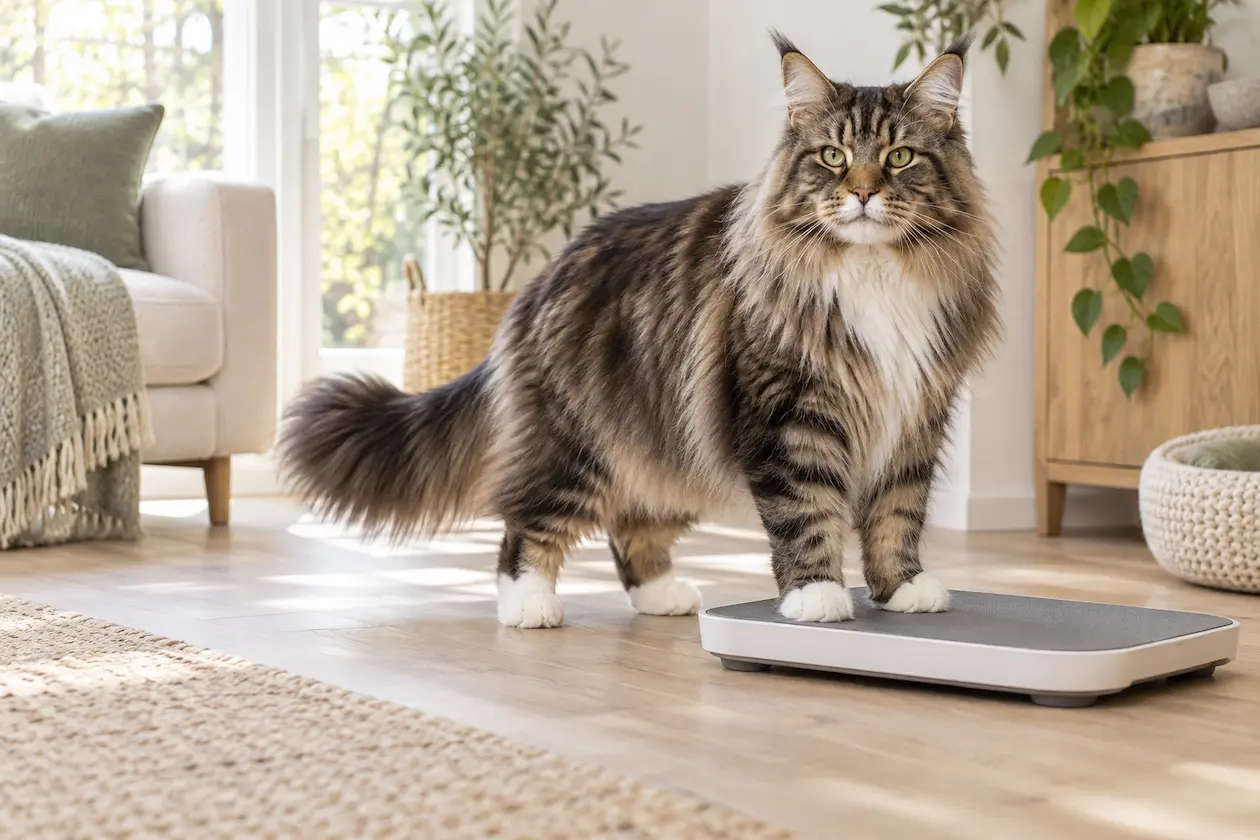
How To Use
Enter your Maine Coon's current weight, sex, and age to see if they are within the healthy weight range and view a full growth chart.
Quick Steps
- 1 Select your Maine Coon's Sex.
- 2 Select their Age.
- 3 Enter their Current Weight in pounds.
- 4 Click Calculate to see the weight assessment.
Maine Coon Weight Calculator
Fill Out The Fields Below
FAQs
Frequently Asked Questions
How big do Maine Coons get?
Maine Coons are the largest domestic cat breed. Adult males typically weigh 13–18 lbs (6–8 kg) and females 8–12 lbs (3.6–5.4 kg). Some exceptional males reach 20+ lbs. They are large-boned and muscular, not just heavy.
When are Maine Coons fully grown?
Maine Coons grow much slower than most cats. They reach full physical maturity at 3–5 years of age, compared to 1 year for most breeds. Do not be alarmed if your Maine Coon is still growing at 2 years old — this is normal.
Is my Maine Coon overweight or just big?
Maine Coons can look very large but still be a healthy weight due to their frame and dense coat. Feel your cat's ribs — you should be able to feel them with light pressure but not see them. Consult your vet for a body condition score assessment.
How much should I feed my Maine Coon?
Maine Coons have higher caloric needs than average cats due to their size. Use our Maine Coon Food Calculator to get personalised feeding recommendations based on their age, weight, and activity level.
Why is my Maine Coon kitten growing slowly?
Maine Coons are naturally slow-growing — this is part of their genetics and is perfectly normal. They gain weight steadily but won't hit the big numbers until 18–36 months. Ensure they are eating a high-quality kitten or all-life-stages food during growth.
Do male and female Maine Coons differ in size?
Yes, significantly. Males are substantially larger than females, averaging 13–18 lbs vs 8–12 lbs for females. This sexual dimorphism is more pronounced in Maine Coons than in most other breeds. Always compare your cat's weight to same-sex ranges.
Maine Coon Weight Chart by Age
The table below shows healthy weight ranges for Maine Coon cats at each age stage, split by sex. Maine Coons grow unusually slowly — full adult size is not reached until 3–5 years.
♂ Male Maine Coon
| Age | Min (lbs) | Avg (lbs) | Max (lbs) |
|---|---|---|---|
| 3 months | 3.0 | 3.8 | 4.5 |
| 4 months | 4.0 | 5.0 | 6.0 |
| 5 months | 5.0 | 6.2 | 7.5 |
| 6 months | 6.0 | 7.5 | 9.0 |
| 9 months | 8.0 | 10.0 | 12.0 |
| 12 months (1 year) | 10.0 | 12.0 | 14.0 |
| 18 months | 11.0 | 13.5 | 16.0 |
| 24 months (2 years) | 12.0 | 14.5 | 17.0 |
| 3–5 years (fully grown) | 13.0 | 15.5 | 18.0 |
♀ Female Maine Coon
| Age | Min (lbs) | Avg (lbs) | Max (lbs) |
|---|---|---|---|
| 3 months | 2.5 | 3.2 | 4.0 |
| 4 months | 3.5 | 4.2 | 5.0 |
| 5 months | 4.5 | 5.5 | 6.5 |
| 6 months | 5.0 | 6.2 | 7.5 |
| 9 months | 6.5 | 8.0 | 9.5 |
| 12 months (1 year) | 7.5 | 9.0 | 11.0 |
| 18 months | 8.0 | 10.0 | 12.0 |
| 24 months (2 years) | 8.0 | 10.0 | 12.0 |
| 3–5 years (fully grown) | 8.0 | 10.0 | 12.0 |
Weight ranges are guidelines based on breed standards. Individual cats may fall slightly outside these ranges and still be healthy. Use the weight calculator above to assess your cat's specific situation.
How Much Should a Maine Coon Weigh?
Maine Coons are the largest domestic cat breed, so their healthy weight range sits well above that of an average house cat. A typical fully grown adult male weighs between 13 and 18 lbs (6–8 kg), while an adult female usually weighs 8 to 12 lbs (3.6–5.4 kg). Exceptional males with a large frame can reach 20 lbs or more without being overweight, because so much of their mass is bone and muscle rather than fat.
What matters more than the number on the scale is whether your cat's weight is proportionate to its frame. A Maine Coon with a big skeletal structure and dense, long coat can look enormous while still carrying an ideal amount of body fat. The opposite is also true: a small-framed Maine Coon at 13 lbs may already be carrying excess weight. This is why the calculator above compares your cat to same-sex, same-age ranges rather than to a single universal target.
If your cat falls outside the ranges in the chart, do not panic. Use it as a prompt to check body condition and to speak with your veterinarian, especially if the weight has changed quickly.
Male vs Female Maine Coon Weight Differences
Maine Coons show more pronounced sexual dimorphism than most cat breeds, meaning the size gap between males and females is unusually wide. On average a male will outweigh a female of the same age by 4 to 6 lbs once both are fully grown. Males also tend to have broader heads, thicker necks, and heavier bone, which adds to the visual difference.
- Adult males: commonly 13–18 lbs, with some reaching 20+ lbs.
- Adult females: commonly 8–12 lbs, rarely exceeding 14 lbs.
- Growth pace: both sexes grow slowly, but males keep adding mass later, often filling out through their third and fourth years.
Because the ranges differ so much, always compare your cat to the correct column in the chart above. A 12 lb female is at the top end of healthy, while a 12 lb male is still on the lighter side and may have more growing to do.
Maine Coon Growth Stages and Milestones
Unlike most cats, which are essentially adult by their first birthday, Maine Coons continue developing for years. Understanding the stages helps you know whether your kitten is on track.
- Kitten (0–6 months): rapid but steady weight gain. Expect roughly 1 to 2 lbs per month during the early months.
- Junior (6–12 months): growth continues but the body starts to lengthen more than it fills out. Many owners notice a lanky, gangly stage here.
- Young adult (1–2 years): the cat looks like an adult but is still gaining muscle and bone density. Weight climbs more slowly.
- Full maturity (3–5 years): the frame finishes filling out, the coat reaches full length, and males in particular add their final pounds of muscle.
If your Maine Coon is still gaining size at two years old, that is completely normal and expected. Slow, continuous growth is one of the breed's defining traits.
Is My Maine Coon Overweight or Just Big-Boned?
This is one of the hardest questions for Maine Coon owners because the breed is genuinely large. The scale alone will not answer it. Instead, use a hands-on body condition check, which works regardless of frame size.
- Ribs: run your hands along the sides. You should feel the ribs easily with light pressure, like feeling your knuckles through the back of your hand. If you have to press to find them, there is likely excess fat.
- Waist: viewed from above, there should be a visible narrowing behind the ribs. A straight or bulging outline suggests overweight.
- Belly: a modest primordial pouch is normal and healthy in Maine Coons. A large, swinging belly full of firm fat is not.
Because the breed hides weight well under a thick coat, many overweight Maine Coons go unnoticed. If in doubt, ask your vet for a body condition score, which rates cats on a 1 to 9 scale where 4 to 5 is ideal.
Feeding a Maine Coon for Healthy Weight
Because they are larger and grow for longer, Maine Coons have higher total calorie needs than most cats, but that does not mean unlimited food. The goal is enough energy to support slow, lean growth without tipping into obesity.
- Growing kittens: feed a high-quality kitten or all-life-stages formula. Their extended growth window means they benefit from kitten food longer than other breeds, often to 12–15 months.
- Protein first: as obligate carnivores, Maine Coons do best on diets rich in animal protein and moderate in fat.
- Portion control: measure meals rather than free-feeding. A big cat still gains fat easily if fed by eye.
- Fresh water: wet food or a water fountain helps support the kidneys and urinary tract, areas the breed can be prone to.
For a personalised daily calorie and portion estimate based on your cat's exact age, weight, and activity level, use our Maine Coon feeding and nutrition calculators linked below.
How to Use the Maine Coon Weight Chart
The chart above is most useful when you read it alongside your cat's frame and body condition, not as a strict pass or fail. Here are two worked examples to show how to interpret it.
- Example 1 — 9-month-old male at 9 lbs: the male average at 9 months is around 10 lbs, so this cat is slightly under average but within the healthy min-to-max band (8–12 lbs). Given how slowly the breed matures, there is plenty of growing left, so this is usually nothing to worry about.
- Example 2 — 2-year-old female at 13 lbs: the female range at 2 years tops out around 12 lbs, so 13 lbs is above the typical band. This cat may simply be large-framed, but it is worth a body condition check to rule out excess weight.
Enter your own cat's sex, age, and weight into the calculator at the top of the page for an instant assessment and a growth chart tailored to your cat.
Other Calculators for Cats
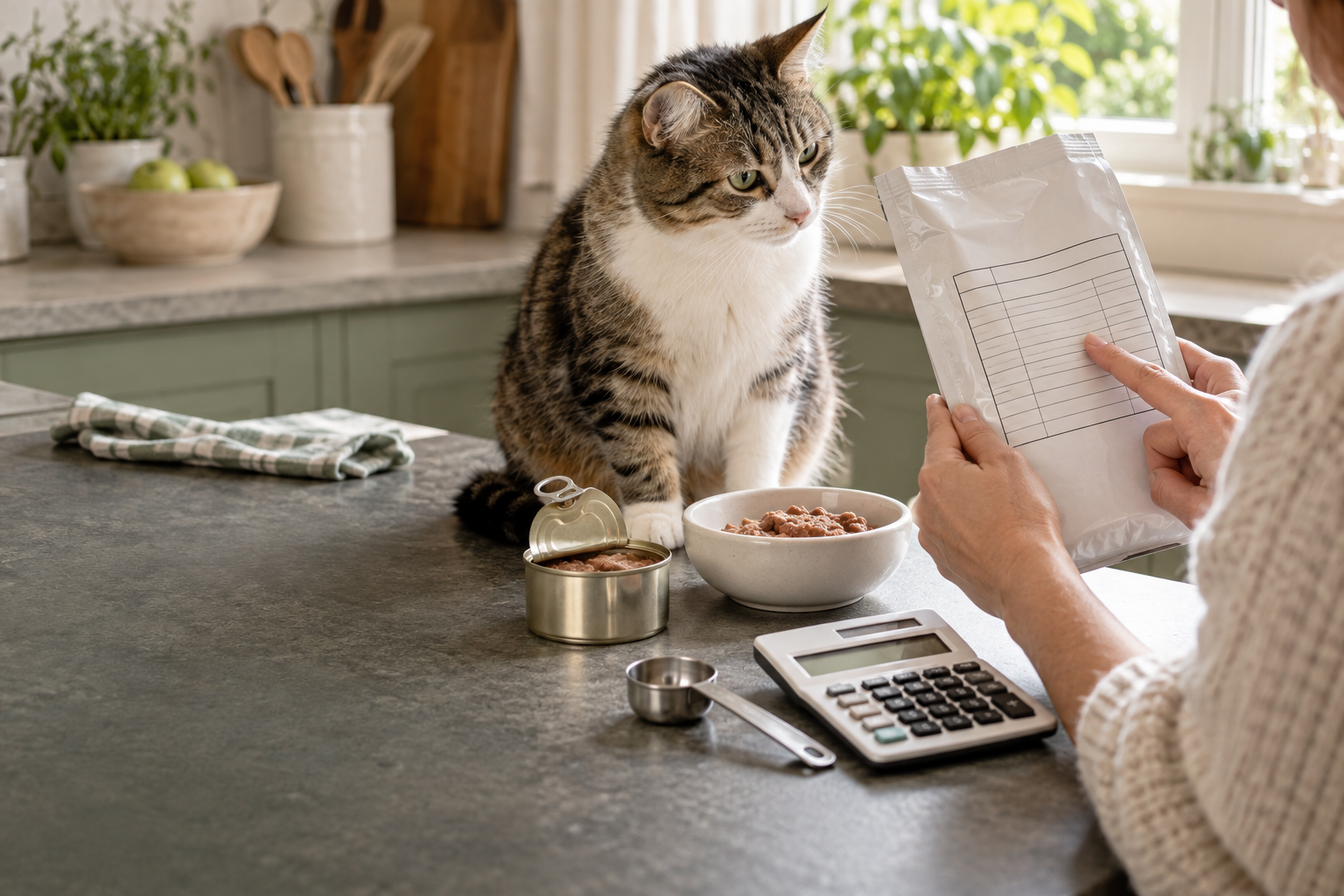
Cat Food Carb Calculator | Free Carbohydrate Calculator for Cat Food
Free cat food carb calculator. Calculate carbohydrate content in wet and dry cat food from the guaranteed analysis label. Compare carbs on a dry matter basis. Essential for low-carb and diabetic cat diets.
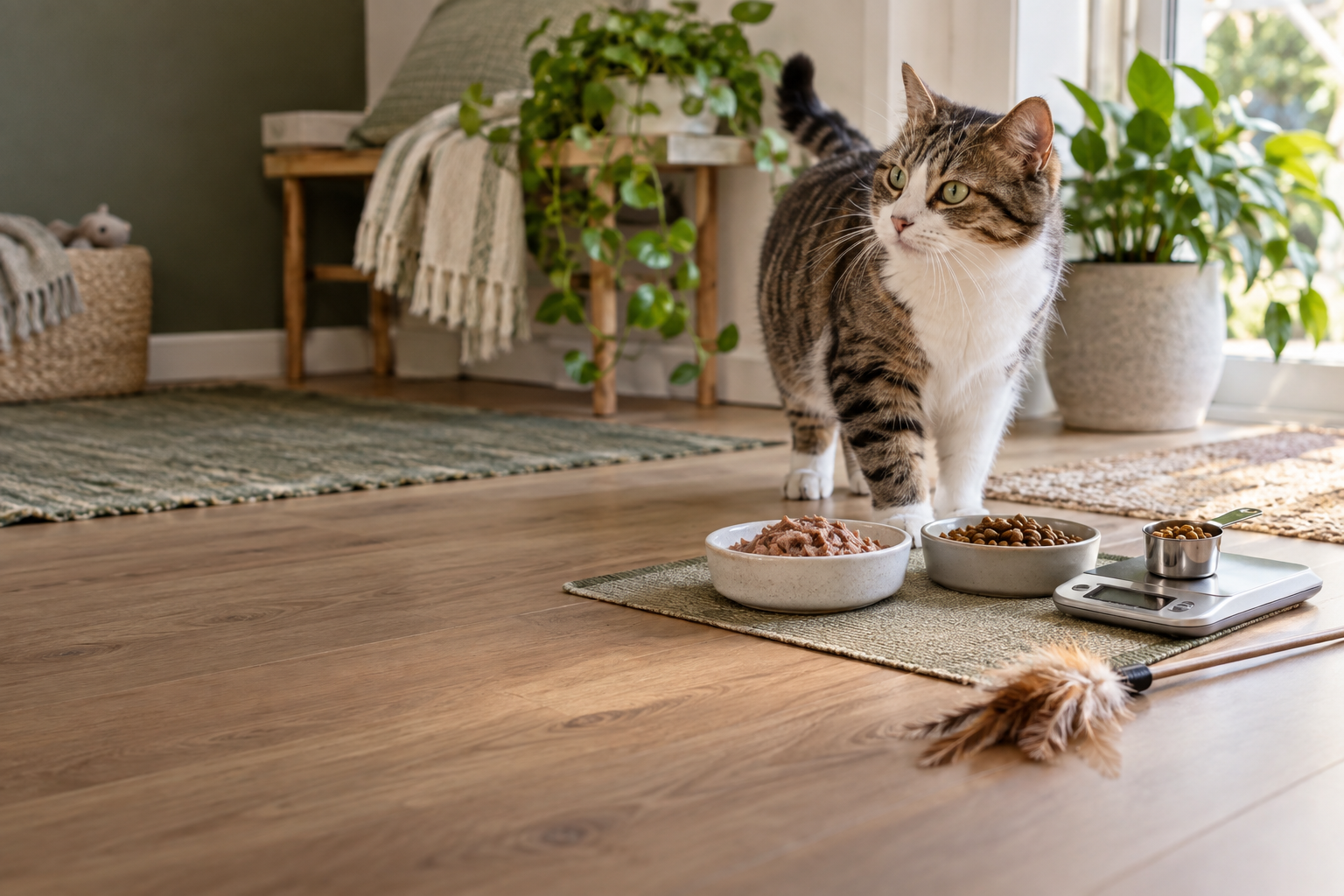
Cat Calorie Calculator - Daily Calories & Feeding Amounts for Cats
Free cat calorie calculator. Enter your cat
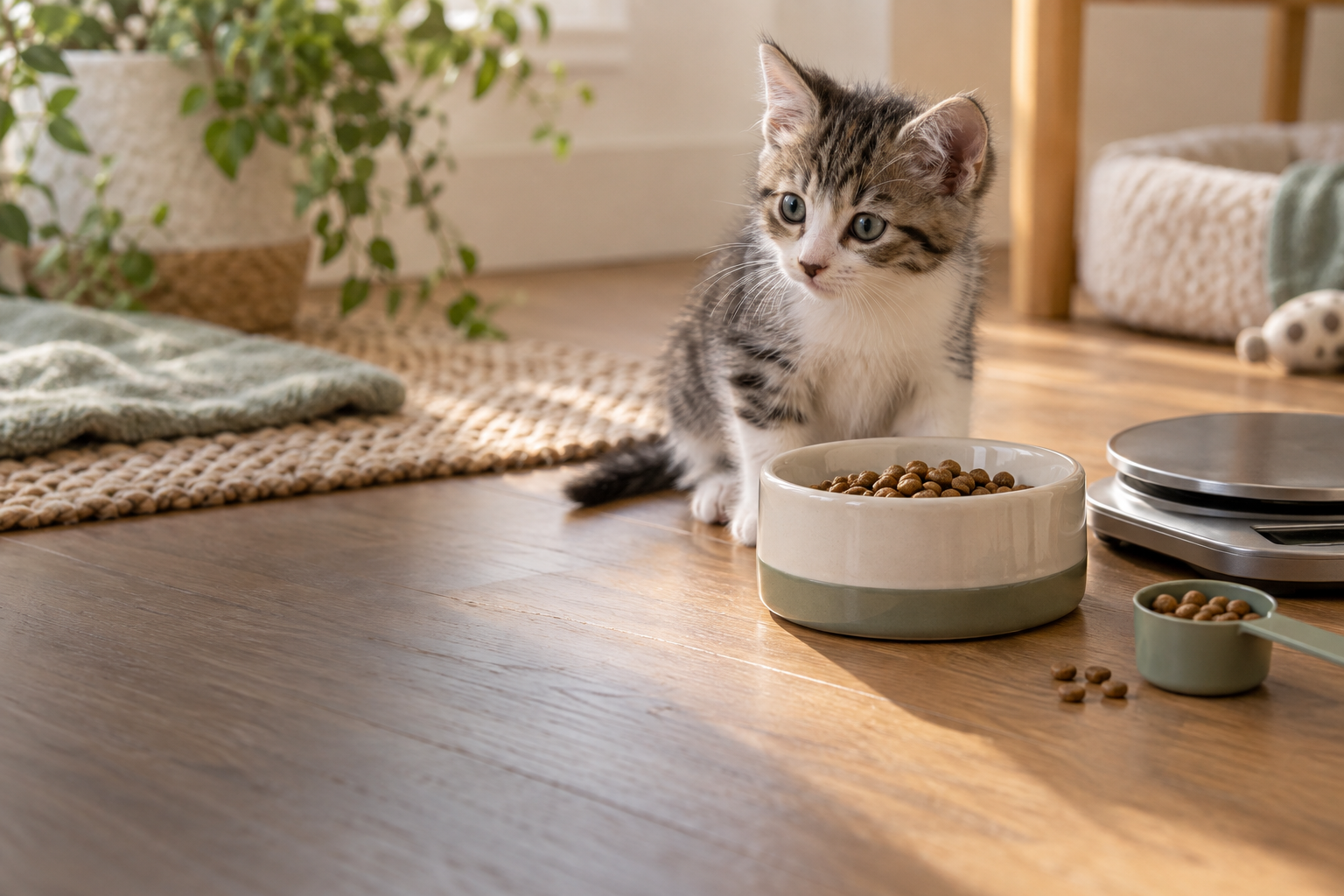
Kitten Calorie Calculator - Free Daily Calorie Needs Tool
Free kitten calorie calculator. Enter your kitten
Other Pet Weight Calculators
Australian Shepherd Weight Calculator | Is Your Aussie a Healthy Weight? | The Pet Calculator
Check your Australian Shepherd\
Beagle Weight Calculator | Healthy Weight for 13-Inch & 15-Inch Beagles
Free Beagle weight calculator — check your Beagle\
Bearded Dragon Weight Chart by Age | Free Weight Calculator
Free bearded dragon weight calculator plus a bearded dragon weight chart by age. Check if your bearded dragon is a healthy weight, from hatchling to adult, with growth milestones and care tips.
Free cat printables
Keep these cat care guides handy
A rotating selection of practical cat guides chosen from our free printable library.Cat Quality of Life Checklist
Track the HHHHHMM quality-of-life measures.
Kitten Growth Chart
Week-by-week weight and development milestones.
Cat Body Condition Chart
A printable body condition reference for cats.