
Last updated: October 3, 2026
Cat Behavior
Cat Aggression
An aggressive cat is almost always reacting to something, whether it is fear, overstimulation, another cat, or pain. Understanding which type of aggression you are seeing is the first step to helping. Here are the common causes, what to do about each, and when aggression is a sign to call your vet.
Why Is My Cat Aggressive?
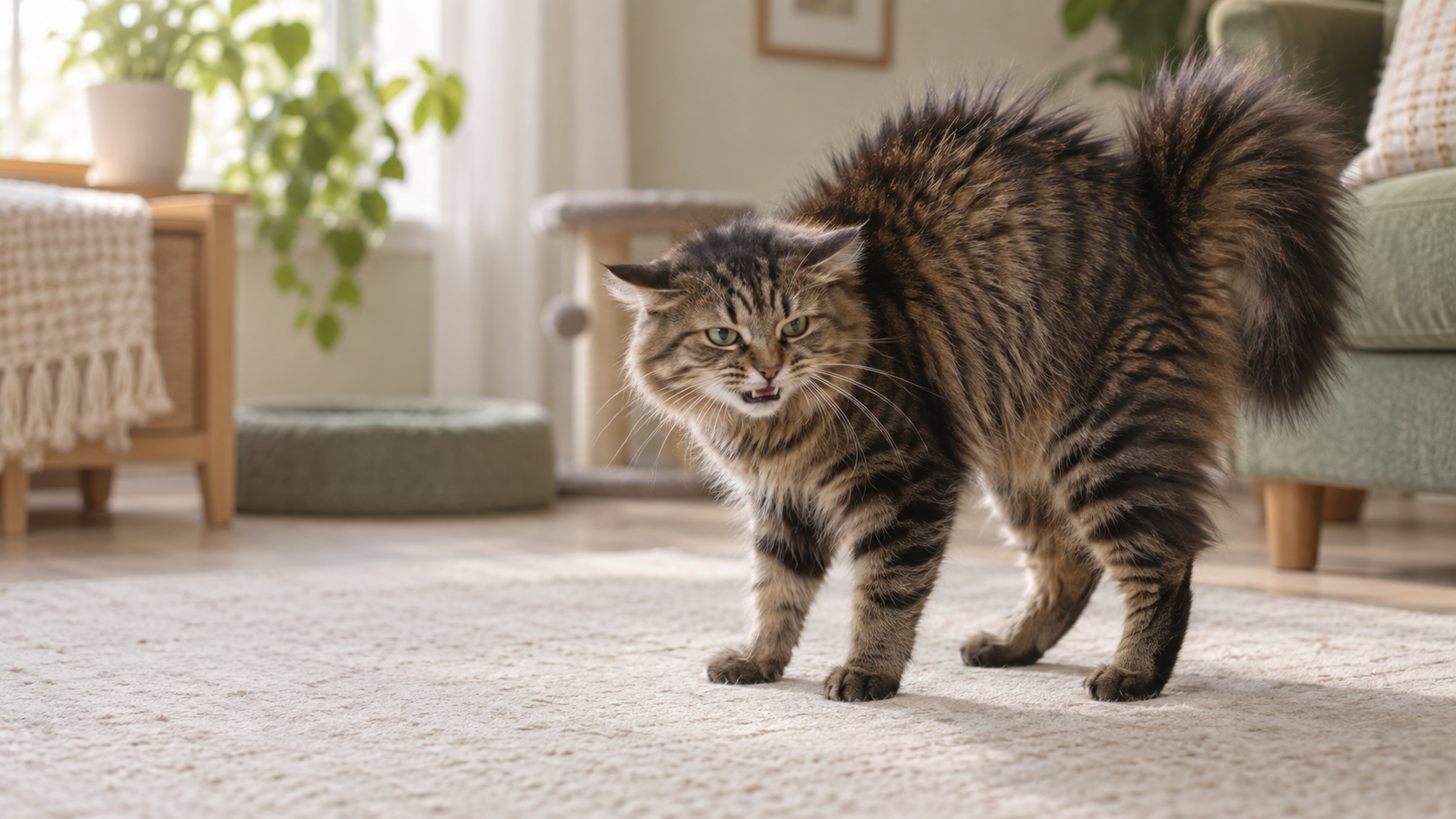
Cats are not aggressive without a reason. Aggression is communication, usually a message that a cat feels threatened, overstimulated, or unwell. The behavior often looks the same from the outside, hissing, swatting, biting, a puffed coat and flattened ears, but the cause underneath can be very different. Pinning down the trigger matters, because the right response for a frightened cat is the opposite of what you would do for a cat that wants to play.
One rule holds across every type: do not punish aggression. Yelling, spraying, or physical correction almost always raises a cat's fear and stress, which makes aggression worse and can damage the bond you rely on to help them. Instead, work with the trigger, give the cat space, and build a calm, predictable routine.
Types of Cat Aggression
Each type has its own triggers and its own fix. Match what you are seeing to the right row before you respond.
| Type | Typical triggers | How to manage it |
|---|---|---|
| Fear or defensive aggression | A perceived threat with no escape route: a stranger, a loud noise, being cornered or handled against their will | Give the cat space and a clear escape route. Never corner or force interaction. Let them retreat and calm down on their own. |
| Play aggression | Common in kittens and young cats. Pouncing, stalking, and biting hands or feet during rough play | Redirect onto toys, not hands. Offer structured play sessions with wand toys to burn energy, and end games before they get overexcited. |
| Redirected aggression | The cat is worked up by something it cannot reach, such as an outdoor cat through a window, then lashes out at whoever is near | Do not touch a worked-up cat. Separate them, remove the trigger from view, and give them time alone to settle before approaching. |
| Territorial aggression | A new cat, a new person, or changes in the home. Often directed at other cats over space, resources, or scent | Use slow, gradual reintroductions between cats. Provide separate food, water, and litter stations so no one has to compete. |
| Petting-induced or overstimulation aggression | Too much petting or handling. The cat reaches its limit and nips or swats, often after tail twitching or skin rippling | Watch for early warning signs and stop petting before the bite. Keep sessions short and let the cat set the pace. |
| Pain-induced or medical aggression | Sudden or out-of-character aggression, flinching or biting when touched in a certain spot, especially in a previously gentle cat | Treat this as a health flag, not a behavior problem alone. Book a veterinary exam to rule out pain, injury, or illness. |
How to Manage an Aggressive Cat
Whatever the type, a handful of principles help across the board. Avoid or remove the trigger wherever you can, and give an upset cat space and time rather than trying to soothe or hold it. Never punish aggression, since it deepens fear and erodes trust. Channel energy, especially in kittens and young cats, into structured play with wand toys instead of your hands, so play never gets rewarded with skin. Build a predictable daily routine and add enrichment such as perches, scratching posts, and hiding spots so your cat feels secure and in control.
When two cats are fighting, do not rush them back together. Separate them, then use slow reintroductions with scent swapping and short, supervised meetings, and give each cat its own food, water, and litter stations so no one has to compete for resources. If aggression follows a specific spot in the home or a specific time of day, that pattern is a clue to the trigger.
When to See a Vet
Sudden or out-of-character aggression, especially in a cat that was previously gentle, deserves a veterinary exam before you treat it as a behavior problem. Pain is one of the most common hidden causes: arthritis, dental disease, an injury, or an internal illness can all make a cat lash out when touched or approached. A cat that suddenly bites when you pet a particular area, or that becomes irritable seemingly overnight, may be telling you it hurts.
Book a vet visit to rule out a medical cause if aggression appears suddenly, escalates, has no obvious trigger, or comes alongside other changes. Reviewing the signs of a sick cat can help you spot what else might be going on. This article is educational and not a substitute for veterinary diagnosis.
Behavior changes often travel together, so it is worth watching for other shifts too. A cat that is stressed or unwell may also start avoiding the litter box. Explore more feline behavior in our Cat Behavior guides.
Frequently Asked Questions About Cat Aggression
Common questions about why cats get aggressive and how to help
Why is my cat suddenly aggressive?
Sudden or out-of-character aggression, especially in a cat that was previously gentle, is one of the clearest signs that something may be physically wrong. Pain from arthritis, dental disease, an injury, or another illness can make a cat lash out when touched or approached. Redirected aggression, where a cat is worked up by something it cannot reach and then turns on whoever is near, can also look sudden. Because a medical cause is common and easy to miss, a new pattern of aggression warrants a veterinary exam to rule out pain or illness.
How do I stop cat aggression?
Start by identifying the type of aggression, because the fix depends on the trigger. Avoid or remove the trigger where you can, give the cat space instead of crowding it, and never punish aggression, which usually increases fear and makes things worse. Burn energy with structured play using wand toys rather than hands, keep a predictable routine, and add enrichment like perches and scratching posts. For aggression between cats, slow reintroductions and separate resources help. If the aggression is sudden or you cannot find a clear trigger, see your vet first to rule out a medical cause.
Why is my cat aggressive toward other cats?
Aggression between cats is often territorial, driven by competition over space, food, litter boxes, or resting spots, and it is common when a new cat is introduced too quickly. Redirected aggression can also spill over onto a housemate cat. Provide separate food, water, and litter stations so cats do not have to compete, add vertical space and hiding spots, and if you are introducing cats, go slowly with scent swapping and gradual, supervised reintroductions rather than face-to-face meetings.
Is my cat playing or being aggressive?
Play aggression is common in kittens and young cats and usually looks like stalking, pouncing, and inhibited biting, often with a loose, bouncy body and no hissing or growling. True aggression tends to come with flattened ears, a puffed coat, hissing, growling, and hard bites or swats meant to drive the other party away. If play is getting too rough, redirect onto toys rather than hands and end the session before your cat becomes overexcited.
Understand Your Cat Better
Explore more about how cats communicate and behave.
Free cat printables
Keep these cat care guides handy
A rotating selection of practical cat guides chosen from our free printable library.Cat Quality of Life Checklist
Track the HHHHHMM quality-of-life measures.
Cat Feeding Guide
Portions by weight, age, and life stage.
Kitten Calorie Guide
Calorie targets by kitten age and weight.