
Last updated: October 3, 2026
Cat Behavior
Cat Not Using the Litter Box
When a cat stops using the litter box or starts peeing outside it, it is easy to assume the cat is being difficult. Very often it is not. Litter box avoidance frequently has a medical cause, so the first step is always to rule out a health problem, not to punish the cat.
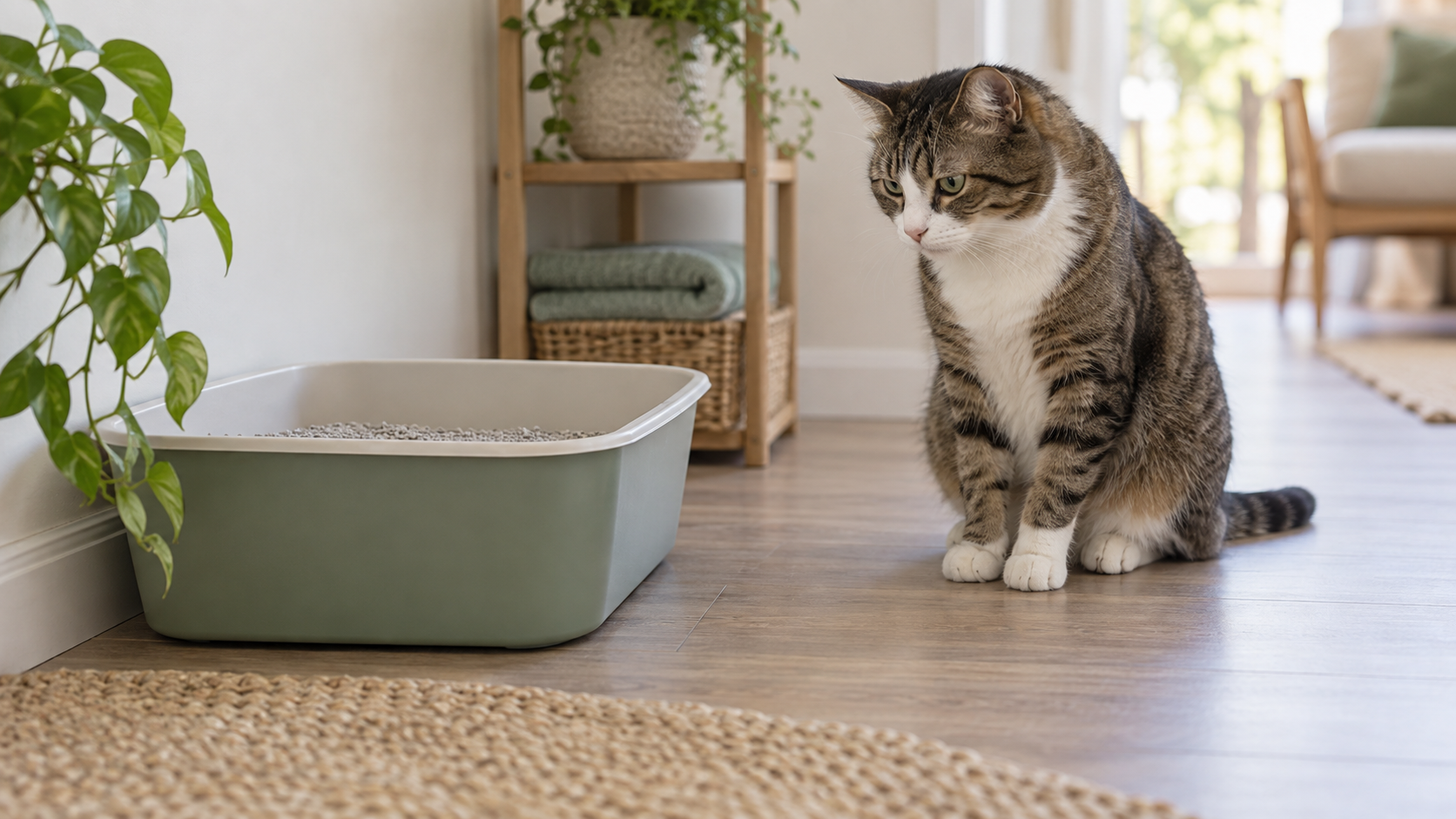
Emergency: Straining With Little or No Urine
A cat, especially a male cat, that repeatedly strains to urinate and produces little or nothing may have a life-threatening urinary blockage. Other warning signs include crying in or near the box, frequent trips, restlessness, vomiting, hiding, and a tense or painful belly.
A blockage can become fatal within a day. This is a medical emergency. Go to an emergency veterinarian immediately.
Rule Out a Medical Cause First
Before you change anything about the box, have your cat seen by a veterinarian, particularly if the change was sudden. Several common health problems cause a cat to avoid the litter box or to urinate in the wrong places, and no amount of cleaning or rearranging will fix them.
Urinary tract disease and cystitis make urinating painful, and a cat quickly learns to avoid the box it links with that pain. Bladder stones and crystals do the same. Kidney disease and diabetes make a cat produce far more urine, which can overwhelm the box and lead to accidents, and both are often first noticed because the cat is drinking a lot of water. In older or stiff cats, arthritis can make a high-sided box simply too hard and too painful to climb into, so they go right next to it instead.
Because so many of these causes look the same from the outside, a vet visit with a urine test and, when needed, bloodwork is the reliable way to tell them apart. Explore related signs in our Cat Health guides.
Medical vs Behavioral Causes
Once your vet has ruled out or treated a health problem, work through the behavioral and environmental causes below.
| Cause | Type | Typical signs | What to do |
|---|---|---|---|
| Urinary tract disease or cystitis | Medical | Frequent trips, straining, crying, blood in urine, licking the genitals | See your vet. Painful urination teaches a cat to avoid the box it associates with the pain. |
| Urinary blockage (male cats) | Medical emergency | Straining but passing little or nothing, restlessness, vomiting, crying, a hard belly | Emergency. A blocked cat can die within a day. Go to an emergency vet immediately. |
| Bladder stones or crystals | Medical | Straining, blood in urine, repeated accidents in odd spots | Needs veterinary imaging and treatment. Do not wait it out. |
| Kidney disease or diabetes | Medical | Drinking and urinating far more than usual, weight loss, large wet patches | A larger urine volume can overwhelm the box. Have your vet run bloodwork and urine tests. |
| Arthritis or pain | Medical | Older or stiff cat, high-sided box, accidents right next to the box | A sore cat may find the box too hard to climb into. Ask your vet and switch to a low-entry box. |
| Dirty or smelly box | Behavioral | Box scooped rarely, cat perches on the edge or goes right beside it | Scoop at least once a day and wash the box regularly. Cats are fastidious. |
| Too few boxes | Environmental | Multi-cat home, accidents when boxes are occupied or claimed | Follow the rule of one box per cat plus one, spread around the home. |
| Wrong location | Environmental | Box near a noisy washer or furnace, in a busy hallway, or hard to reach | Move the box to a quiet, low-traffic, easy-to-reach spot away from food and water. |
| Covered vs open box | Environmental | Some cats dislike hoods that trap odor or feel like a trap | Try an uncovered box, or offer both and let your cat choose. |
| Litter type or depth | Environmental | Recent switch of litter brand, scent, or texture, or too much or too little litter | Most cats prefer unscented, fine-grained litter about two inches deep. Change one thing at a time. |
| Stress or territorial marking | Behavioral | New pet, new person, move, or conflict; small amounts sprayed on vertical surfaces | Reduce stressors, add resources, and see the spraying vs soiling note below. |
Step-by-Step Troubleshooting Checklist
After a clean bill of health from your vet, go through these steps in order. Change one thing at a time so you can see what actually helps.
- Confirm the vet check is done. If you have not ruled out a medical cause, stop here and book that visit first.
- Scoop daily and wash regularly. Most cats will avoid a soiled box. Scoop at least once a day and wash the box with mild soap on a regular schedule.
- Count your boxes. Aim for one box per cat plus one, so one cat has two and two cats have three, spread across different rooms and floors.
- Check the location. Move boxes away from noisy appliances such as washers and furnaces, out of busy hallways, and somewhere quiet and easy to reach, away from food and water.
- Rethink the box style. Try an uncovered box for cats that dislike hoods, and a low-entry box for kittens, seniors, or stiff cats.
- Revisit the litter. Offer unscented, fine-grained litter about two inches deep, and if you recently switched brands or scents, go back to the old one.
- Clean accidents thoroughly. Use an enzymatic cleaner on soiled spots so leftover odor does not draw your cat back to the same place.
- Lower stress. Address new pets, new people, moves, or conflict between cats, and add resources such as perches, hiding spots, and feeding stations.
- Never punish. Scolding or rubbing a cat's nose in an accident increases stress and makes avoidance worse.
Spraying vs House-Soiling
It helps to know which problem you are dealing with. House-soiling means the cat squats and empties its bladder on a horizontal surface such as the floor, a rug, or a bed. This usually points to a medical issue or a dislike of the box, and it is what most of this guide addresses.
Spraying, or urine marking, looks different. The cat stands, backs up to a vertical surface like a wall or the side of the furniture, quivers its tail, and leaves a small amount of urine as a territorial signal. Marking is usually driven by stress, a new pet or person, or the sight or smell of cats outdoors, and both spayed and neutered cats can do it. If the pattern looks like marking rather than soiling, the fix leans more toward reducing stress and managing territory than toward changing the box.
When to Consult Your Vet
This guide is educational and is not a substitute for veterinary care. Contact your veterinarian whenever a cat suddenly stops using the box, strains or cries when urinating, passes blood, or produces very little urine, and any time the change comes with drinking or urinating more than usual, weight loss, or acting unwell. Treat straining with little or no urine, especially in a male cat, as an emergency.
Your vet can distinguish a medical cause from a behavioral one and guide the right plan for your cat.
Frequently Asked Questions About Litter Box Problems
Common questions about why cats stop using the litter box and how to fix it
Why is my cat not using the litter box?
The first thing to rule out is a medical cause. Urinary tract disease, bladder stones or crystals, kidney disease, diabetes, and arthritis all commonly cause a cat to stop using the box, often because urinating there became painful or the box became hard to get into. If the change is sudden, if your cat strains, cries, passes blood, or produces very little urine, see your veterinarian before you assume it is behavioral. Once your vet has ruled out health problems, look at the box itself: cleanliness, number, location, cover, and litter type are the usual behavioral and environmental culprits.
Why is my cat peeing outside the litter box?
Peeing outside the box has the same starting point: rule out a medical cause first. A cat with cystitis, a bladder stone, or a urinary blockage may squat and urinate in unusual places because it hurts to go in the box. Kidney disease and diabetes increase urine volume and can overwhelm the box. If your cat, especially a male cat, is straining and producing little or nothing, treat it as an emergency and go to a vet right away. If your vet finds nothing wrong, the cause is usually a dirty box, too few boxes, a poor location, a disliked cover or litter, or stress. Cleaning soiled spots with an enzymatic cleaner also helps, because leftover odor draws the cat back.
How many litter boxes should I have?
The rule of thumb is one litter box per cat, plus one extra. So one cat needs two boxes, two cats need three, and so on. Spread the boxes across different rooms and floors rather than lining them up in one spot, so a cat is never blocked from a box by another cat or by a closed door. In multi-cat homes, too few boxes is one of the most common reasons a cat starts going elsewhere.
How do I stop my cat from peeing outside the litter box?
Start with a vet visit to rule out a urinary or other medical problem, because no amount of box changes will fix a health issue. Once your cat is cleared, work through the basics: scoop daily, add boxes to reach one per cat plus one, move boxes to quiet and easy-to-reach spots, try an uncovered box, and offer unscented fine litter about two inches deep. Clean every soiled area with an enzymatic cleaner so the odor does not lure your cat back. Reduce stress from new pets, people, or changes, and make each change one at a time so you can see what works.
What is the difference between spraying and house-soiling?
House-soiling means a cat squats and empties its bladder on a horizontal surface such as the floor, a rug, or a bed, usually because of a medical problem or a dislike of the box. Spraying, or urine marking, is different: the cat stands, backs up to a vertical surface like a wall or furniture, quivers its tail, and deposits a small amount of urine as a territorial signal. Marking is often triggered by stress, a new pet, or outdoor cats nearby, and both spayed and neutered cats can do it. Telling the two apart helps you and your vet target the right fix.
Understand Your Cat Better
Explore more about cat behavior and the health signs behind it.
Free cat printables
Keep these cat care guides handy
A rotating selection of practical cat guides chosen from our free printable library.Kitten Calorie Guide
Calorie targets by kitten age and weight.
Cat Quality of Life Checklist
Track the HHHHHMM quality-of-life measures.
Kitten Growth Chart
Week-by-week weight and development milestones.