
Last updated: October 3, 2026
Cat Behavior
Why Is My Cat Hiding?
Some hiding is completely normal, but a sudden change in hiding is one of the most reliable signs a cat is unwell. Here is how to tell normal, comforting hiding apart from the kind that means it is time to call your vet.
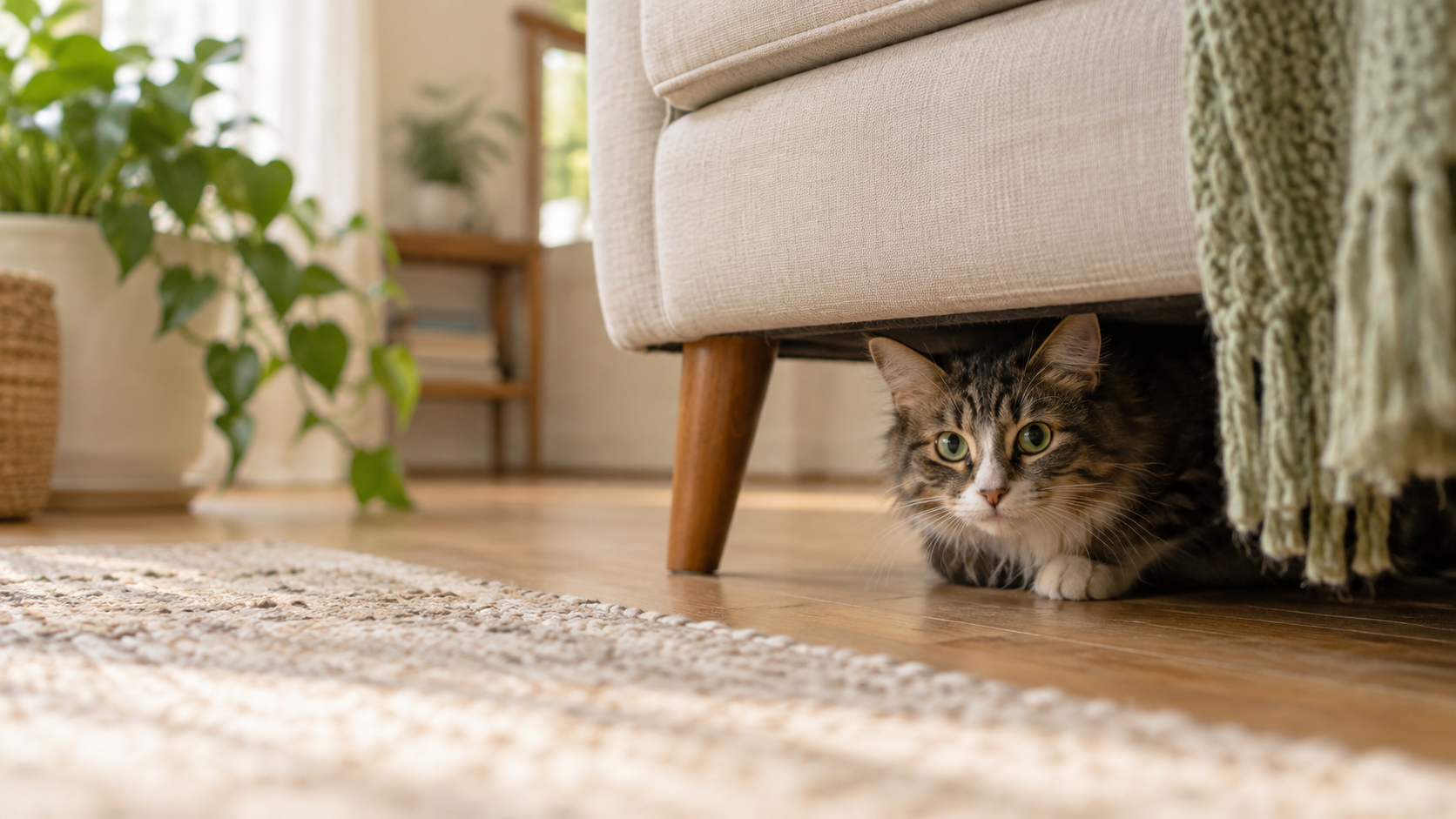
Hiding Is a Natural Cat Behavior
Cats are both predators and prey, and that shapes how they rest. Seeking out small, safe, enclosed spaces lets a cat feel secure enough to sleep deeply, so a den under the bed, inside a closet, in a cat-tree cubby, or in a quiet sunny corner is normal and healthy. Much of the time, a hiding cat is simply doing what cats do.
Plenty of hiding is completely normal and nothing to worry about. A cat may retreat when adjusting to a new home or new people, when there are loud noises or visitors, when a new pet arrives, or just because a favorite quiet spot is the best place for a nap. In these cases the trigger is clear, the cat still eats and drinks, and it comes back out once things settle.
The reason hiding deserves attention is that cats instinctively conceal illness and pain. In the wild, a sick animal that looks weak is a target, so cats are wired to withdraw and stay quiet when they feel unwell. That instinct is exactly why a sudden or increasing amount of hiding, especially paired with other changes, is one of the earliest and most reliable clues that a cat is sick.
Normal Hiding vs Concerning Hiding
Look at the whole picture. It is the change in pattern, and what comes with it, that tells you whether to worry.
| What to check | Usually normal | Reason to worry |
|---|---|---|
| When it started | A long-standing habit, or a clear trigger like a move, visitors, fireworks, or a new pet | A sudden change: a cat that never used to hide is now hiding, or hiding much more than usual |
| Where they hide | Favorite, familiar spots: under the bed, a closet, a cat tree cubby, a quiet sunny corner | New or unusual places, especially cramped, dark, hard-to-reach spots the cat did not use before |
| Eating and drinking | Still comes out to eat, drink, and use the litter box on a normal schedule | Hiding and not eating or drinking, or skipping the litter box. This pairing is urgent |
| Energy and posture | Relaxed while resting, comes out when calm returns, plays and greets you as usual | Lethargy, a hunched or tucked posture, reluctance to move, or seeming weak or withdrawn |
| Other signs | No other changes: normal grooming, breathing, and litter box habits | Vomiting, diarrhea, weight loss, labored breathing, over-grooming one spot, or vocalizing in pain |
| How they respond | Settles and re-emerges within hours to a day or two as the trigger passes | Stays hidden for a day or more, or hides more each day rather than less |
What to Do When Your Cat Is Hiding
If the hiding fits a clear stressor, the best thing you can give a nervous cat is safe spaces and time. Leave the hiding spot alone rather than pulling your cat out, keep food, water, and a litter box within easy reach, and lower the pressure by dimming lights, reducing noise, and letting your cat come out on its own terms. Most cats reappear as the trigger fades.
But if the hiding is sudden, is increasing, or comes with any sign of illness, do not simply wait it out. Gently check on your cat and look for other clues that something is wrong: review the signs of a sick cat, and note whether your cat is unusually lethargic or seems to be not eating. If you find any of these alongside the hiding, contact your veterinarian.
Treat a cat that is hiding and not eating at the same time as urgent. That combination often means a cat is genuinely unwell, and cats that stop eating for even a day or two can develop serious complications, so it warrants a prompt call to your vet rather than watchful waiting.
When to Call Your Vet
This guide is general information, not a diagnosis. Because cats hide illness so effectively, err on the side of caution. Contact your veterinarian if your cat starts hiding suddenly, hides more each day, retreats to unusual places, or hides alongside not eating, lethargy, vomiting, diarrhea, breathing changes, or signs of pain. When a hiding cat is also not eating, call sooner rather than later. Your vet is the right person to say whether your individual cat needs to be seen.
Frequently Asked Questions About Cat Hiding
Common questions about why cats hide and when it is a health concern
Why is my cat hiding?
Hiding is a natural cat behavior. Cats seek small, safe, enclosed spaces to rest and to feel secure, so some hiding is completely normal, especially after a move, around visitors or loud noises, or with a new pet in the home. It becomes a concern when the hiding is sudden or increased, because cats instinctively hide illness and pain. If your cat has started hiding out of nowhere, or is hiding far more than usual, look for other signs something is wrong and contact your vet.
Should I worry if my cat is hiding?
Not always. If the hiding fits a clear trigger like a new home, visitors, or fireworks, and your cat still eats, drinks, and comes out once things calm down, it is usually normal and time and space will help. Worry when the hiding is sudden or increasing, when your cat hides in unusual places, or when it comes with not eating, lethargy, vomiting, or any other change. Because cats hide illness so well, a sudden change in hiding is one of the most reliable early signs a cat is unwell, and it is worth a vet call.
Cat hiding and not eating, what does it mean?
Hiding and not eating together is an urgent combination that should not be watched at home for long. A cat that retreats and stops eating is often unwell, in pain, or highly stressed, and cats that go without food for even a day or two can develop serious liver problems. Do not wait it out. Check for other sick-cat signs like lethargy, vomiting, or hiding in unusual spots, and contact your veterinarian promptly.
How long is it normal for a cat to hide?
A cat reacting to a known stressor, like a move or a party, may hide for a few hours up to a day or two and then gradually come out as it feels safe again. What matters is the direction: normal hiding tapers off as the trigger passes, while concerning hiding lasts longer or gets worse each day. If your cat is still hiding after a couple of days, is hiding more rather than less, or shows any sign of illness, treat it as a reason to call your vet.
Understand Your Cat Better
Explore more about how cats communicate and behave.
Free cat printables
Keep these cat care guides handy
A rotating selection of practical cat guides chosen from our free printable library.Kitten Calorie Guide
Calorie targets by kitten age and weight.
Cat Body Condition Chart
A printable body condition reference for cats.
Kitten Growth Chart
Week-by-week weight and development milestones.