
Last updated: October 3, 2026
Cat Behavior
Cat Meowing a Lot
Cats meow mainly to talk to us, so a cat that suddenly meows a lot is usually trying to tell you something. Here are the common reasons behind excessive meowing, how to respond without making it worse, what to do about night meowing, and when the change is a reason to call your vet.
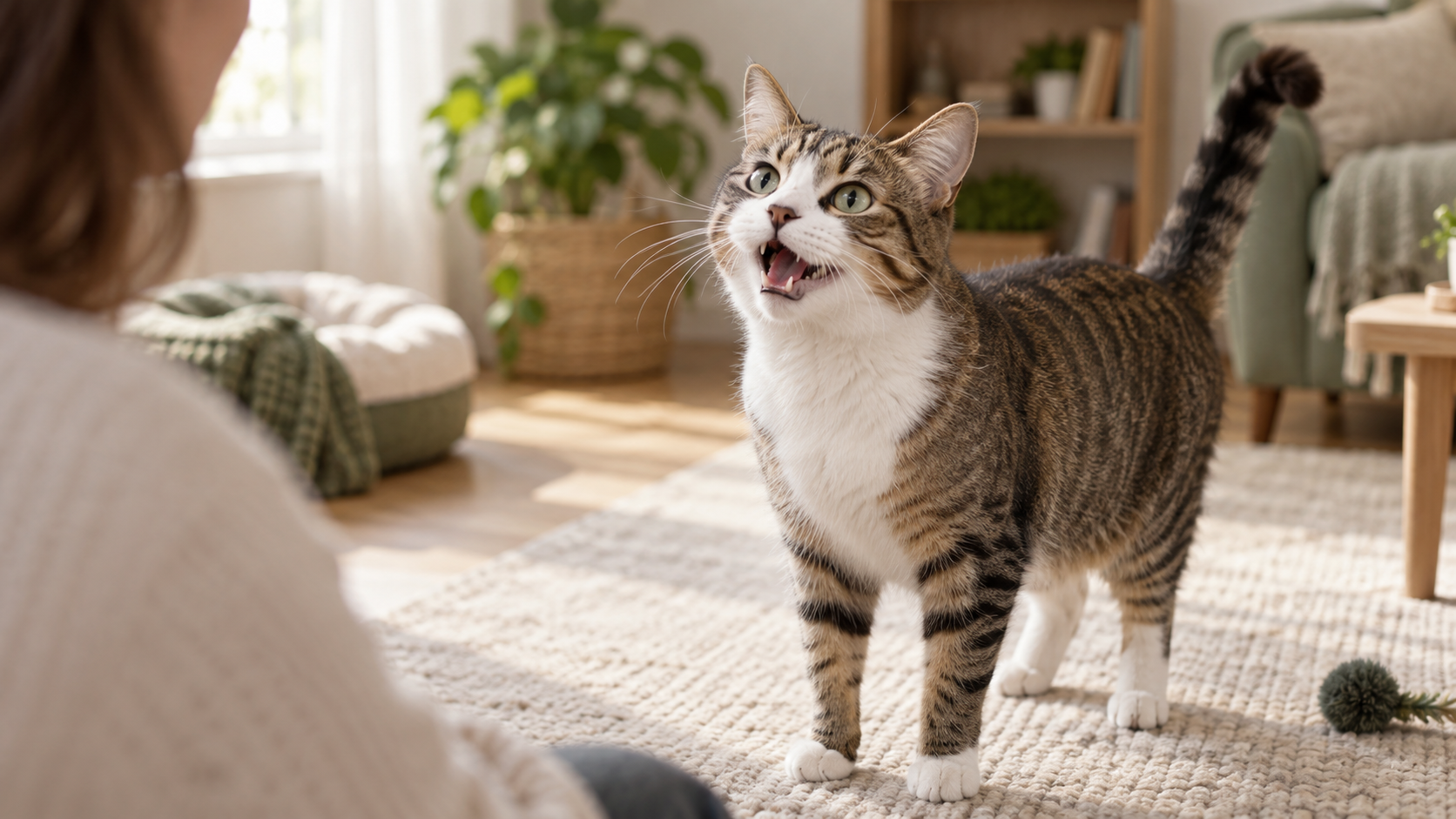
Why Cats Meow So Much
Adult cats rarely meow at each other. The meow is largely a signal cats developed to communicate with people, which is why so much of it is aimed at you. Some cats are simply chattier than others, and certain breeds are known for being talkative, so a baseline level of meowing is normal and part of your cat's personality.
What matters is a change from that baseline. Excessive meowing is usually a request, for attention, food, play, or company, or a response to something in the environment, such as stress, boredom, or a cat in heat. In older cats, a jump in vocalizing can also point to a medical cause. The table below covers the most common reasons and how to read them.
Reasons a Cat Meows Excessively
Match the meowing to the context and the rest of your cat's behavior before deciding how to respond.
| Reason | Typical context | How to respond |
|---|---|---|
| Seeking attention or play | Meowing at you, following you around, most active when you are home | Many cats learn that a meow brings company, petting, or a game. It is a request for interaction. |
| Hunger or a feeding routine | Loud meowing near mealtimes, by the bowl, or first thing in the morning | A cat that expects food at set times will remind you. Feeding on demand can reinforce it. |
| Greeting | A short chirp or meow when you come home or walk into the room | A friendly hello. This kind of meow is social and usually nothing to worry about. |
| Stress or a change in the home | New pet, new baby, house move, furniture changes, or a new routine | Vocalizing can be a response to uncertainty. Cats often settle once things feel predictable again. |
| Being in heat | Loud, drawn-out yowling in an unspayed or unneutered cat, often restless | Cats in heat, and males who sense one nearby, become very vocal. Spaying or neutering usually resolves it. |
| Loneliness or boredom | Meowing when left alone, or in an under-stimulated home with little to do | A bored cat may vocalize for something to happen. More play and enrichment often helps. |
| Cognitive decline in senior cats | An older cat crying out, often louder at night, seeming disoriented or confused | Age-related cognitive change can cause confusion and night-time vocalizing. Worth a vet discussion. |
| Medical causes | A sudden or unexplained increase in meowing, especially in an older cat | Pain, hyperthyroidism, and high blood pressure can all cause extra vocalizing. This needs a vet check. |
How to Respond to Excessive Meowing
The goal is to meet your cat's genuine needs while avoiding accidentally training more meowing. When a cat learns that meowing produces food, attention, or a game, it will meow more. The trick is to break the link between the noise and the reward, without ignoring a cat that is actually unwell.
- Do not reward demand-meowing at the moment it happens. Wait for a pause or a calm moment, then offer food, attention, or play.
- Meet the real needs. Keep fresh water and appropriate food available, and make sure the litter box is clean and accessible.
- Add enrichment and play. Daily interactive play, climbing space, window perches, and puzzle feeders give a bored or under-stimulated cat something to do.
- Keep routines steady. Feed, play, and settle down at consistent times so your cat is not left guessing and calling out for what comes next.
- Have unspayed or unneutered cats spayed or neutered, which usually ends the intense yowling that comes with being in heat.
If the meowing comes with tension or conflict between cats, or with swatting and other pushy behavior, our guide to cat aggression may help you sort out what is going on.
Why Cats Meow at Night, and What Helps
Night meowing is one of the most common complaints from cat owners. Cats are naturally most active around dawn and dusk, so a cat with energy to burn may cry out for company or play while you are trying to sleep. Hunger is another frequent trigger, along with boredom in a quiet, dark house where nothing is happening.
A few adjustments usually help. Schedule an active play session in the evening to tire your cat out, followed by a meal or a small snack close to bedtime so they are not waking you for food. Leave out enrichment such as a puzzle feeder, and provide a warm, comfortable place to settle. As with daytime meowing, try not to reward night crying with food or attention, or it can become a nightly habit.
Night-time vocalizing deserves extra attention in older cats. A senior cat that begins yowling at night, seems disoriented, or paces the house can be showing signs of cognitive decline or an underlying medical condition, and that is a reason to speak with your vet rather than simply manage the noise.
When to See a Vet
A sudden or unexplained increase in meowing is worth taking seriously, because a change in vocalization can be an early sign of illness. This is especially true for older cats, where new or louder crying, particularly at night, can point to a medical cause rather than a behavior problem.
Conditions that can drive extra vocalizing include pain, high blood pressure, and hyperthyroidism, an overactive thyroid that is common in senior cats and often comes with restlessness, weight loss despite a good appetite, and increased vocalizing. Cognitive decline in aging cats can also cause night-time yowling and confusion.
Contact your veterinarian if your cat's meowing has increased suddenly or has no clear cause, if a senior cat has started yowling at night, or if the vocalizing comes with other changes such as weight loss, appetite changes, hiding, or lethargy. This article is general information and is not a substitute for veterinary diagnosis. Explore more feline behavior in our Cat Behavior guides.
Frequently Asked Questions About Cat Meowing
Common questions about excessive meowing and what to do
Why is my cat meowing so much?
Cats meow to communicate with people, and excessive meowing usually has a specific cause: wanting attention or play, hunger or an established feeding routine, greeting you, stress from a change in the home, being in heat, boredom, or a medical issue. Start by ruling out unmet needs and recent changes. If your cat has suddenly started meowing far more than usual, or an older cat is newly vocal, treat it as a reason to see your vet.
Why does my cat meow at night?
Night meowing can come from hunger, boredom, or too much pent-up energy, so a good play session and a meal before bed often helps. It can also be a bid for attention that gets reinforced if you respond. In senior cats, night-time yowling can be a sign of cognitive decline, high blood pressure, or hyperthyroidism, so new or worsening night vocalizing in an older cat is worth a vet visit.
Should I ignore my cat when it meows for attention?
If the meow is genuine demand-meowing and all real needs are met, it is best not to reward it at the exact moment it happens, because responding teaches your cat that meowing works. Wait for a quiet moment, then give attention, food, or play. At the same time, make sure the underlying need is covered with enough food, enrichment, and interaction during the day. Never withhold care to a cat that may be unwell.
Why is my senior cat yowling?
An older cat that starts yowling, especially loudly at night or while wandering the house, may be experiencing age-related cognitive decline, or a medical condition such as hyperthyroidism or high blood pressure. Because a sudden change in vocalizing can signal illness, a newly vocal senior cat should be examined by a veterinarian rather than assumed to be simply aging.
Understand Your Cat Better
Explore more about how cats communicate and behave.
Free cat printables
Keep these cat care guides handy
A rotating selection of practical cat guides chosen from our free printable library.Kitten Growth Chart
Week-by-week weight and development milestones.
Kitten Calorie Guide
Calorie targets by kitten age and weight.
Cat Quality of Life Checklist
Track the HHHHHMM quality-of-life measures.