
Last updated: October 3, 2026
Cat Health
Cat UTI Symptoms
Straining in the litter box, tiny frequent trips, blood in the urine, and crying can all point to a urinary problem in cats. Here is what those signs mean, why a true UTI is only one of several possible causes, and the one situation that is a true emergency.
This guide is general information, not veterinary advice. Urinary symptoms in cats can have several causes, and some are serious. If your cat is straining, in pain, or passing blood, contact your veterinarian, who can examine your cat and give advice for their specific situation.
Emergency: a cat straining but passing little or no urine needs a vet now
A cat, and especially a male cat, who strains hard in the litter box but produces little or no urine may have a blocked urethra. A blocked bladder cannot empty, and this becomes life-threatening within hours. Go to a vet or emergency clinic immediately if you see any of these:
- Repeated straining with little or no urine coming out
- Crying, restlessness, or obvious pain when trying to urinate
- Vomiting, or refusing food and water
- A hard, tense, or painful belly
- Weakness, collapse, hiding, or unresponsiveness
Do not wait to see if it passes. A urinary blockage is a genuine emergency.
What a Cat UTI Actually Is
Many owners use the phrase cat UTI as an umbrella term for any urinary trouble, but a true urinary tract infection means bacteria have infected the bladder or urinary tract. In young, otherwise healthy cats, that kind of bacterial infection is actually less common than people expect. More often, the same symptoms come from inflammation of the bladder without any infection at all.
Vets group these problems under the term feline lower urinary tract disease, or FLUTD. FLUTD covers several conditions that share almost identical signs, including feline idiopathic cystitis (inflammation with no clear cause), bladder stones or crystals, and, less commonly, bacterial infection. Because they look so alike from the outside, a vet is the only one who can tell them apart, usually with a urine test and sometimes imaging.
The practical takeaway: the signs you notice at home tell you that something is wrong with your cat's urinary system, but not exactly what. That is why guessing and reaching for leftover antibiotics is a bad idea, and why a proper diagnosis matters.
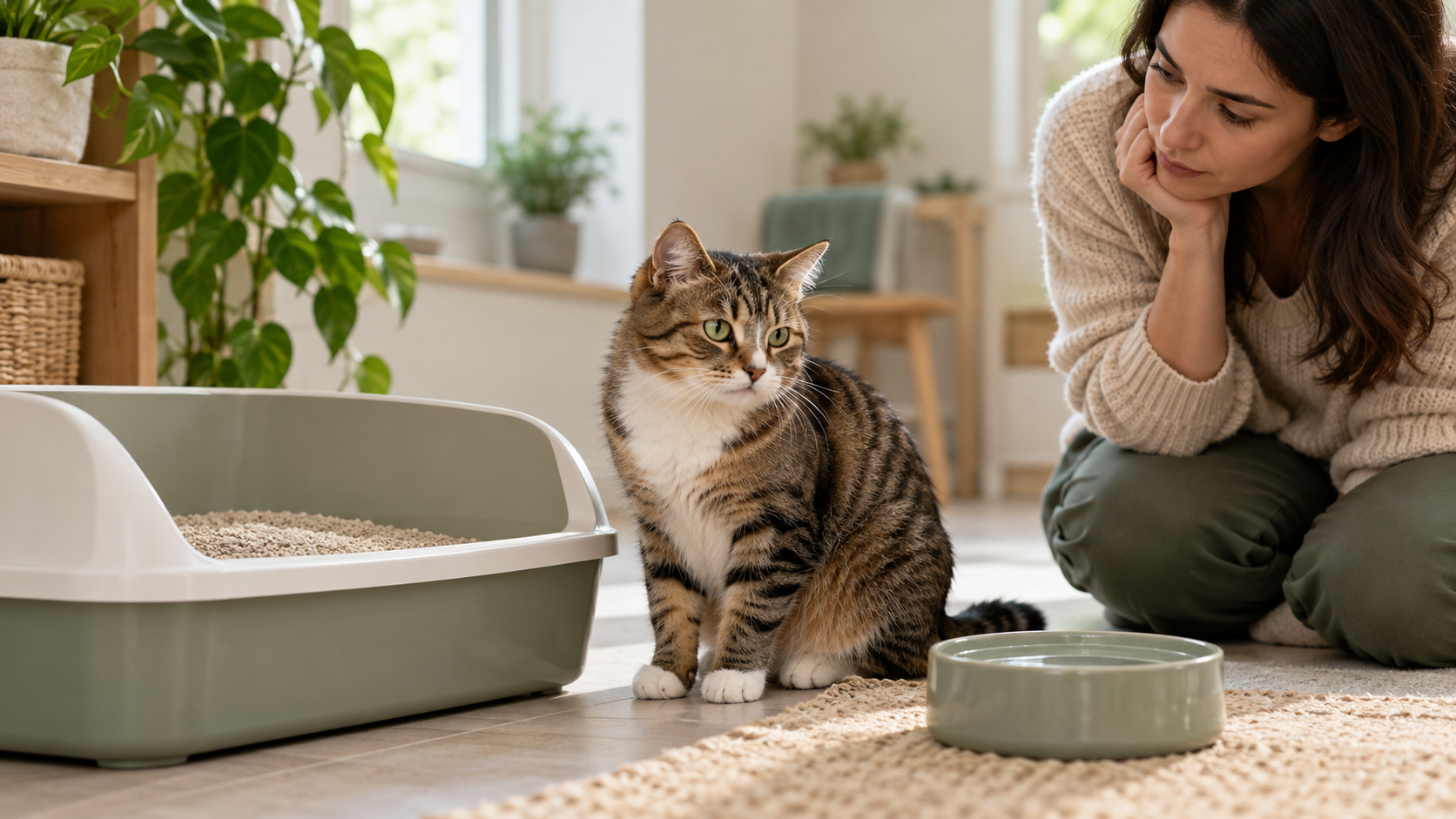
Symptoms of a Cat UTI
The signs of urinary trouble that owners notice most often
Straining and frequent tiny trips
One of the clearest signs is a cat who visits the litter box again and again, straining and posturing, but only passing a small amount of urine each time. It can look like constipation, so watch closely to see whether they are trying to urinate.
Blood in the urine
Pink, red, or rust-colored urine, or spots of blood on the litter, points to inflammation or irritation of the bladder or urethra. Any visible blood in the urine is a reason to book a vet visit.
Crying and pain when urinating
Vocalizing, crying, or meowing in or around the litter box can mean urinating is painful. A cat in pain may also seem restless, tense, or reluctant to settle.
Urinating outside the box and excessive licking
A cat may start peeing on floors, rugs, or cool surfaces like the bath or sink because they associate the box with discomfort or feel a constant urge to go. Frequent licking of the genital area is another common sign of urinary irritation.
Cause, What It Looks Like, and What to Do
Use this as a starting point, not a diagnosis. Your vet can confirm the cause.
| Possible cause | What it often looks like | What to do |
|---|---|---|
| Idiopathic (stress) cystitis | Straining, frequent small trips, blood in urine, and urinating outside the box, often with no infection found | Very common, especially in younger cats. Needs a vet to rule out other causes. Managed with stress reduction, water intake, and sometimes medication. |
| Bladder stones or crystals | Straining, painful urination, blood in urine, and sometimes repeat episodes | Diagnosed by a vet with urine tests and imaging. Treated with diet changes, and sometimes surgery to remove stones. |
| Bacterial infection (true UTI) | Frequent urination, straining, and blood in urine, more common in older cats or those with other illness | Confirmed by a urine culture and treated with veterinary-prescribed antibiotics. Do not use leftover or human medication. |
| Urethral plug or blockage | Straining hard while producing little or no urine, crying, restlessness, vomiting, or collapse | A life-threatening emergency, especially in male cats. Go to a vet or emergency clinic immediately. |
Common Causes
Feline idiopathic cystitis (stress cystitis). This is one of the most common reasons for urinary signs, particularly in younger and middle-aged cats. It is inflammation of the bladder with no infection and no single clear cause, and stress plays a big role. Changes in the household, conflict with other pets, boredom, and being overweight can all contribute.
Bladder stones and crystals. Minerals in the urine can form crystals or stones that irritate the bladder wall and cause bleeding, straining, and pain. Some are managed with special diets, while others need to be removed surgically. A vet diagnoses these with urine tests and imaging.
Bacterial infection. A true bacterial UTI is more likely in older cats and in cats with underlying conditions such as kidney disease or diabetes, which can change the urine and make infection easier. These infections are confirmed with a urine culture and treated with antibiotics prescribed by a vet.
Urethral plugs and blockage. In some cats, especially males, a plug of crystals, mucus, and cells can block the narrow urethra so urine cannot pass. This is the medical emergency described at the top of this page. If your cat is straining with little or no urine, do not wait.
What You Can Do at Home vs When to See a Vet
There is no safe way to diagnose or treat the underlying cause of urinary symptoms at home, because a vet needs to rule out blockage, stones, and infection first. What you can do is support your cat while you arrange care. Encourage water intake, keep the litter box scrupulously clean, and reduce stress in the household. If your cat is drinking or urinating more than usual overall, our guides on a cat drinking a lot of water and cat dehydration explain what to watch for.
See your vet promptly if your cat is straining, passing blood, crying in the box, or going outside the box. If they are suddenly avoiding the litter box, it is worth reading about why a cat stops using the litter box, since a medical cause must be ruled out before treating it as behavior. For a broader picture of when symptoms add up to something serious, see our overview of sick cat symptoms. Remember the emergency signs at the top of this page override everything else: a cat straining with little or no urine cannot wait.
Prevention
You cannot guarantee a cat will never have a urinary flare-up, but a few habits lower the risk and support the bladder. The biggest levers are water intake, litter box hygiene, and a calm routine.
- Boost water intake. Dilute urine is less irritating. Offer fresh water in several spots, and consider a pet water fountain, since some cats prefer running water.
- Consider more moisture in the diet. Wet food adds water to your cat's daily intake. Our guide on wet vs dry cat food compares the two, and any diet change is best discussed with your vet.
- Keep litter boxes clean and plentiful. Scoop daily and provide enough boxes so your cat is never put off using one.
- Reduce stress. Keep routines steady, provide hiding spots and vertical space, and ease conflict between pets, since stress is a major trigger for cystitis.
- Support a healthy weight. Extra weight is linked to urinary problems. You can check your cat with our cat BMI calculator and plan portions with the cat nutrition calculator.
Frequently Asked Questions About Cat UTIs
Common questions about urinary symptoms in cats and when they are serious
What are the symptoms of a UTI in cats?
Common signs include straining in the litter box, making frequent trips but passing only small amounts of urine, blood in the urine, crying or vocalizing while urinating, urinating outside the litter box, and excessive licking of the genital area. These signs overlap across several urinary conditions, so a vet visit is the only way to know the true cause.
Do cats actually get bacterial UTIs?
They can, but true bacterial urinary tract infections are less common in young, otherwise healthy cats than many owners assume. Bacterial UTIs become more likely in older cats and in cats with conditions like kidney disease or diabetes. In younger cats, the same symptoms are more often caused by feline idiopathic cystitis, which is inflammation without infection.
When is a cat UTI an emergency?
Treat it as an emergency and seek veterinary care immediately if your cat is straining hard but producing little or no urine, especially a male cat. This can mean the urethra is blocked, which stops the bladder from emptying and quickly becomes life-threatening. Other emergency signs include repeated vomiting, crying in pain, a hard or painful belly, lethargy, and collapse.
Can I treat a cat UTI at home?
You should not try to treat the underlying cause at home, because a vet needs to rule out blockage, stones, and infection first. What you can do supportively is encourage water intake, keep the litter box clean, and reduce stress in the household. If your cat is straining, in pain, or passing blood, that still needs veterinary attention rather than home care alone.
How can I help prevent urinary problems in cats?
Focus on water intake, litter box hygiene, and a calm environment. Offer wet food or add water to meals, provide fresh water in several spots, and consider a pet water fountain. Keep enough clean litter boxes for your household, reduce stress and sudden changes, and help your cat stay at a healthy weight. These steps lower the risk of recurring urinary flare-ups but do not replace veterinary care when symptoms appear.
Explore More Cat Health Guides
Understand your cat's symptoms and know when to call the vet.
Free cat printables
Keep these cat care guides handy
A rotating selection of practical cat guides chosen from our free printable library.Cat Feeding Guide
Portions by weight, age, and life stage.
Cat Quality of Life Checklist
Track the HHHHHMM quality-of-life measures.
Cat Body Condition Chart
A printable body condition reference for cats.