
Last updated: October 3, 2026
Cat Behavior
What Does Catnip Do to Cats?
Sprinkle a little catnip and one cat rolls in ecstasy while another walks away unimpressed. Here is what catnip actually does, why some cats feel nothing at all, whether it is safe, and how to use it for play and enrichment.
How Catnip Works
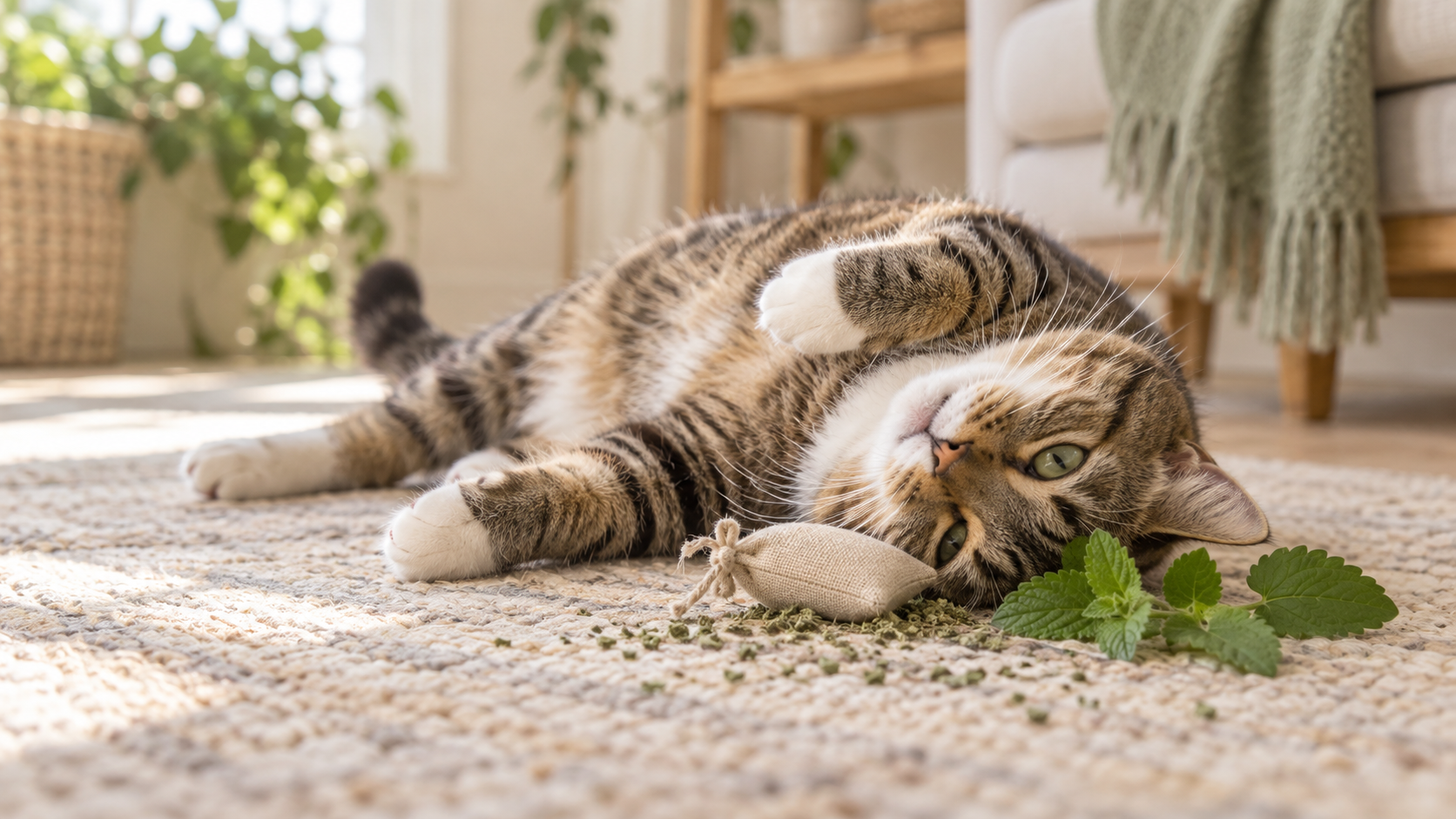
Catnip is a member of the mint family, and its effect comes from an aromatic oil it contains called nepetalactone. When a cat sniffs catnip, that compound reaches receptors in the lining of the nose, which stimulate sensory neurons and, in turn, areas of the brain that influence behavior and emotion. The result is a brief, harmless burst of stimulation that many cats clearly enjoy.
The response is driven by smell rather than taste. Interestingly, eating catnip tends to have a calmer, more sedative effect, while smelling it is what produces the playful, excitable reaction. Either way, the effect is short and self-limiting, which is a big part of why catnip is considered such a safe way to enrich a cats day.
The Typical Effects of Catnip
Reactions vary from cat to cat, and any of these, including no reaction, is normal.
| Effect | What it looks like | What it means |
|---|---|---|
| Sniffing and licking | Rubbing, licking, and chewing the catnip | The classic reaction when catnip is smelled. The aroma is what triggers the response. |
| Rolling and rubbing | Rolling on the floor, rubbing the face and body | A sign of the pleasant, euphoric phase many cats show while under the effect. |
| Playfulness or hyperactivity | Zoomies, batting toys, pouncing, vocalizing | A burst of stimulated, playful energy that is normal and usually brief. |
| Mellowing out | Calm, relaxed, sometimes spacey or sleepy | Some cats become mellow rather than hyper, especially if they eat a little. |
| No reaction at all | Ignores the catnip completely | Normal for cats that have not inherited the response, and for most young kittens. |
Why Some Cats React and Others Do Not
Sensitivity to catnip is inherited. An estimated 20 to 30 percent of cats simply do not carry the gene for the response, so no amount of catnip will do anything for them, and that is perfectly normal. Age matters too: most kittens do not show a reaction until they are around three to six months old, and some senior cats gradually lose their sensitivity.
If your cat is a non-responder, you are not out of options. Silver vine, a plant popular in Asia, produces a similar reaction in many cats that do not respond to catnip, and other plants such as valerian and Tatarian honeysuckle work for some cats as well. It can be worth trying a couple to find what your individual cat enjoys.
Is Catnip Safe, and How to Use It Well
Catnip is safe and non-addictive, and because the effect wears off in about 10 minutes and is followed by a period where the cat cannot respond again for a while, it is very hard for a cat to overdo it. A cat that eats a lot of catnip may get a passing upset stomach, but that resolves on its own. The main thing to watch is that a small number of cats become overstimulated and a little nippy while under the effect, so give an excitable cat room to enjoy it rather than handling it heavily.
Used occasionally, catnip is a great enrichment tool. It can encourage a lazy cat to play and exercise, make a scratching post more appealing, or help a nervous cat settle into a new space. If your cat is prone to bouts of overexcitement or aggression during play, keep sessions short and let the effect pass before petting. For more on channeling feline energy and reading your cat, browse our cat behavior guides.
Frequently Asked Questions About Catnip
Common questions about how catnip works and whether it is safe
What does catnip actually do to cats?
Catnip contains an aromatic compound called nepetalactone. When a cat smells it, the compound binds to receptors in the nose that stimulate sensory neurons and areas of the brain involved in behavior and emotion, producing a short, harmless high. Cats typically respond by sniffing, licking, rubbing, rolling, and becoming playful or, in some cats, mellow and relaxed. The effect is a response to the smell, and eating catnip tends to have a calmer, more sedative effect than smelling it.
How long does catnip last?
The effect is short-lived. Most cats respond for about 10 minutes, after which the reaction fades. Once it wears off, there is usually a refractory period of roughly 30 minutes to two hours during which the cat will not respond to catnip again, no matter how much is offered. This built-in reset is one reason catnip is hard to overdo through normal use.
Why does my cat not react to catnip?
Not reacting is completely normal. The response to catnip is inherited, and an estimated 20 to 30 percent of cats do not have the gene for it, so they simply feel nothing. In addition, most kittens under about three to six months old do not respond, and very old cats sometimes lose their sensitivity. If your cat ignores catnip, it is not unusual, and alternatives like silver vine work for many cats that do not respond to catnip.
Is catnip safe for cats?
Yes, catnip is considered safe and non-addictive for cats. It is not a drug in the harmful sense, and cats do not become dependent on it. If a cat eats a large amount it may get a mildly upset stomach, with some vomiting or diarrhea, but this passes on its own. Because the effect naturally wears off and cats become temporarily immune to it, it is difficult for a cat to overdo catnip. As with anything new, introduce it in a small amount and see how your cat responds.
How often can I give my cat catnip?
Occasional use, such as a couple of times a week, keeps catnip novel and effective. Because of the refractory period, offering it constantly does not produce a constant effect and may make some cats less responsive over time. Using it now and then, for enrichment or to encourage play and exercise, gets the most benefit. Some cats can become overstimulated and a little nippy while under the effect, so give an excitable cat space rather than handling it heavily until the effect passes.
What forms does catnip come in?
Catnip is sold as dried leaves, sprays, and stuffed into toys, and it also grows as a plant. Dried catnip and fresh leaves tend to give the strongest response, while sprays are milder and handy for refreshing a scratching post or toy. Silver vine, sold as sticks, powder, or in toys, is a popular alternative that many catnip non-responders react to. Whichever form you use, buy from a reputable source and store dried catnip in a sealed container to keep it potent.
Understand Your Cat Better
Explore more about how cats play, communicate, and behave.
Free cat printables
Keep these cat care guides handy
A rotating selection of practical cat guides chosen from our free printable library.Cat Quality of Life Checklist
Track the HHHHHMM quality-of-life measures.
Kitten Calorie Guide
Calorie targets by kitten age and weight.
Kitten Growth Chart
Week-by-week weight and development milestones.