
Last updated: October 3, 2026
Cat Health
Capstar for Cats
Capstar is the flea tablet owners reach for when they want fleas gone fast. It works within about 30 minutes, but only for a day. Here is what it does, what it does not do, how it is dosed, and why it is one part of a flea plan rather than the whole answer.
This guide is general information, not veterinary advice. Dosages and suitability depend on your cats weight, age, and health. Always read the product label and check with your veterinarian before giving any medication, and never give a cat a flea product intended for dogs without veterinary guidance, as some are toxic to cats.
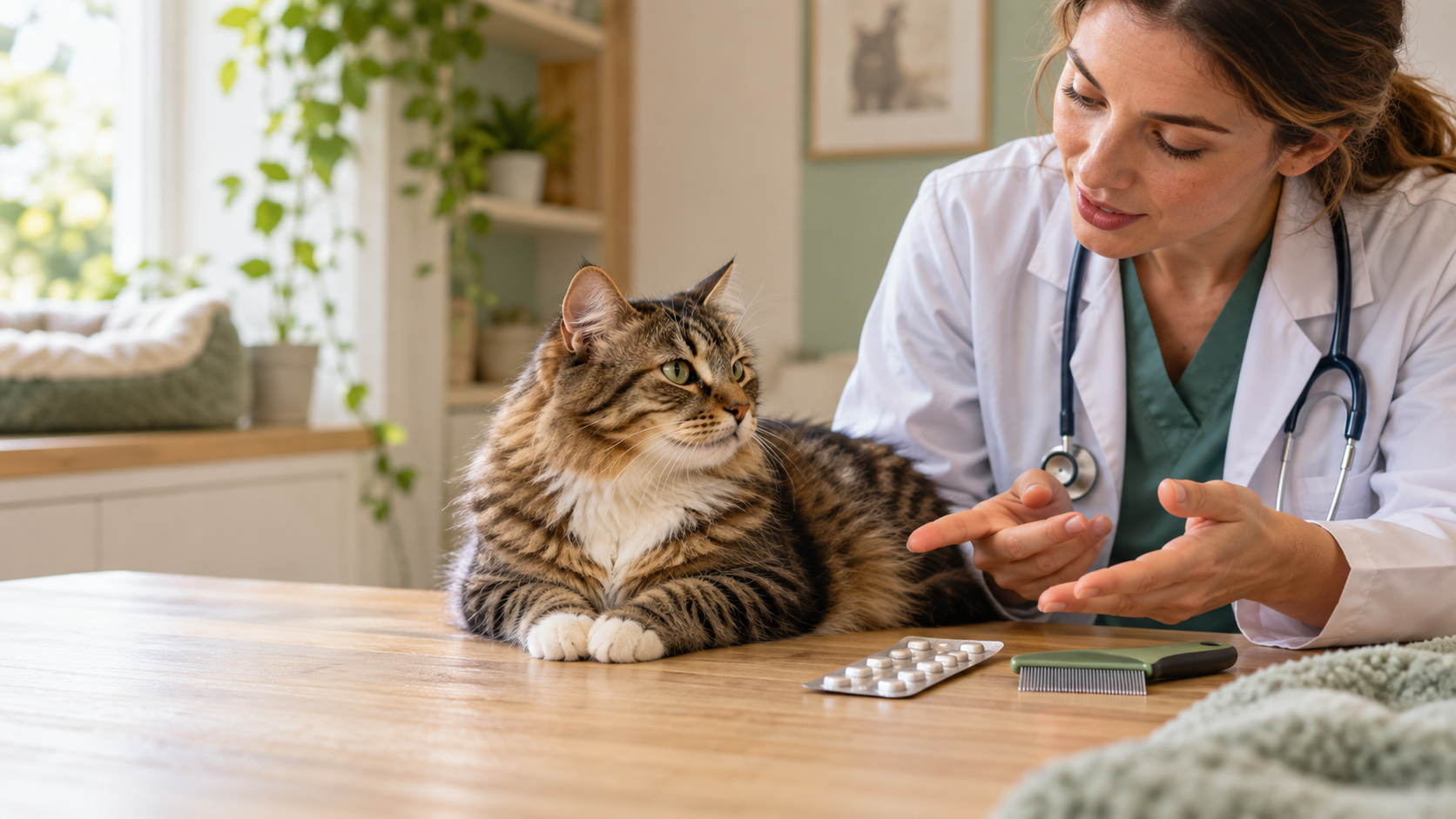
What Capstar Is and How It Works
A fast-acting knockdown for the adult fleas on your cat
The active ingredient
Capstar is an oral tablet containing nitenpyram, an insecticide that spreads through your cats bloodstream. When a flea bites, it takes in the drug and dies, which is how Capstar clears the adult fleas already on your cat so quickly.
Fast but short
It starts killing fleas within about 30 minutes and clears most within hours, but it only works for around 24 hours. There is no lasting protection, so it tackles the fleas present today and nothing tomorrow.
What it does not do
Capstar does not kill flea eggs, larvae, or pupae, and it is not a preventive. Because most of a flea population lives in the home, not on the cat, it cannot end an infestation by itself.
Where it fits
Think of Capstar as the rapid first step: it gives fast relief and knocks down the visible fleas while a longer-lasting monthly preventive and home cleaning do the work of breaking the flea life cycle.
Capstar Dosage for Cats
General guidance based on the product label. Always confirm the right product and dose for your cat with your vet.
| Cat weight or status | Product | Notes |
|---|---|---|
| 2 to 25 lb (about 0.9 to 11.3 kg) | Capstar for cats and small dogs (11.4 mg nitenpyram) | Covers most cats. One tablet by mouth, and it may be repeated as often as once a day if needed. |
| Under 2 lb or under 4 weeks old | Not suitable | Not for use in very young kittens or cats below the minimum weight. Ask your vet about safe flea control for tiny kittens. |
| Pregnant or nursing cats | Vet guidance first | Check with your vet before using any flea product in a pregnant or nursing cat. |
To be sure of your cats weight before dosing, our cat weight calculator and pet medication calculator can help, though the dose should be confirmed by your vet.
Side Effects and How to Give It
Capstar is generally well tolerated. The most common thing owners notice is a short-lived increase in scratching, grooming, or restlessness soon after a dose. This is usually a good sign: as the fleas die they become more active and irritate the skin, so your cat may seem itchier for a few hours before settling. Less commonly, some cats may drool, vomit, or seem a little off. If your cat seems genuinely unwell or symptoms persist, contact your vet.
The tablet is small and can be given directly by mouth or hidden in a small amount of food. Because it is fast-clearing, it can be repeated as often as daily if fleas remain, but follow the label and your vets advice rather than dosing repeatedly on your own. Capstar can generally be used alongside a monthly spot-on or oral preventive, which is exactly how it is meant to be used.
Capstar Is Step One, Not the Whole Plan
Because Capstar kills only the adult fleas on your cat and only for a day, using it alone leaves the real problem untouched. The majority of a flea population, the eggs, larvae, and pupae, lives in carpets, bedding, and floors, ready to hatch and reinfest your cat. To actually clear an infestation, combine Capstar with these steps:
- Start a vet-recommended monthly flea preventive that keeps working over time.
- Wash bedding on a hot cycle and vacuum floors and furniture thoroughly, then empty the vacuum.
- Treat every pet in the household, since fleas move between animals.
- Keep up prevention for several months, as pupae can keep hatching for weeks.
For the full approach to spotting and clearing fleas, see our guides to cat fleas and flea treatment for cats. And because fleas are the main cause of tapeworm, it is worth reading about worms in cats too, since a flea problem and a worm problem often go together.
Frequently Asked Questions About Capstar for Cats
Common questions about how it works, dosing, and safety
What is Capstar for cats and what does it do?
Capstar is an oral flea tablet whose active ingredient is nitenpyram. It kills the adult fleas living on your cat very quickly, usually starting to work within about 30 minutes, and clears the great majority of adult fleas within a few hours. It is a fast knockdown treatment for an active flea infestation, not a preventive, and it does not stop new fleas from jumping on later, which is why it is used alongside a longer-lasting flea control plan.
How fast does Capstar work, and how long does it last?
Capstar begins killing adult fleas within roughly 30 minutes and clears most of them within about four to six hours. The catch is that it only works for about 24 hours. It has no lasting or residual effect, so once it wears off it offers no protection against new fleas. This is exactly why it is thought of as a rapid knockdown rather than ongoing prevention, and why a monthly preventive is still needed.
How much Capstar can I give my cat?
The standard product for cats contains 11.4 mg of nitenpyram and is given as a single tablet by mouth to cats from 2 to 25 pounds and at least four weeks old. Because it clears the body quickly, it can be given as often as once a day if fleas remain a problem, but you should follow the label and your vets advice rather than dosing repeatedly on your own. Never use a dog-specific flea product on a cat without veterinary guidance, as some are toxic to cats.
Is Capstar safe for cats?
Nitenpyram has a good safety record and is widely used, including in kittens from four weeks of age and two pounds in weight. It can be given to cats that are also on other flea preventives, which is part of how it fits into a broader plan. As with any medication, check with your vet first if your cat is pregnant, nursing, very young, elderly, or has a health condition, and read the label carefully before giving it.
Why is my cat scratching more after Capstar?
A burst of scratching, restlessness, or grooming shortly after a dose is common and is usually a sign the medication is working. As the fleas are dying they become more active, which irritates the skin, so your cat may seem itchier for a short while before settling. This typically passes within a few hours. If your cat seems genuinely unwell, or you notice vomiting, drooling, or other worrying signs, contact your vet.
Does Capstar get rid of fleas completely?
On its own, no. Capstar kills the adult fleas on your cat right now, but it does not kill eggs, larvae, or pupae, and most of a flea population lives in the environment rather than on the animal. Without treating your home and using a long-term preventive, new fleas will keep hatching and reinfesting your cat. To truly clear an infestation, pair Capstar with a monthly flea preventive and thorough environmental cleaning.
Explore More Cat Health Guides
Understand your cat's care and know when to call the vet.
Free cat printables
Keep these cat care guides handy
A rotating selection of practical cat guides chosen from our free printable library.Cat Quality of Life Checklist
Track the HHHHHMM quality-of-life measures.
Kitten Calorie Guide
Calorie targets by kitten age and weight.
Kitten Growth Chart
Week-by-week weight and development milestones.