
Last updated: October 3, 2026
Cat Health
Cat Constipation: Signs and What to Do
Constipation in cats can range from a passing bout to a sign of something that needs treatment. Here is how to spot the signs, what tends to cause it, gentle steps to discuss with your vet, and the red flags that mean you should not wait.
This guide is general information, not veterinary advice. Every cat is different. If your cat is unwell or you are worried, contact your veterinarian, who can examine your cat and give advice for their specific situation.
Seek emergency veterinary care now if any of these apply
- Your cat is straining in the litter box but little or no urine is coming out, especially a male cat. This can be a urinary blockage, which is life-threatening and cannot wait.
- No bowel movement for more than 48 to 72 hours, or repeated straining that produces nothing
- Vomiting, a swollen or painful belly, crying out, or obvious distress
- Lethargy, weakness, hiding, refusing food, or collapse
A straining cat is not always constipated. If your cat cannot urinate, treat it as an emergency and go to a vet or emergency clinic immediately.
Signs Your Cat May Be Constipated
A constipated cat usually shows a few of these together. Watch for straining in the litter box with little or nothing produced, hard, dry, or infrequent stools, and small, pellet-like feces. You may also notice signs of discomfort such as crying in the box, repeated trips with no result, or a hunched posture, along with a reduced appetite or low energy in some cats.
Keeping an eye on the litter box helps you catch changes early. Note how often your cat passes stool, what it looks like, and whether they seem to strain. If you scoop daily, an empty box for a day or more is a useful early warning. Because straining can also be a sign of a urinary problem, watch closely for whether urine is being produced.
Common Causes of Constipation in Cats
What tends to be behind a constipated cat, from mild to serious
Dehydration and diet
Not drinking enough is one of the most common causes, as it leaves stool hard and dry. A diet low in moisture or fiber can add to the problem. Cats on dry food alone in particular may benefit from added water and wet food, though changes are best guided by your vet.
Hairballs
Cats groom constantly and swallow loose hair, which can bind up stool and make it harder to pass. Cats that shed heavily or groom a lot may be more prone to this. Regular grooming and a vet-guided plan can help reduce how much hair they take in.
Obesity, low activity, and pain
Overweight or inactive cats often have sluggish bowels, and pain from arthritis can make crouching in the litter box uncomfortable enough that a cat holds stool. Litter box aversion, from a dirty, hard to reach, or disliked box, can do the same. A vet can check for pain and help with a plan.
Chronic constipation and megacolon
When constipation keeps coming back or becomes severe, the colon can stretch and lose its ability to push stool along, a condition called megacolon. Chronic or repeated constipation needs veterinary diagnosis and long-term management, not home treatment alone.
Cause, What It Looks Like, and What to Do
Use this as a starting point, not a diagnosis. Your vet can confirm the cause.
| Possible cause | What it often looks like | What to do |
|---|---|---|
| Dehydration | Hard, dry stools and reduced water intake, sometimes tacky gums | Encourage water and wet food. If it does not resolve or your cat seems unwell, see your vet. |
| Hairballs | Firm stool mixed with hair, often in cats that groom or shed a lot | Regular grooming and a vet-guided plan help. Persistent straining warrants a vet check. |
| Low-fiber diet | Small, dry, infrequent stools with no other illness signs | Ask your vet before changing the diet or adding fiber, as needs vary by cat. |
| Obesity and low activity | Overweight or inactive cat with sluggish, infrequent bowel movements | A vet-guided weight and activity plan can help. Do not crash diet a cat. |
| Pain or litter box aversion | Avoiding the box, straining, or holding stool due to arthritis or stress | A vet can check for pain or arthritis. Clean, accessible boxes help. |
| Megacolon (chronic cases) | Repeated, severe constipation with a stretched, poorly functioning colon | Needs veterinary diagnosis and long-term management. Do not treat at home alone. |
Gentle Steps to Discuss With Your Vet
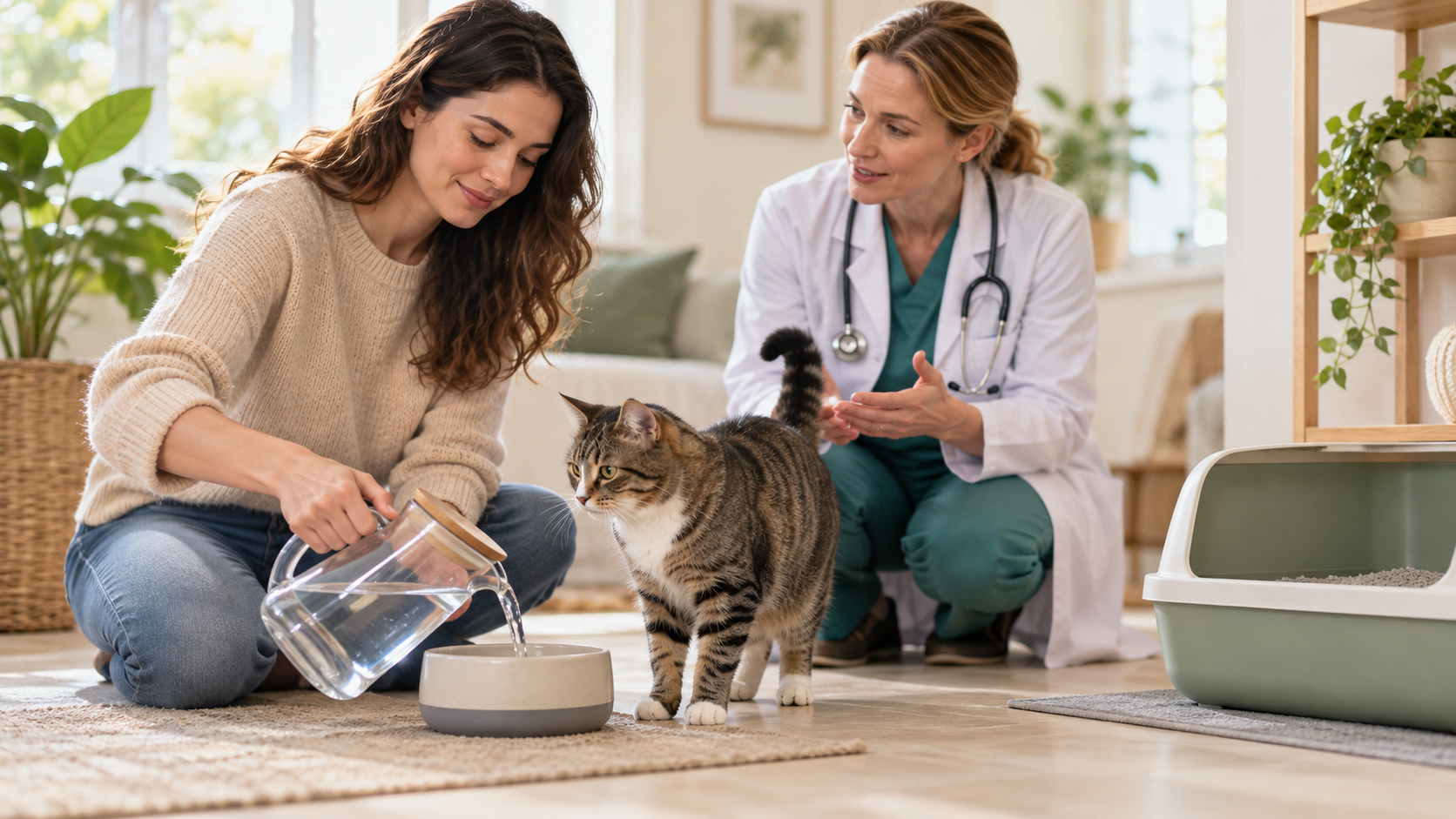
For a mild, one-off bout while you arrange a vet visit, a few gentle measures may help. Increase water intake by offering fresh water in several spots, trying a pet water fountain, or adding a little water to meals. Switch to or add wet food, which raises moisture in the diet. Encourage activity with short play sessions to keep the bowels moving, and make sure litter boxes are clean, low-sided, and easy to reach.
Any fiber, supplement, laxative, or stool softener should be vet-guided. The right choice and dose depend on the cause, and the wrong product can make things worse. Never give human laxatives, mineral oil, or enemas, as some are toxic or dangerous for cats. If you want help reviewing how much and what your cat eats, our cat feeding calculator can be a starting point for a conversation with your vet.
When to See a Vet
Occasional mild constipation that resolves within a day is often not serious. Book a veterinary appointment if your cat has not passed stool for more than 48 to 72 hours, is straining repeatedly, or shows vomiting, pain, a swollen belly, or lethargy. Constipation that keeps returning also needs a vet, since it can point to an underlying condition. For the emergency signs at the top of this page, above all a straining cat that cannot urinate, do not wait for an appointment.
Constipation often overlaps with other issues. Because dehydration is a frequent cause, our guide to cat dehydration is worth reading, and if hair seems to be part of the problem, see our cat hairballs guide. You can also browse the full cat health guides for related symptoms.
Frequently Asked Questions About Cat Constipation
Common questions about a constipated cat and when it is serious
How do I help my constipated cat?
Start by making sure your cat is drinking enough and getting moisture from food, since dehydration is a common cause. Adding or switching to wet food, providing fresh water in several spots, and encouraging gentle activity can all help. Any fiber supplement, laxative, or stool softener should only be used on your vet’s advice, because the wrong product or dose can make things worse. Never give human laxatives. If your cat has not passed stool in more than 48 to 72 hours, is straining repeatedly, vomiting, painful, or lethargic, contact your vet promptly rather than waiting.
What causes constipation in cats?
The most common causes are dehydration, hairballs, a low-fiber diet, obesity and low activity, and pain or arthritis that makes using the litter box uncomfortable. Stress or a litter box the cat dislikes can lead a cat to hold stool. In chronic or repeated cases, an underlying issue such as megacolon or another medical condition may be involved, which is why ongoing or severe constipation needs a veterinary exam rather than home treatment alone.
How long is too long for a cat not to poop?
Most cats pass stool about once a day. If your cat has not had a bowel movement for more than 48 to 72 hours, or is straining without producing anything, it is time to call your vet. Do not wait if straining comes with vomiting, obvious pain, a swollen or tender belly, or lethargy. Important: a cat, especially a male cat, straining in the litter box with little or no urine coming out may have a urinary blockage, not constipation. That is a life-threatening emergency, so seek emergency veterinary care immediately.
Are home remedies for cat constipation safe?
Some gentle measures, such as increasing water intake, adding wet food, and encouraging activity, are reasonable to try while you arrange a vet visit. Beyond that, be cautious. Do not give human laxatives, mineral oil, or enemas, as some are toxic or dangerous for cats and can cause serious harm. Fiber sources and stool softeners should be chosen and dosed by your vet, since the right approach depends on the cause. If simple steps do not help within a day or two, or your cat seems unwell, let your vet guide treatment.
Explore More Cat Health Guides
Understand your cat's symptoms and know when to call the vet.
Free cat printables
Keep these cat care guides handy
A rotating selection of practical cat guides chosen from our free printable library.Kitten Calorie Guide
Calorie targets by kitten age and weight.
Cat Quality of Life Checklist
Track the HHHHHMM quality-of-life measures.
Cat Body Condition Chart
A printable body condition reference for cats.