
Last updated: October 3, 2026
Cat Health
Cat Dehydration: Signs and What to Do
Dehydration in cats is usually a symptom of an underlying problem, not a standalone illness. Here is how to spot the signs at home, including the skin-tent test, what you can do for mild cases, and when your cat needs a vet.
This guide is general information, not veterinary advice. Every cat is different. If your cat is unwell or you are worried, contact your veterinarian, who can examine your cat and give advice for their specific situation.
Call your vet or an emergency clinic now if your cat has any of these
- Very lethargic, weak, or collapsed and unable to stand
- Ongoing vomiting and diarrhea that will not stop
- Sunken eyes with gums that are dry, tacky, or pale
- Refusing all food and water for more than a day
Moderate to severe dehydration needs veterinary fluids and cannot wait for a routine appointment.
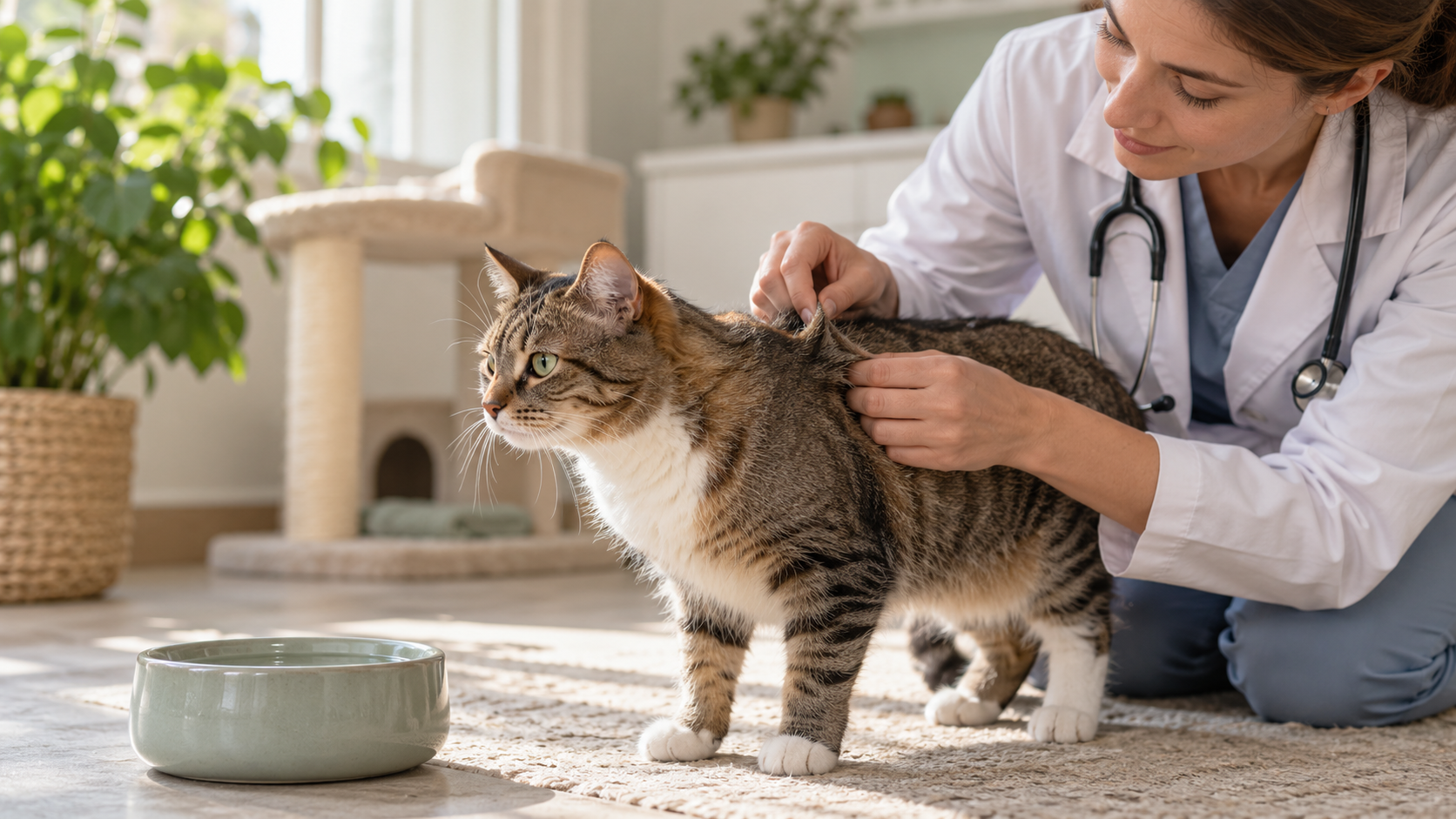
Signs of Dehydration in Cats
What to look for, from the skin-tent test to changes in energy and appetite
The skin-tent test
Gently lift the loose skin over your cat’s shoulders and let it go. In a well-hydrated cat the skin snaps back into place quickly. In a dehydrated cat it stays tented and settles back slowly. This is a quick home check, not a diagnosis, and older or very thin cats can give a less reliable result.
Tacky or dry gums
Press a finger gently against your cat’s gums. Healthy gums feel moist and slippery. Gums that feel dry, sticky, or tacky can point to dehydration. Pale gums alongside other signs are a reason to call your vet.
Sunken eyes and lethargy
As dehydration progresses, the eyes can look sunken or dull and your cat may become noticeably tired, withdrawn, or reluctant to move. Lethargy is an important warning sign that the problem is more than mild.
Reduced appetite
A dehydrated cat often eats less and may lose interest in food and water together. Because reduced appetite frequently travels with the underlying cause, it is worth noting alongside the other signs when you speak to your vet.
Cause, What It Looks Like, and What to Do
Use this as a starting point, not a diagnosis. Your vet can confirm the cause.
| Possible cause | What it often looks like | What to do |
|---|---|---|
| Not drinking enough | Reduced water intake, often in cats fed only dry food or with limited water access | Offer fresh water in several spots and add wet food. If your cat still will not drink or seems unwell, call your vet. |
| Vomiting or diarrhea | Fluid loss alongside repeated vomiting, loose stools, tacky gums, or low energy | Ongoing vomiting or diarrhea can dehydrate a cat quickly. See your vet, and treat it as urgent if it does not stop. |
| Kidney disease | Increased thirst and urination, weight loss, and poor appetite, often in older cats | Needs veterinary diagnosis and management. Dehydration here is a sign of an underlying condition, not the whole problem. |
| Diabetes | Excessive thirst and urination, increased appetite with weight loss | Requires veterinary testing and treatment. Persistent dehydration warrants a prompt exam. |
| Hot weather | Panting, lethargy, or seeking cool spots during heat, especially with limited water | Provide shade, cool fresh water, and airflow. Signs of heat stress or collapse are an emergency. |
How to Hydrate a Cat at Home for Mild Cases
If your cat is only mildly dehydrated and is still bright, alert, and eating, you can encourage more drinking at home. Offer fresh water in several bowls around the house so water is always nearby, try a pet water fountain since many cats prefer moving water, and add wet food or a splash of water to meals to boost water intake. Keeping water away from the litter box and food, and cleaning bowls daily, can also help.
Do not try to force water into your cat’s mouth with a syringe, as it can be inhaled into the lungs. Remember that dehydration is usually a symptom of an underlying problem rather than the whole story, so if your cat stays dehydrated, will not drink, or seems unwell, it needs a vet. Moderate to severe dehydration needs veterinary fluids and cannot be corrected with a water bowl. If your cat is off its food, our cat feeding calculator can help you understand normal intake once your vet has ruled out illness.
When to See a Vet
Because dehydration usually signals an underlying condition, it is worth a veterinary appointment whenever it is more than very mild or does not resolve quickly once your cat drinks more. Book a visit if the skin-tent test is clearly slow, the gums feel dry, or your cat is drinking or urinating more than usual, losing weight, or off its food. For the emergency signs listed at the top of this page, do not wait for an appointment.
Dehydration often appears alongside other symptoms. If your cat has loose stools, see our guide to cat diarrhea, and if it is being sick, our guide to why your cat is throwing up may help. In older cats, increased thirst and dehydration can be linked to kidney disease, which needs veterinary management.
Frequently Asked Questions About Cat Dehydration
Common questions about spotting dehydration and hydrating a cat
How do I know if my cat is dehydrated?
The quickest home check is the skin-tent test. Gently lift the loose skin over your cat’s shoulders and let go. In a hydrated cat the skin snaps back quickly, while in a dehydrated cat it stays tented and settles back slowly. Other signs include tacky or dry gums, sunken eyes, lethargy, and reduced appetite. These checks are a rough guide only, so if you are worried, contact your vet, who can assess how dehydrated your cat really is.
How do I hydrate a dehydrated cat?
For a mild case in a cat that is otherwise bright and eating, you can encourage drinking at home: offer fresh water in several bowls around the house, try a pet water fountain, and add wet food or a little water to meals to boost water intake. Do not force water into your cat’s mouth, as it can be inhaled. Because dehydration is usually a symptom of an underlying problem, and moderate to severe dehydration needs veterinary fluids, a cat that stays dehydrated, will not drink, or seems unwell should be seen by a vet.
What causes dehydration in cats?
Common causes include simply not drinking enough, and fluid loss from vomiting or diarrhea. It is also frequently linked to underlying conditions such as kidney disease and diabetes, which are common in older cats, and to hot weather. Because dehydration is usually a symptom rather than a standalone problem, a vet visit helps find and treat the real cause.
When is cat dehydration an emergency?
Seek veterinary care immediately if your cat is very lethargic or collapsed, or has ongoing vomiting and diarrhea that will not stop. Moderate to severe dehydration needs veterinary fluids and cannot be fixed with a water bowl at home. When in doubt, call your vet or an emergency clinic rather than waiting.
Explore More Cat Health Guides
Understand your cat's symptoms and know when to call the vet.
Free cat printables
Keep these cat care guides handy
A rotating selection of practical cat guides chosen from our free printable library.Kitten Growth Chart
Week-by-week weight and development milestones.
Cat Body Condition Chart
A printable body condition reference for cats.
Cat Pregnancy Timeline
A week-by-week kittening calendar and checklist.