
Last updated: October 3, 2026
Cat Health
Cat Hairballs: Causes, Prevention, and When to Worry
Cats swallow loose hair every time they groom. Most of it passes right through, but some comes back up as a hairball. Here is why they happen, what counts as normal, how to cut them down, and the signs that mean you should call your vet.
This guide is general information, not veterinary advice. Every cat is different. If your cat is unwell or you are worried, contact your veterinarian, who can examine your cat and give advice for their specific situation.
Call your vet or an emergency clinic now if your cat has any of these
- Repeated retching or gagging that brings up nothing, over and over
- A distended, hard, or painful belly
- Refusing food, or not eating for more than a day
- Constipation, straining in the litter box, or no stool
- Lethargy, weakness, or hiding away
These can signal an intestinal blockage, which is a life-threatening emergency and cannot wait for a routine appointment.
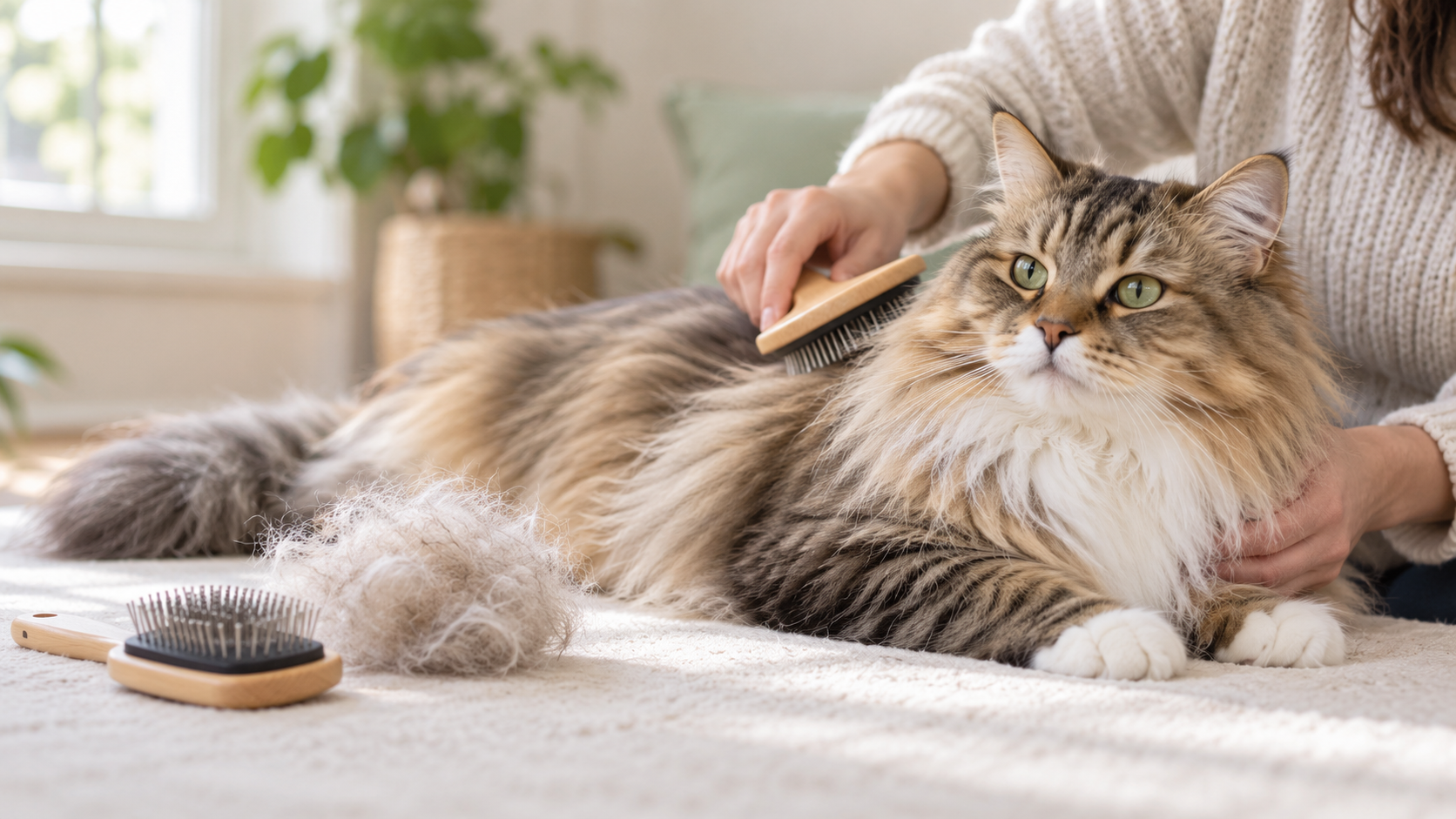
Why Cats Get Hairballs
From normal grooming to signs that need a closer look
Grooming and swallowed hair
A cat’s tongue is covered in tiny backward-facing barbs that catch loose and dead hair during grooming. Most of that hair is swallowed and passes harmlessly through the gut. When some of it collects in the stomach instead of moving on, the cat brings it back up as a hairball.
What is normal
An occasional hairball, roughly once or twice a month for many cats, is generally considered normal. Long-haired cats and heavy groomers tend to have them a little more often, especially during shedding season. A short bout of retching that ends in a hairball, after which your cat is bright and eating normally, is usually not a cause for concern.
When it is concerning
Frequent hairballs, repeated retching that produces nothing, or hairballs alongside appetite loss, lethargy, weight loss, or constipation are not routine. They can point to a digestive problem, over-grooming from stress or skin disease, or a blockage. These signs deserve a veterinary check rather than waiting.
Over-grooming and skin issues
A sudden rise in hairballs can mean your cat is swallowing more hair than usual. Stress, allergies, fleas, and skin conditions can all drive over-grooming. Treating the underlying cause, with your vet, often reduces both the grooming and the hairballs.
A Simple Hairball Prevention Checklist
Small, steady habits reduce how much hair your cat swallows. Check any new diet or remedy with your vet first.
| Step | How to do it | Why it helps |
|---|---|---|
| Brush regularly | Comb out loose hair before your cat swallows it, more often for long-haired cats and during shedding season | Less hair swallowed means fewer hairballs form in the first place. |
| Feed a hairball-control diet | Ask your vet about hairball-control cat food, which is higher in fiber to help hair move through the gut | Helps swallowed hair pass in the stool instead of coming back up. |
| Support good hydration | Offer fresh water, consider a pet water fountain, and ask your vet about adding wet food | Good hydration keeps the digestive tract moving and stool comfortable to pass. |
| Use vet-recommended remedies | Malt or petroleum-based hairball pastes and lubricants, used only as your vet advises | Can ease the passage of hair, but should not replace a vet visit for frequent hairballs. |
| Watch grooming habits | Note over-grooming, which can be driven by stress, allergies, fleas, or skin problems | Reducing excess grooming lowers how much hair is swallowed. |
How to Help a Cat With Hairballs
The best approach is to stop hairballs before they form. Regular brushing is the single most useful habit, since every bit of loose hair on the comb is hair your cat does not swallow. Long-haired cats and heavy shedders benefit from daily grooming, and a good grooming tool makes it quicker.
Diet and hydration do the rest. A hairball-control cat food is higher in fiber to help swallowed hair move through the gut, and steady hydration from fresh water, a pet fountain, or added wet food keeps digestion moving. Vet-recommended malt or petroleum-based hairball pastes can lubricate the passage of hair, but they are a supporting tool, not a fix for frequent hairballs. Getting your cat to a healthy weight and feeding the right amount also supports good digestion. You can estimate portions with our cat feeding calculator. For a closer look at the options, from gels and diets to grooming, see our guide to cat hairball remedies. Before changing food or starting any remedy, check with your vet.
When to See a Vet
An occasional hairball in an otherwise happy, eating cat is usually nothing to worry about. Book a veterinary appointment if hairballs become frequent, if your cat retches often without bringing anything up, or if they come with reduced appetite, weight loss, low energy, constipation, or a change in grooming. For the emergency signs listed at the top of this page, especially repeated unproductive retching with a swollen belly or a cat that will not eat, do not wait for an appointment.
Hairballs can be confused with other problems. If your cat is coughing or retching but not producing a hairball, see our guide to why your cat is coughing. If your cat is bringing up food or fluid rather than hair, our guide to a cat throwing up may help. For more symptom guides, visit the cat health guides.
Frequently Asked Questions About Cat Hairballs
Common questions about why cats get hairballs and when to worry
How do I help my cat with hairballs?
The most effective help is prevention. Brush your cat regularly to remove loose hair before it is swallowed, ask your vet about a hairball-control diet that is higher in fiber, and support good hydration with fresh water and, if your vet agrees, some wet food. Vet-recommended hairball remedies such as malt or petroleum-based pastes can help hair pass through, but use them only as your vet advises. If your cat is having frequent hairballs, or retching without producing anything, see your vet rather than relying on remedies alone.
How often do cats get hairballs?
For many cats an occasional hairball, roughly once or twice a month, is considered normal, though there is a lot of variation. Long-haired cats and heavy groomers tend to have them more often, especially during shedding season. What matters more than a set number is a change from your cat’s usual pattern. Hairballs that become frequent, or that appear several times a week, are worth discussing with your vet.
When are hairballs a problem?
Hairballs are a problem when they become frequent, when your cat retches repeatedly and brings up nothing, or when they come with other signs such as appetite loss, lethargy, constipation, weight loss, or a swollen belly. Repeated unproductive retching can signal that a hairball or something else is blocking the digestive tract, which is a medical emergency. When in doubt, contact your veterinarian.
Can hairballs cause a blockage in cats?
Rarely, a hairball can grow too large to pass and cause an intestinal blockage. Warning signs include repeated unproductive retching or gagging, a distended or painful belly, refusing food, constipation or straining in the litter box, and lethargy. A blockage is a life-threatening emergency, so if you see these signs, call your vet or an emergency clinic right away.
Do certain cats get more hairballs than others?
Yes. Long-haired breeds, cats that shed heavily, and fastidious groomers swallow more hair and tend to have more hairballs. Cats that over-groom because of stress, allergies, fleas, or skin problems can also have more. Kittens usually have very few, and a sudden rise in hairballs in an adult cat is a reason to look at diet, grooming, and skin health with your vet.
Explore More Cat Health Guides
Understand your cat's symptoms and know when to call the vet.
Free cat printables
Keep these cat care guides handy
A rotating selection of practical cat guides chosen from our free printable library.Cat Pregnancy Timeline
A week-by-week kittening calendar and checklist.
Cat Body Condition Chart
A printable body condition reference for cats.
Cat Quality of Life Checklist
Track the HHHHHMM quality-of-life measures.