
Last updated: October 3, 2026
Cat Health
Cat Diarrhea: Causes and Care
Diarrhea in cats can be a passing upset from a diet change or stress, or a sign of parasites, infection, or a longer-term condition. Here is how to read the clues, care gently for a bright cat at home, and know the red flags that mean it is time to call your vet.
This guide is general information, not veterinary advice. Every cat is different. If your cat is unwell or you are worried, contact your veterinarian, who can examine your cat and give advice for their specific situation.
Call your vet or an emergency clinic now if your cat has any of these
- Profuse or bloody diarrhea, or black, tarry stool
- Diarrhea together with repeated vomiting, lethargy, or collapse
- Signs of dehydration, such as tacky gums, sunken eyes, or skin that is slow to spring back
- Any diarrhea in a young kitten, or in a very old, frail, or already-sick cat
Cats, and especially kittens, can lose fluid and become dangerously dehydrated quickly, so these signs cannot wait for a routine appointment.
Common Causes of Diarrhea in Cats
What tends to be behind loose stool, from mild to serious
A sudden diet change
Switching food, brands, or flavors too quickly is one of the most common reasons a cat gets loose stool. The gut needs time to adjust. Whenever you change diet, mix in the new food gradually over about 7 to 10 days, and go back a step if the stool softens.
Food intolerance and infections
Some cats react to certain ingredients with recurring soft stool. Bacterial and viral infections can also cause diarrhea, often alongside lethargy, fever, or vomiting. Infections can make a cat unwell quickly, so these are best assessed by your vet rather than managed by trial and error at home.
Intestinal parasites
Worms and other intestinal parasites are a frequent cause of diarrhea, particularly in kittens and outdoor cats. You may see mucus, a bloated belly, or visible worms. Parasites need veterinary testing and the correct treatment, as the right product depends on the parasite.
Inflammatory bowel disease and stress
Longer-running or repeated diarrhea, sometimes with weight loss or vomiting, can point to inflammatory bowel disease, which needs veterinary diagnosis and ongoing care. Stress from a move, a new pet, travel, or a change in routine can also loosen the stool of an otherwise healthy cat.
Cause, What It Looks Like, and What to Do
Use this as a starting point, not a diagnosis. Your vet can confirm the cause.
| Possible cause | What it often looks like | What to do |
|---|---|---|
| Sudden diet change | Loose stool starting soon after a new food, treat, or brand switch | Return to the old food and transition more slowly over 7 to 10 days. See your vet if it does not settle. |
| Food intolerance or sensitivity | Recurring soft stool, sometimes with gas, linked to certain foods | Your vet can guide a diet trial. Do not keep experimenting with human foods on your own. |
| Intestinal parasites | Persistent diarrhea, sometimes with visible worms, mucus, or a bloated belly | Needs veterinary testing and the correct deworming treatment. Common in kittens. |
| Bacterial or viral infection | Sudden diarrhea, often with lethargy, fever, or vomiting at the same time | See your vet promptly. Young, old, or unwell cats can decline quickly. |
| Inflammatory bowel disease | Long-running or repeated diarrhea, sometimes with weight loss or vomiting | Requires veterinary diagnosis and ongoing management. Not something to treat at home. |
| Stress or change in routine | Soft stool around a move, new pet, travel, or other upheaval | Often eases as your cat settles. If it lasts beyond a day or two, check with your vet. |
What Color and Consistency Can Hint At
The look of the stool can give your vet useful clues, but these are clues, not diagnoses, and they should never replace an exam. Watery diarrhea moves through fast and raises the risk of dehydration. Mucus, the slimy coating you might see, often points to irritation in the lower bowel. Black and tarry stool can mean digested blood from higher up in the gut, while fresh red blood tends to come from lower down.
Any black tarry stool or visible blood is a reason to call your vet rather than wait and watch. The most helpful thing you can do is note when the diarrhea started, how often it is happening, and whether anything changed recently, then share that with your vet. A clear photo, or a small fresh sample if your vet asks for one, tells them far more than trying to interpret the stool yourself.
Gentle Home Care Versus Vet Red Flags
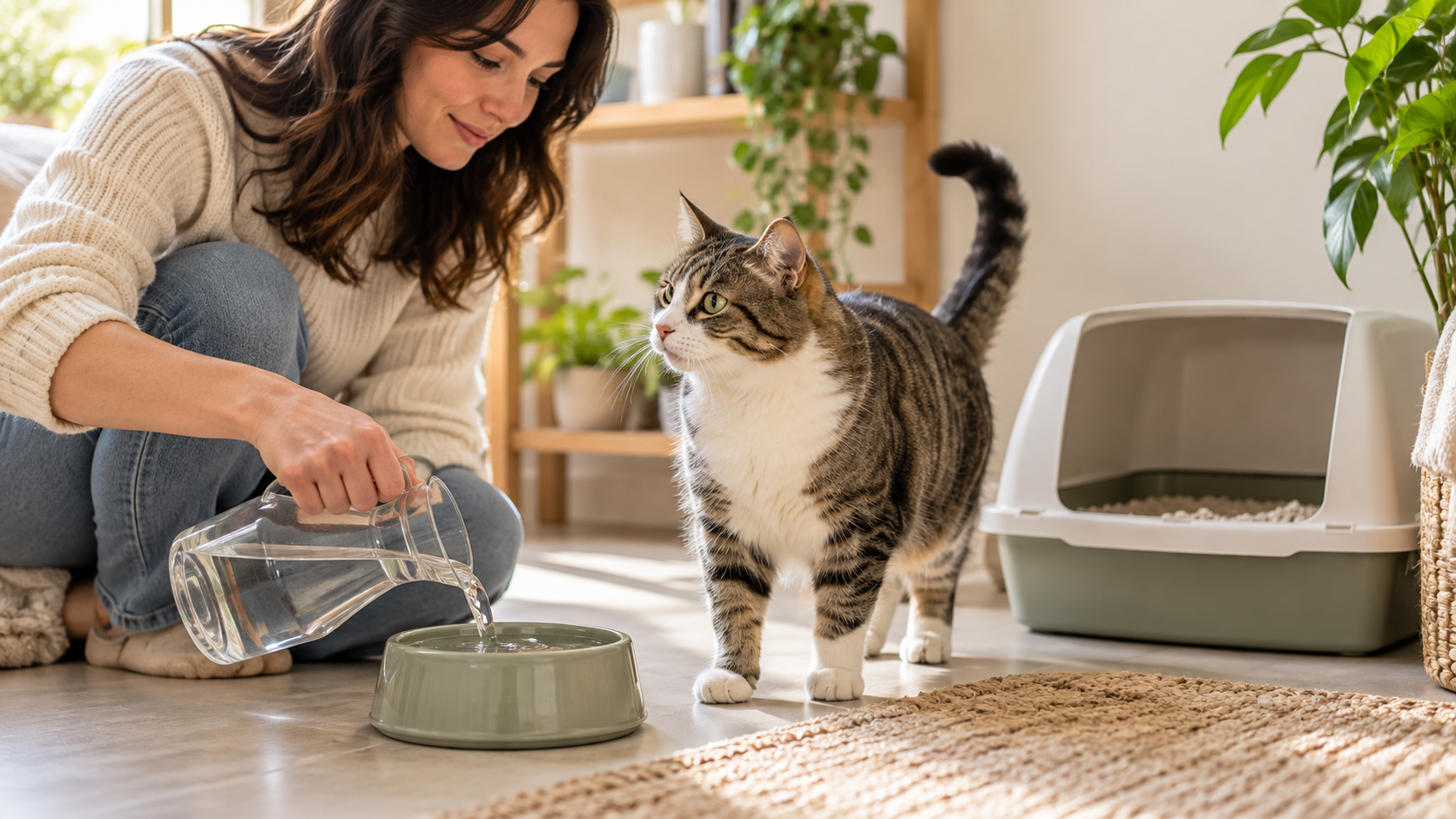
If your cat is otherwise bright, alert, eating, and drinking, and there is no blood, gentle home care can be reasonable for a short time. Keep fresh water available at all times so your cat can stay hydrated. Feed a bland, vet-recommended diet in small amounts rather than a big meal, and hold off on treats and rich foods for now. When you return to normal food, do it gradually so you do not restart the upset.
Do not give your cat human anti-diarrhea medicine. Several common human products are toxic to cats and can cause serious harm. If you think your cat needs medication, call your vet, who can recommend something safe at the right dose for a cat.
Stop home care and contact your veterinarian if you notice any red flags: blood in the stool, black tarry stool, diarrhea lasting more than 24 to 48 hours, vomiting at the same time, lethargy, or signs of dehydration. Ongoing diarrhea with vomiting is a common pairing that deserves a prompt call, since your cat can lose fluid from both ends at once.
When to See a Vet
One soft stool in a cat who is otherwise playful and eating well is often nothing to worry about. Book a veterinary appointment if the diarrhea keeps coming back over more than a day or two, or comes with any of these: blood or black tarry stool, vomiting, reduced appetite, weight loss, low energy, or signs of dehydration. For the emergency signs listed at the top of this page, and for any diarrhea in a kitten, do not wait for an appointment.
Diarrhea often appears alongside other symptoms. If your cat is also being sick, our guide to a cat throwing up may help, and if you are seeing warning signs of fluid loss, read about cat dehydration. When a stomach upset puts your cat off their food, see why your cat is not eating. Once your cat is well again, our cat feeding calculator can help you get portions back on track.
Frequently Asked Questions About Cat Diarrhea
Common questions about why cats get diarrhea and when it is serious
What causes diarrhea in cats?
Common causes of diarrhea in cats include a sudden change in diet, food intolerance, intestinal parasites, bacterial or viral infections, inflammatory bowel disease, and stress. A single soft stool in an otherwise bright, playful cat is often minor. Diarrhea that lasts more than a day or two, or comes with blood, vomiting, lethargy, or signs of dehydration, needs a veterinary exam because the cause and the right treatment can only be confirmed by your vet.
How do I treat cat diarrhea at home?
For a cat who is otherwise bright, eating, and drinking, gentle home care means making sure fresh water is always available, feeding a bland vet-recommended diet in small amounts, and avoiding sudden food changes. Introduce any new food gradually. Do not give human anti-diarrhea medicine, as some of these products are toxic to cats and can be dangerous. If the diarrhea does not clearly improve within a day or so, or any red flag appears, contact your veterinarian rather than continuing to manage it at home.
When should I worry about cat diarrhea?
Worry and call your vet if you see blood, black tarry stool, diarrhea that lasts more than 24 to 48 hours, vomiting at the same time, lethargy, or signs of dehydration such as tacky gums or skin that is slow to spring back. Profuse or bloody diarrhea combined with lethargy or dehydration, and any diarrhea in a young kitten, should be treated as an emergency. When in doubt, it is always safer to call your vet.
What can stool color and consistency tell me?
Stool clues can help your vet, but they are not a diagnosis. Watery stool suggests rapid transit and a risk of fluid loss. Mucus can point to irritation in the lower bowel. Black, tarry stool may mean digested blood from higher in the gut, and fresh red blood usually comes from lower down. Any black tarry or bloody stool is a reason to call your vet. Taking a photo, or a small fresh sample if asked, helps your vet far more than trying to interpret it yourself.
Can I give my cat human anti-diarrhea medicine?
No. Do not give your cat any human anti-diarrhea or stomach medicine unless your veterinarian has specifically told you to. Several common human products are toxic to cats and can cause serious harm. If you feel your cat needs medication, call your vet, who can recommend something that is safe for cats at the correct dose.
Explore More Cat Health Guides
Understand your cat's symptoms and know when to call the vet.
Free cat printables
Keep these cat care guides handy
A rotating selection of practical cat guides chosen from our free printable library.Kitten Growth Chart
Week-by-week weight and development milestones.
Cat Feeding Guide
Portions by weight, age, and life stage.
Cat Body Condition Chart
A printable body condition reference for cats.