
Last updated: October 3, 2026
Cat Health
Cat Hairball Remedies
The occasional hairball is normal, but when they happen too often the right remedy can genuinely help. This guide covers the treatments that actually work, from lubricant gels and hairball-control diets to grooming, omega oils, and hydration, how to use each one safely, and the point at which a remedy is no longer the answer. For why cats get hairballs and how to prevent them in the first place, see our cat hairballs overview.
This guide is general information, not veterinary advice. Every cat is different. Check any new diet, supplement, or remedy with your vet first, and if your cat is unwell or you are worried, contact your veterinarian, who can examine your cat and advise for their specific situation.
Call a vet or emergency clinic now, not a remedy, if your cat has any of these
- Repeated, unproductive retching that brings up nothing, over and over
- A swollen, hard, or painful belly
- Refusing food, or not eating for more than a day
- Constipation, straining in the litter box, or no stool
- Lethargy, weakness, or hiding away
These can signal an intestinal blockage, which is a life-threatening emergency. It needs a vet right away, not a hairball remedy.
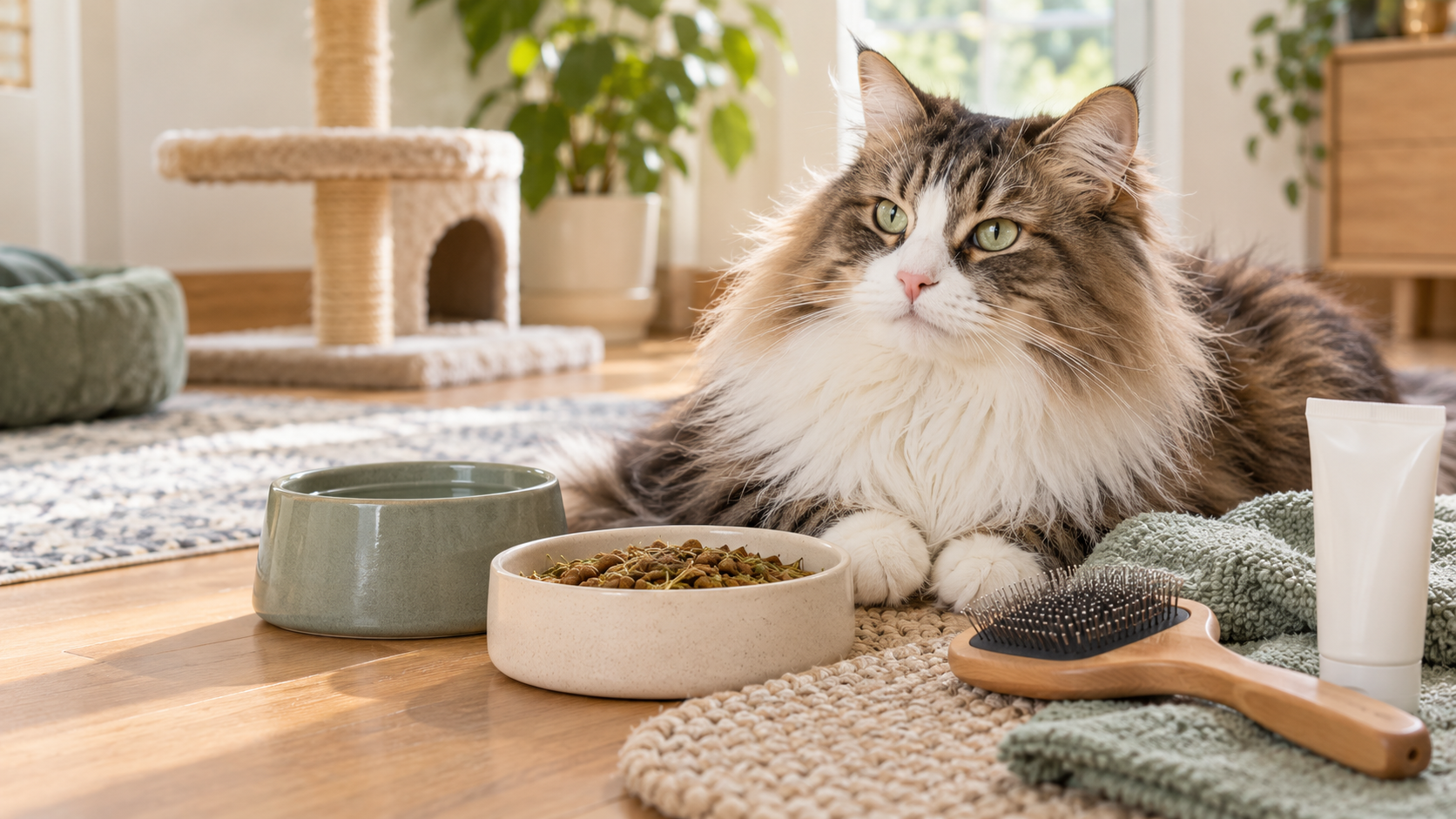
Types of Hairball Remedies
The tools that help, and what each one is actually for
Hairball gels and lubricants
Petroleum- or malt-based lubricant laxatives that help swallowed hair slide through the gut and pass in the stool. They are given as a treat or smeared on a paw for the cat to lick off, and are meant for occasional use as your vet advises rather than as a daily habit.
Fiber and hairball-control diets
Higher-fiber foods, including hairball-control cat foods, help move swallowed hair through the digestive tract so it passes instead of coming back up. Switch foods gradually, and use our cat feeding calculator to get the daily portions right.
Grooming and deshedding
The most effective remedy is prevention. Regular brushing removes loose hair before your cat swallows it, so it never has the chance to form a hairball. Long-haired cats and heavy shedders benefit most, and daily grooming makes the biggest difference during shedding season.
Skin, coat and hydration support
Omega oils support a healthier coat and less shedding, while good hydration keeps digestion moving so hair passes more easily. Fresh water, a pet water fountain, and wet food all help, and a vet-approved fish oil can be added to food.
Hairball Remedies Compared
What each remedy does and how to use it safely. Check any new food, supplement, or product with your vet first.
| Remedy | How it helps | How to use / cautions |
|---|---|---|
| Hairball gel or paste | Lubricates swallowed hair so it slides through the gut and passes in the stool | Give as directed and do not overuse. Heavy long-term use of petroleum-based lubricants may affect the absorption of some nutrients, so check with your vet. |
| Hairball-control diet | Higher fiber moves swallowed hair through the digestive tract | Switch foods gradually over a week or so, and ask your vet whether a prescription diet is a better fit for your cat. |
| Regular brushing | Removes loose hair before your cat can swallow it, so fewer hairballs form | Brush more during shedding season, and daily for long-haired cats. This is prevention, and the most effective remedy of all. |
| Omega-3 or coat support | Supports a healthier coat and can reduce how much your cat sheds | Pour a vet-approved product over food. Ask your vet about the right one and the right amount for your cat. |
| Hydration | Keeps digestion moving so hair passes more easily | Add wet food, offer fresh water, and consider a pet water fountain to encourage drinking. |
Building a Simple Hairball Routine
The remedies above work best together, in a sensible order. Start with the one that prevents the most hairballs: regular brushing, stepped up during shedding season and done daily for long-haired cats. Every bit of loose hair on the comb is hair your cat will not swallow. Pair that with a higher-fiber or hairball-control diet and steady hydration from fresh water, a fountain, or wet food, so the hair that is swallowed keeps moving through the gut instead of collecting in the stomach.
Keep a hairball gel as an occasional backup rather than the centerpiece, and add a vet-approved omega supplement if your cat sheds heavily. Getting your cat to a healthy weight supports good digestion too, and you can check where your cat sits with our cat weight calculator. If a steady routine like this is already in place and hairballs are still frequent, that is your cue to involve the vet.
How to Use a Hairball Gel Safely
Hairball gels and pastes can be genuinely useful, but they work best used sparingly. Give only the amount the label or your vet recommends, offered as a treat or smeared on a paw so your cat licks it off. Treat them as an occasional aid, not a daily habit, unless your vet has specifically told you otherwise.
A gel is also not a fix for frequent hairballs. If your cat needs one often, that points to a bigger question about grooming, diet, or an underlying skin or digestive issue, and the better step is a vet visit. Heavy, long-term use of petroleum-based lubricants may interfere with how the gut absorbs some nutrients, which is another reason to keep them occasional and to check with your vet.
Home Remedies: What Helps and What to Avoid
A few gentle home measures can support the remedies above. A small amount of plain canned pumpkin (not pie filling) adds a little fiber that can help hair move through, and a small dose of vet-approved fish oil can improve the coat and cut down shedding. Introduce anything new slowly and in small amounts.
Some popular home remedies are best avoided. Do not give butter, large amounts of oil, mineral oil by mouth, or any human laxative. These can be unsafe, and mineral oil in particular is nearly tasteless and can be accidentally inhaled into the lungs, which is dangerous. Always check with your vet first before trying any home remedy, especially if your cat has another health condition.
When Remedies Are Not Enough
Remedies are for the occasional hairball in an otherwise healthy, happy cat. They are not a substitute for veterinary care. If hairballs become frequent, if your cat retches repeatedly without producing anything, or if you see any of the emergency signs at the top of this page, the answer is a vet visit, not more remedies.
It also helps to be sure hairballs are really the problem. For the full picture on causes, prevention, and what counts as normal, see our cat hairballs overview. If your cat is bringing up food or fluid rather than hair, our guide to a cat throwing up may fit better, and if the trouble is at the other end, our guide to cat constipation can help. For more symptom guides, visit the cat health guides.
Frequently Asked Questions About Cat Hairball Remedies
Common questions about gels, diets, home remedies, and when to see a vet
What is the best hairball remedy for cats?
There is no single best remedy, because the most effective approach is usually a combination. Regular brushing to remove loose hair before it is swallowed does the most good, and it pairs well with a higher-fiber hairball-control diet, steady hydration, and, when your vet agrees, a hairball gel to help hair pass. For a cat with frequent hairballs, the best move is a vet visit to find the cause rather than piling on more products.
How do cat hairball gels work?
Hairball gels and pastes are mild lubricant laxatives, usually petroleum- or malt-based. They coat the swallowed hair and the gut so the hair slides through the digestive tract and passes in the stool instead of collecting in the stomach and coming back up. They are given as a treat or smeared on a paw for the cat to lick off. They ease the passage of hair but do not stop a cat from swallowing it, which is why grooming still matters most.
How often can I give my cat a hairball remedy?
Follow the product label and your vet’s advice rather than a fixed daily habit. Many hairball gels are meant for occasional or short-term use, not every day forever, because heavy long-term use of petroleum-based lubricants may interfere with the absorption of some nutrients. If your cat needs a remedy often, treat that as a signal to see your vet and look at diet and grooming instead of simply giving more.
Do home remedies for hairballs work?
Some gentle home measures can help. A small amount of plain canned pumpkin adds fiber, and a little vet-approved fish oil can support the coat and reduce shedding. But several popular home remedies are risky. Avoid giving butter, large amounts of oil, mineral oil by mouth, or any human laxative, because these can be unsafe, and mineral oil in particular can be inhaled into the lungs. Check with your vet before trying any home remedy.
When should I see a vet about hairballs?
See your vet if hairballs become frequent, if your cat retches repeatedly without bringing anything up, or if they come with appetite loss, lethargy, weight loss, or constipation. Repeated unproductive retching, a swollen or painful belly, or refusing food can signal an intestinal blockage, which is a life-threatening emergency that needs a vet or emergency clinic right away, not a remedy.
Explore More Cat Health Guides
Understand your cat's symptoms and know when to call the vet.
Free cat printables
Keep these cat care guides handy
A rotating selection of practical cat guides chosen from our free printable library.Cat Quality of Life Checklist
Track the HHHHHMM quality-of-life measures.
Kitten Calorie Guide
Calorie targets by kitten age and weight.
Cat Body Condition Chart
A printable body condition reference for cats.