
Last updated: October 3, 2026
Cat Health
Why Is My Cat Coughing?
Coughing in cats can be as simple as a hairball or a sign of something that needs treatment, like feline asthma or a respiratory infection. Here is how to read the signs, tell a cough from gagging, and know when it is an emergency.
This guide is general information, not veterinary advice. Every cat is different. If your cat is unwell or you are worried, contact your veterinarian, who can examine your cat and give advice for their specific situation.
Call your vet or an emergency clinic now if your cat has any of these
- Breathing with an open mouth, or fast or labored breathing while resting
- Blue, grey, or very pale gums or tongue
- Wheezing with obvious distress, or a sudden coughing fit that will not stop
- Collapse, extreme weakness, or unresponsiveness
These can mean your cat is struggling to get enough oxygen and cannot wait for a routine appointment.
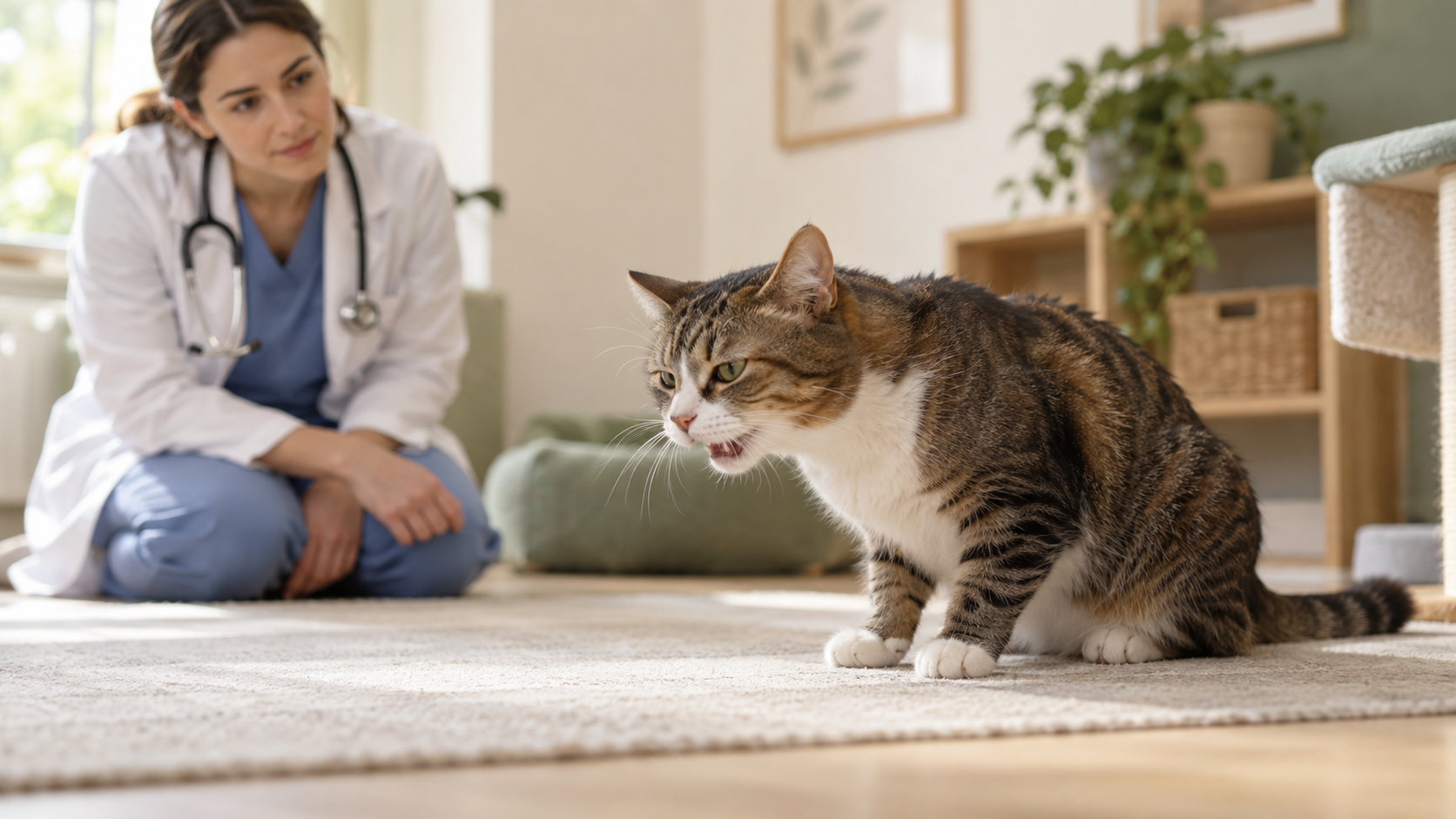
Common Causes of Coughing in Cats
What tends to be behind a cough, from mild to serious
Hairballs
Cats groom constantly and swallow loose hair, which can trigger coughing or retching as they try to bring up a hairball. The occasional hairball is normal. Frequent hairballs, or repeated retching that produces nothing, deserve a vet visit and possibly a diet or grooming change.
Feline asthma
Asthma is one of the most common causes of a recurring dry cough in cats. Cats often crouch low with the neck stretched out during an episode, and some wheeze. Asthma is managed with veterinary treatment, and a sudden severe attack with open-mouth breathing is an emergency.
Respiratory infection
Viral or bacterial infections of the airways can cause coughing alongside sneezing, runny eyes or nose, and sometimes a reduced appetite. Many mild cases improve with supportive care, but see your vet if your cat stops eating, becomes lethargic, or does not improve.
Heartworm, parasites, and irritants
Heartworm and lungworm can cause a persistent cough and need veterinary testing. Inhaled irritants like dust, smoke, or aerosol sprays can cause a short bout of coughing that usually settles once the cat is away from the trigger.
Cause, What It Looks Like, and What to Do
Use this as a starting point, not a diagnosis. Your vet can confirm the cause.
| Possible cause | What it often looks like | What to do |
|---|---|---|
| Hairballs | Coughing or retching that ends in bringing up a hairball or nothing at all | Usually mild if occasional. Frequent hairballs or retching with nothing produced warrants a vet check. |
| Feline asthma | Recurrent dry cough, often a crouched posture with neck extended, sometimes wheezing | Needs veterinary diagnosis and management. Sudden open-mouth breathing is an emergency. |
| Upper respiratory infection | Cough with sneezing, nasal or eye discharge, sometimes reduced appetite | See your vet, especially if your cat stops eating or becomes lethargic. |
| Heartworm or parasites | Persistent cough, sometimes with weight loss or reduced energy | Requires veterinary testing. Prevention matters in at-risk areas. |
| Inhaled irritant | Short bout of coughing after dust, smoke, spray, or a foreign particle | Often settles quickly. If coughing persists or worsens, contact your vet. |
Coughing, Gagging, or Vomiting: How to Tell the Difference
These look similar but point to different problems, so it helps to watch closely. A cough is a sharp sound from the chest, usually with the body held low and the neck stretched forward, and normally brings up nothing. Gagging and retching involve the throat and stomach and may produce a hairball or a little fluid. Vomiting brings up food or yellow bile.
The single most useful thing you can do is record a short video of an episode on your phone. Cats rarely perform on cue at the clinic, and a clip helps your vet tell a cough from a hairball at a glance. Note how often it happens, how long each episode lasts, and anything that seems to trigger it.
When to See a Vet
A single cough after a dusty room or a hairball is usually nothing to worry about. Book a veterinary appointment if the cough keeps coming back over more than a day or two, sounds wet or harsh, or comes with any of these: sneezing or nasal and eye discharge, reduced appetite, weight loss, low energy, or a change in breathing. For the emergency signs listed at the top of this page, do not wait for an appointment.
Coughing sometimes appears alongside other symptoms. If your cat is also off their food, see why your cat is not eating, and if the cough follows sneezing, our guide to cat sneezing and upper respiratory issues may help. Frequent hairball-related coughing is covered in our cat hairballs guide.
Frequently Asked Questions About Cat Coughing
Common questions about why cats cough and when it is serious
Why is my cat coughing?
The most common causes of coughing in cats are hairballs, feline asthma, and upper respiratory infections. Less often it can signal heartworm, parasites, or an inhaled irritant. A single short cough after dust or a hairball is usually minor, but a cough that repeats over days, or comes with sneezing, discharge, appetite loss, or breathing changes, should be checked by a vet.
Cat coughing but no hairball, what does it mean?
A dry cough with no hairball is more likely to be respiratory than digestive. Feline asthma is a common cause of a recurring dry cough, often with a crouched posture and neck stretched forward. Respiratory infections and irritants can also cause it. Because a productive-looking cough that never brings anything up can point to airway disease, it is worth a veterinary exam rather than waiting.
When is cat coughing an emergency?
Treat it as an emergency and seek veterinary care immediately if your cat is breathing with an open mouth, breathing fast or with visible effort at rest, has blue, grey, or very pale gums, is wheezing and distressed, or collapses. These signs can mean your cat is not getting enough oxygen and cannot wait.
How can I tell a cough from gagging or vomiting?
A cough is a sharp sound from the chest, often with the body low and the neck extended, and usually brings up nothing. Gagging and retching involve the throat and stomach and may produce a hairball or fluid. Vomiting brings up food or bile. Filming a short clip of the episode on your phone helps your vet tell them apart.
Is coughing in cats contagious to other pets?
It depends on the cause. Coughs from asthma, heartworm, or an inhaled irritant are not contagious. Coughs linked to some respiratory infections can spread between cats, so keep a sneezing, coughing cat separate from other cats and see your vet for a diagnosis.
Explore More Cat Health Guides
Understand your cat's symptoms and know when to call the vet.
Free cat printables
Keep these cat care guides handy
A rotating selection of practical cat guides chosen from our free printable library.Cat Pregnancy Timeline
A week-by-week kittening calendar and checklist.
Kitten Calorie Guide
Calorie targets by kitten age and weight.
Cat Quality of Life Checklist
Track the HHHHHMM quality-of-life measures.