
Last updated: October 3, 2026
Cat Health
Why Is My Cat Sneezing?
An occasional sneeze is normal, but frequent sneezing can point to an upper respiratory infection, an allergy or irritant, a foreign body, or a dental problem. Here is how to read the signs, tell when it clears on its own, and know when to call your vet.
This guide is general information, not veterinary advice. Every cat is different. If your cat is unwell or you are worried, contact your veterinarian, who can examine your cat and give advice for their specific situation.
Call your vet or an emergency clinic now if your cat has any of these
- Labored breathing, or breathing with an open mouth
- Fast or effortful breathing while resting
- A cat that has stopped eating entirely, or is weak and lethargic
- Blue, grey, or very pale gums, or collapse
Cats hide illness well, so open-mouth breathing or a refusal to eat is a serious sign that cannot wait for a routine appointment.
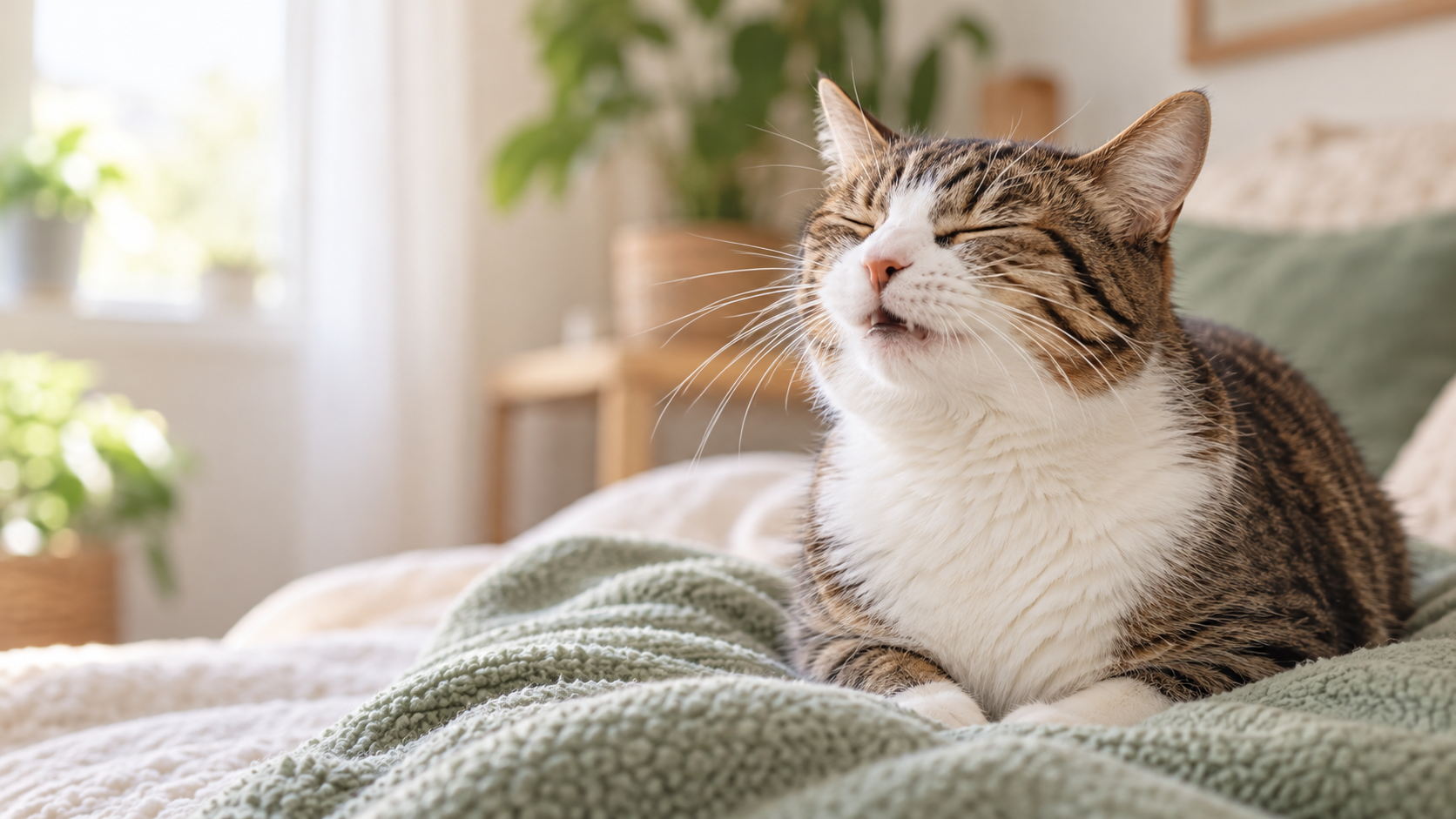
Common Causes of Sneezing in Cats
What tends to be behind a sneeze, from mild to serious
Upper respiratory infection
Infections of the nose and throat are the most common cause of frequent sneezing. Many are viral, such as feline herpesvirus and calicivirus, and some are bacterial. They often bring a runny nose or eyes and can dull the appetite. Mild cases may improve with supportive care, but see your vet if discharge turns thick and yellow or green, or your cat stops eating or becomes lethargic.
Allergies and irritants
Dust, cigarette smoke, litter dust, perfume, and cleaning or aerosol sprays can irritate a cat’s nose and trigger bouts of sneezing. This kind of sneezing often settles once the trigger is removed. Switching to a low-dust or unscented litter and keeping the air clear can help. Sneezing that persists after you remove likely irritants is worth a vet check.
A foreign body
Sudden, intense sneezing, often with pawing at the nose, can mean something is lodged there, such as an inhaled blade of grass or a seed. Do not try to probe or remove anything from your cat’s nose yourself. If the sneezing does not clear quickly, or you see discharge or blood from one nostril, see your vet, who can examine and remove it safely.
Dental disease
The roots of the upper teeth sit close to the nasal passages, so an infected upper tooth root can cause sneezing or nasal discharge, often on one side, along with bad breath or a sore mouth. Dental problems need a veterinary exam and are easy to miss at home, so mention any mouth signs to your vet.
Cause, What It Looks Like, and What to Do
Use this as a starting point, not a diagnosis. Your vet can confirm the cause.
| Possible cause | What it often looks like | What to do |
|---|---|---|
| Upper respiratory infection | Repeated sneezing with a runny nose or eyes, sometimes reduced appetite or low energy | See your vet, especially if discharge turns thick and yellow or green, or your cat stops eating. |
| Allergies or irritants | Bouts of sneezing linked to dust, smoke, litter, perfume, or cleaning sprays | Often settles once the trigger is removed. Persistent sneezing warrants a vet check. |
| Foreign body | Sudden intense sneezing, often pawing at the nose, sometimes from a blade of grass or seed | Do not probe the nose yourself. See your vet if it does not clear quickly. |
| Dental disease | Sneezing or nasal discharge on one side, bad breath, sometimes a sore mouth | An infected upper tooth root can reach the nose. Needs a veterinary dental exam. |
| Occasional sneeze | A single sneeze or a short bout in a bright, playful cat that is eating normally | Usually harmless. Watch for any of the warning signs listed on this page. |
When Sneezing Clears on Its Own, and When It Needs a Vet
A single sneeze, or a short bout after a dusty room or a whiff of perfume, is usually nothing to worry about, especially in a cat that stays bright, playful, and is eating normally. Sneezing from a passing irritant often settles within a day or two once the trigger is gone. In these cases you can simply watch your cat and keep the air clear of smoke, sprays, and dust.
Book a veterinary appointment if the sneezing keeps going for more than a few days, or comes with any of these: thick yellow or green nasal discharge, discharge or redness in the eyes, appetite loss, low energy or lethargy, or any blood. For the emergency signs listed at the top of this page, such as labored or open-mouth breathing or a cat that has stopped eating, do not wait for an appointment.
When to See a Vet
Contact your vet if the sneezing does not settle within a few days, is getting worse, or your cat seems unwell in any other way. Thick coloured discharge, eye involvement, appetite loss, weight loss, and blood are all reasons to be seen sooner rather than later. Your vet can look for infection, a foreign body, or a dental cause, and advise on treatment and, where relevant, keeping other cats safe.
Sneezing often appears alongside other symptoms. If your cat is also off their food, see why your cat is not eating, and if a cough develops with the sneezing, our guide to cat coughing may help. You can also browse the full cat health guides for related guides.
Frequently Asked Questions About Cat Sneezing
Common questions about why cats sneeze and when it is serious
Why is my cat sneezing?
The most common cause of sneezing in cats is an upper respiratory infection, which can be viral, such as feline herpesvirus or calicivirus, or bacterial. Allergies and irritants like dust, smoke, litter, or cleaning sprays can also cause it, as can a foreign body such as an inhaled blade of grass, or dental disease from an infected upper tooth root. An occasional sneeze in a bright, well cat that is eating normally is usually minor, but sneezing that continues for more than a few days, or comes with thick discharge, appetite loss, or lethargy, should be checked by a vet.
Cat sneezing a lot, should I worry?
Frequent sneezing is worth paying attention to. Watch your cat closely and contact your vet if the sneezing lasts more than a few days, if there is thick yellow or green nasal discharge, discharge from the eyes, or any blood, or if your cat is off their food, lethargic, or losing weight. These can point to an infection or another problem that needs treatment. Occasional sneezing in a cat that is otherwise bright, active, and eating well is far less concerning.
Is cat sneezing contagious to other cats?
It depends on the cause. Sneezing from allergies, irritants, a foreign body, or dental disease is not contagious. Sneezing caused by viral or bacterial upper respiratory infections, including herpesvirus and calicivirus, can spread between cats through secretions and shared bowls or bedding. If you have other cats and one is sneezing with discharge, it is sensible to keep them apart and see your vet for a diagnosis. Keeping vaccinations up to date, which your vet can advise on, helps reduce the risk.
What can I do at home for a sneezing cat?
Supportive care can help a cat that is otherwise bright while you monitor them. Keep the air free of smoke, aerosols, and strong scents, try a low-dust or unscented litter, and gently wipe away discharge from the nose and eyes with a soft damp cloth. Running a humidifier or letting your cat sit in a steamy bathroom can ease a stuffy nose. Make sure fresh water and food are easy to reach, as a blocked nose can dull appetite. Do not give any human or leftover medication, as many are toxic to cats. If sneezing persists or any warning sign appears, see your vet.
How long should a sneezing cat take to get better?
Mild sneezing from a passing irritant often clears within a day or two once the trigger is gone. Sneezing from an upper respiratory infection can last longer, and some cats, especially those carrying herpesvirus, have flare-ups at times of stress. As a general guide, sneezing that continues for more than a few days, or that is getting worse rather than better, deserves a veterinary exam rather than waiting it out.
Explore More Cat Health Guides
Understand your cat's symptoms and know when to call the vet.
Free cat printables
Keep these cat care guides handy
A rotating selection of practical cat guides chosen from our free printable library.Kitten Growth Chart
Week-by-week weight and development milestones.
Cat Feeding Guide
Portions by weight, age, and life stage.
Cat Quality of Life Checklist
Track the HHHHHMM quality-of-life measures.