
Last updated: October 3, 2026
Cat Health
Ear Mites in Cats
Ear mites are one of the most common causes of itchy, irritated ears in cats, especially in kittens and outdoor cats. Here is how to spot the signs, why a vet should confirm them, how they are treated, and how to keep them from spreading through your home.
This guide is general information, not veterinary advice. Every cat is different. If your cat is unwell or you are worried, contact your veterinarian, who can examine your cat and give advice for their specific situation.
See your vet promptly if your cat has any of these
- A head tilt, loss of balance, circling, or unusual eye movements
- Bleeding from the ear, a swollen ear flap, or obvious pain when the ear is touched
- A thick, pus-like, or foul-smelling discharge, which can point to a deeper infection
- Sudden changes in hearing, or scratching so severe it breaks the skin
Untreated ear problems can move deeper into the ear and affect balance and hearing, so these signs should not wait.
What Ear Mites Are
A closer look at the parasite behind the itch
A tiny, contagious parasite
Ear mites are microscopic parasites, most often the species Otodectes cynotis. They live in the ear canal and feed on skin oils and debris. Although each mite is smaller than a pinhead, a single infestation can involve large numbers, which is why the irritation can be so intense.
Very common in kittens and outdoor cats
Ear mites are one of the most common ear problems in cats. They are seen most often in kittens, in cats that spend time outdoors, and in cats living in groups or shelters, because the mites spread through close contact between animals.
Why they cause such intense itching
As the mites move and feed, they irritate the sensitive lining of the ear canal. The cat responds with relentless scratching and head shaking, and the ear produces a dark, waxy debris. Left alone, the scratching and inflammation can lead to secondary infections and sores.
Not the only cause of itchy ears
Ear mites are common, but they are not the only reason a cat scratches its ears. Yeast and bacterial infections, allergies, and growths can look very similar. That overlap is exactly why a vet exam, rather than a guess, is the safest first step.
Symptoms, What They Look Like, and What to Do
Use this as a starting point, not a diagnosis. Your vet can confirm whether mites are the cause.
| Sign | What it often looks like | What to do |
|---|---|---|
| Intense ear scratching | Frequent, vigorous scratching at one or both ears, sometimes enough to break the skin | Have your vet check the ears. Scratching has many causes and should not be treated blind. |
| Head shaking and tilting | Repeated head shaking or holding the head to one side | See your vet, especially if it is persistent or the cat seems off balance. |
| Dark, crumbly discharge | Dry, dark brown or black debris in the ear canal that looks like coffee grounds | This is a classic mite sign but not proof. A vet can confirm before treating. |
| Redness and odor | Red, inflamed ear canal, sometimes with a noticeable smell | Book a vet visit. Redness and odor can also mean a secondary infection. |
| Crusting or hair loss | Scabs, crusting, or thinning fur around the ears and at the base of the ears | A vet should examine the skin, as constant scratching can cause sores that get infected. |
Symptoms of Ear Mites in Cats
The hallmark of ear mites is intense itching. Affected cats scratch at their ears repeatedly, shake their heads, and sometimes rub the sides of their heads along the floor or furniture. The other classic clue is a dark, crumbly discharge deep in the ear canal that is often described as looking like coffee grounds.
You may also notice redness and inflammation inside the ear, a mild odor, and sometimes crusting, scabs, or hair loss around the ears from constant scratching. One or both ears can be affected. Because these same signs can come from infections or allergies, they are a reason to see your vet, not a confirmed diagnosis on their own. Ear irritation is one of many sick cat symptoms worth tracking.
How Ear Mites Are Diagnosed
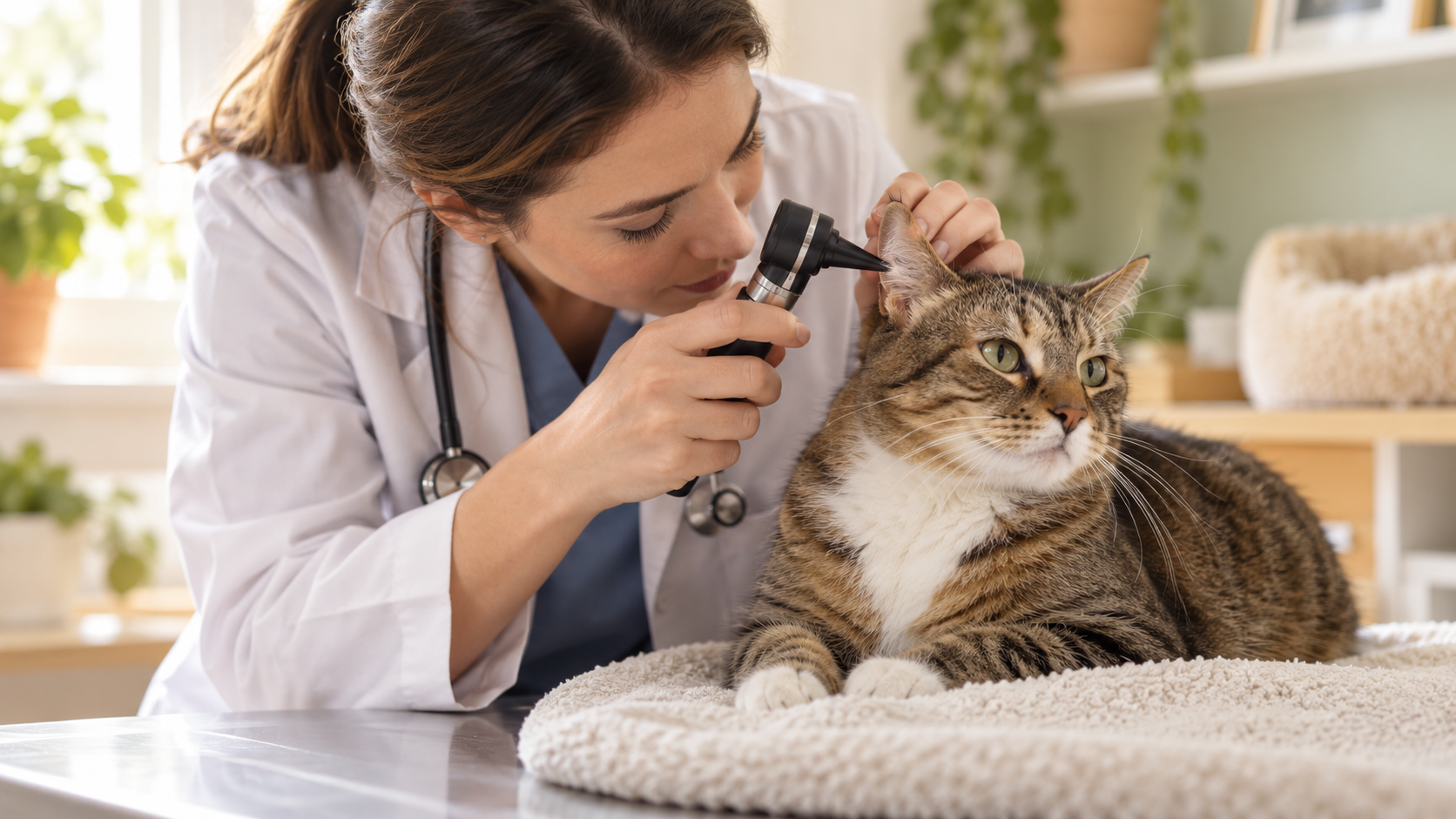
A veterinarian confirms ear mites by looking into the ear canal with an otoscope and by examining a swab of the ear debris under a microscope, where the mites and their eggs can actually be seen. This step matters more than it might seem. Yeast infections, bacterial infections, allergies, and small growths can all cause scratching and dark debris that look just like mites from the outside.
Because of that overlap, it is best not to assume the problem is mites and start treating on your own. Treating for the wrong thing wastes time, can irritate an already sore ear, and may let the real cause get worse. A quick exam gives you a clear answer and the right treatment from the start.
Treatment for Ear Mites
Ear mites are treated with vet-prescribed parasiticides, which may be ear drops applied directly into the ear or a spot-on product that also covers other parasites. Your vet will often clean the ears first, or show you how to clean them gently at home, so the medication can reach the mites. Cleaning should be done carefully and only with your vet's guidance, since the ear canal is delicate.
Finishing the whole course is important. Many products need to work through the mites' life cycle, so stopping early can let the infestation bounce back. The environment matters too, because mites can survive briefly off the animal, so washing bedding and treating every pet in the home helps prevent reinfestation.
A word of caution: do not reach for random home remedies or products that are not labeled for cats. Oils, over-the-counter drops meant for other species, and internet remedies can irritate the ear, mask a different problem, or be unsafe for cats. Stick to what your vet prescribes.
Are Ear Mites Contagious?
Yes, ear mites spread very easily. They pass through direct contact between animals, so they move readily between cats and can also affect dogs and ferrets living in the same home. This is why vets usually recommend treating all pets in the household at once, even the ones that do not seem itchy yet, so the mites do not simply move from one animal to another.
Ear mites are not a lasting infestation in people. On rare occasions they can cause a brief, transient skin irritation in someone in close contact, but they do not set up home on humans. Ear mites often travel alongside other parasites, so it is worth reviewing cat fleas and how to handle them at the same time.
Preventing Ear Mites
The best defense is routine parasite prevention recommended by your vet, since many modern products help guard against ear mites along with fleas and other parasites. Ask your vet which option fits your cat, and see our overview of flea and parasite treatment for cats for how these products fit together.
Check your cat's ears regularly for dark debris, redness, or a smell so you can catch problems early. When mites are found, treat every pet in the home at the same time and wash bedding to break the cycle. Keeping your cat in good overall condition helps too, and a balanced diet supports the skin and coat, which you can plan with our cat nutrition calculator.
Frequently Asked Questions About Ear Mites in Cats
Common questions about spotting, treating, and preventing ear mites
What are ear mites in cats?
Ear mites are tiny parasites, most often Otodectes cynotis, that live in the ear canal and feed on skin debris and secretions. They are very common, especially in kittens and cats that spend time outdoors or around other animals. The mites are highly contagious between pets and cause intense itching, but they are too small to see clearly without magnification, which is why a vet check matters.
What are the signs of ear mites in cats?
The most common signs are intense ear scratching, frequent head shaking, and a dark, crumbly discharge in the ear canal that is often compared to coffee grounds. You may also see redness, a smell, crusting, or hair loss around the ears from constant scratching. These signs overlap with other ear problems, so they point to a vet visit rather than a home diagnosis.
How does a vet diagnose ear mites?
A veterinarian confirms ear mites by examining the ear canal with an otoscope and by looking at a sample of the ear debris under a microscope, where the mites can be seen. This matters because bacterial and yeast infections, allergies, and polyps can look almost identical from the outside. Treating for mites when the real problem is something else can delay proper care, so it is best not to assume.
Are ear mites in cats contagious?
Yes. Ear mites spread easily through direct contact between animals, so they pass readily between cats and can also affect dogs and ferrets in the same home. Because of this, vets usually recommend treating all pets in the household at the same time. Ear mites are not a lasting infestation in people, although rarely they can cause brief, transient skin irritation.
How can I prevent ear mites in cats?
Routine parasite prevention recommended by your vet, checking your cat's ears regularly for dark debris or redness, and treating every pet in the home when mites are found all help keep ear mites from taking hold or coming back. Keeping bedding clean and limiting contact with untreated animals also reduces the risk.
Explore More Cat Health Guides
Understand your cat's symptoms and know when to call the vet.
Free cat printables
Keep these cat care guides handy
A rotating selection of practical cat guides chosen from our free printable library.Cat Body Condition Chart
A printable body condition reference for cats.
Cat Quality of Life Checklist
Track the HHHHHMM quality-of-life measures.
Cat Pregnancy Timeline
A week-by-week kittening calendar and checklist.