Last updated: October 3, 2026
Cat Nutrition
Can Cats Eat Peanut Butter?
Peanut butter is a favorite for dogs, so it is natural to wonder about cats. The honest answer is that it is best avoided. It is not usually toxic, but it offers cats nothing, carries a choking risk, and some brands contain a sweetener that is genuinely dangerous. Here is what to know.
The short answer
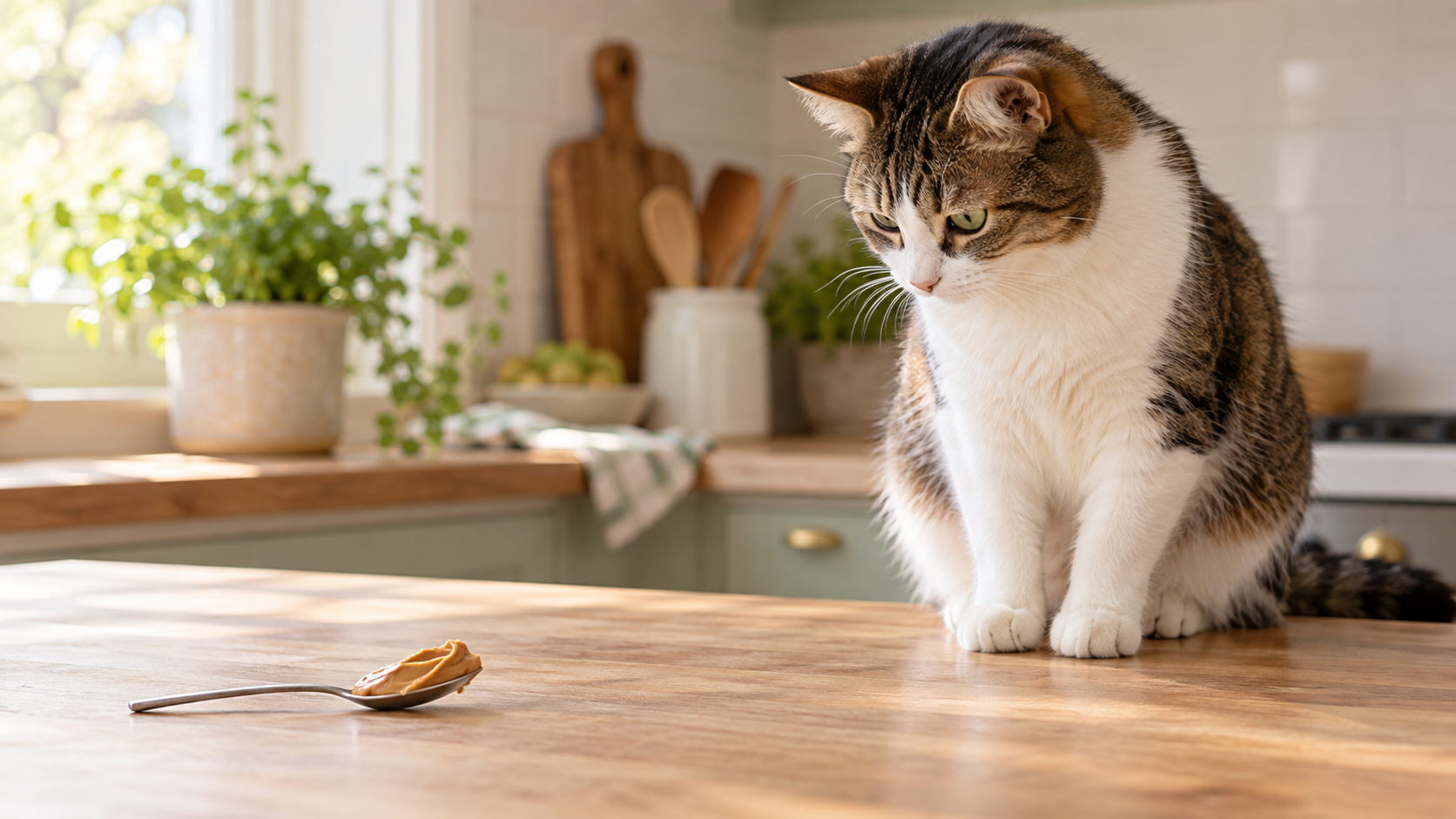
Plain peanut butter is not usually toxic, but it is not recommended for cats. It is high in fat and salt, offers no nutrition for a carnivore, and is a choking hazard. Most importantly, never give peanut butter that contains xylitol or birch sugar. A stray lick of plain peanut butter is not an emergency, but there is no reason to offer it.
Check the label for xylitol before anything else
Some peanut butters are sweetened with xylitol, also labeled as birch sugar, which is toxic to pets. If your cat or, just as importantly, a dog in your home has eaten peanut butter containing xylitol, treat it as urgent:
- Contact your veterinarian or a pet poison helpline immediately, even if your pet seems fine.
- Have the jar or label to hand so you can tell them the ingredients and how much was eaten.
- Do not wait for symptoms, since the effects of xylitol can come on quickly.
Why Peanut Butter Is Not a Good Cat Treat
Even the plain, xylitol-free kind is a poor fit for cats
Empty calories for a carnivore
Peanut butter is packed with fat and calories but built around plant protein cats cannot use well. For an obligate carnivore it is a lot of calories with none of the nutrition that meat provides, which does nothing good for a cats waistline.
A real choking risk
The thick, sticky texture can cling to the roof of the mouth or the throat. In an animal as small as a cat, that stickiness is a genuine choking hazard, not just an inconvenience.
Salt, sugar, and additives
Many brands add salt, sugar, and oils, and some add xylitol. None of these belong in a cats diet, and the sodium in particular is a concern for cats with heart or kidney issues.
Better treats exist
If you want to give your cat something special, a small piece of cooked plain chicken or a commercial cat treat suits them far better and carries none of the peanut butter downsides.
The Main Concerns at a Glance
Each of these is a reason to keep peanut butter off your cats menu.
| Concern | Risk | Notes |
|---|---|---|
| Xylitol (birch sugar) | Potentially dangerous | This sweetener appears in some peanut butters and is toxic to pets. Always read the label and never give a product that lists xylitol or birch sugar. |
| High fat content | Weight gain, stomach upset | Peanut butter is very calorie and fat dense. For a small carnivore this means empty calories and, in larger amounts, a risk of digestive upset or pancreatitis. |
| Salt and additives | Unnecessary sodium | Many brands add salt, sugar, and palm oil, none of which a cat needs. Even plain versions are a poor fit for feline nutrition. |
| Sticky, thick texture | Choking hazard | The claggy texture can stick in a cats mouth or throat, which is a genuine choking risk in such a small animal. |
| No nutritional value for cats | Offers nothing needed | As obligate carnivores, cats gain nothing from peanuts. The protein is plant based and not the type cats are built to use. |
What About Using Peanut Butter for Pills?
Because peanut butter works so well for dogs, some owners try it to disguise a cats medication. For cats it is a weak choice. The sticky texture and fat make it awkward and risky, the xylitol found in some brands is dangerous, and many cats simply are not interested. A commercial pill pocket, a small amount of a cat-safe meat paste, or a lick treat is safer and usually more effective.
Always ask your vet whether a medication can be given with food, since some should not, and for medicines dosed by body weight our pet medication calculator can help you understand the numbers, with the final dose coming from your vet. If your cat is refusing food along with a medication, or is not eating at all, speak to your clinic rather than trying to tempt it with peanut butter.
Frequently Asked Questions About Cats and Peanut Butter
Common questions about xylitol, pills, and safety
Is peanut butter bad for cats?
Plain peanut butter is not classified as toxic to cats, but it is not good for them and is generally not recommended. It is high in fat, salt, and calories with no nutritional value for an obligate carnivore, its sticky texture is a choking risk, and some brands contain xylitol, a sweetener that is dangerous to pets. A stray lick of plain peanut butter will not harm most cats, but there is no good reason to offer it.
Why is xylitol in peanut butter dangerous?
Xylitol, sometimes labeled as birch sugar, is a sugar substitute used in some peanut butters and many sugar-free products. It is well documented as toxic to dogs, and because the safety data in cats is limited, the responsible approach is to avoid it entirely for cats too. The bigger risk is that if your cat can reach a jar of xylitol peanut butter, a dog in the household can as well, so it is safest not to keep xylitol products where pets can get them. If you suspect your pet has eaten xylitol, contact your vet or a pet poison helpline immediately.
Can I use peanut butter to give my cat a pill?
It is not the best choice. Owners sometimes use peanut butter to hide medication, but for cats the sticky texture, the fat, and the xylitol risk make it a poor option, and cats are often less enthusiastic about it than dogs. A purpose-made pill pocket, a small amount of a cat-safe meat paste, or a lick treat is safer and more appealing. Always check with your vet whether the medication can be given with food first.
My cat licked some peanut butter. What should I do?
If it was plain peanut butter and only a small lick, your cat is very likely fine, though they may get a mild stomach upset. The one thing to check straight away is the label. If the peanut butter contained xylitol or birch sugar, contact your vet or a pet poison helpline right away, even if your cat seems well. For a large amount of any peanut butter, watch for vomiting, diarrhea, or lethargy and call your vet if you are concerned.
Are peanuts themselves safe for cats?
A plain, unsalted, shelled peanut is not toxic, but peanuts share the same problems as peanut butter: high fat, no real benefit for a carnivore, and a choking risk from the size and shape. Salted or flavored peanuts are worse because of the sodium and seasonings. As with peanut butter, peanuts are best left off the menu, with treats saved for small pieces of cooked meat that suit a cat far better.
Explore More Cat Nutrition Guides
Know what is safe before you share from your plate.
Free cat printables
Keep these cat care guides handy
A rotating selection of practical cat guides chosen from our free printable library.Cat Pregnancy Timeline
A week-by-week kittening calendar and checklist.
Kitten Calorie Guide
Calorie targets by kitten age and weight.
Kitten Growth Chart
Week-by-week weight and development milestones.