
Last updated: October 3, 2026
Can Cats Eat Lettuce?
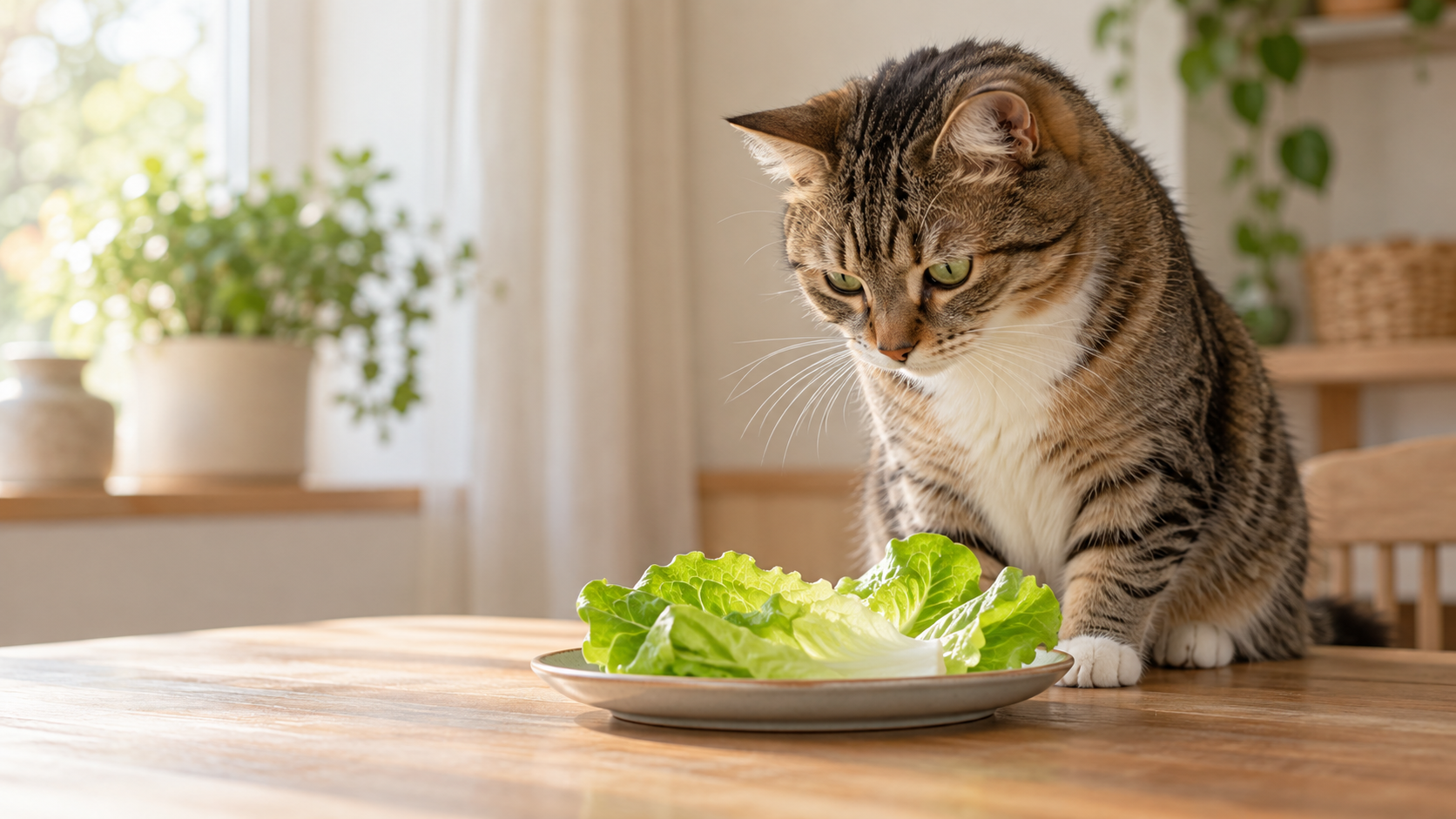
Yes, cats can eat lettuce in small amounts. Plain, washed lettuce is non-toxic, mostly water, and very low in calories, so a few torn pieces make a harmless crunchy treat. Just remember that cats are obligate carnivores, so lettuce is a fun extra and never a replacement for complete cat food. This guide covers what is safe, what to skip, and how to offer it.
Quick Answer
Cats can safely eat small amounts of plain lettuce. It is not toxic, it is about 95 percent water, and it is low in calories, which makes it a fine occasional treat for a curious cat. Common types like romaine and iceberg are all fine.
The catch is that lettuce offers almost no nutrition that a cat can use. Cats are obligate carnivores that need animal protein and specific nutrients, so lettuce should stay a tiny treat and never take the place of a complete, balanced cat food. Serve it plain, with no dressing or seasoning.
Is Lettuce Safe for Cats?
Plain lettuce is safe for cats. It does not appear on lists of foods that are toxic to cats, and the common varieties you find at the store are all fine in small amounts. That includes romaine, iceberg, butterhead (such as Boston and bibb), and green or red leaf lettuce. The differences between them are mostly water content and crunch, and none of them are a problem for a healthy cat as an occasional nibble.
The real risk with lettuce is almost never the leaf itself. It is what ends up on it. Salad dressing, oil, salt, vinegar, and seasonings can upset a cat's stomach, and ingredients like onion and garlic are genuinely toxic to cats. So skip any lettuce that has been dressed or seasoned, wash the leaf well to remove dirt and residue, and offer it plain.
Benefits and Limits of Lettuce for Cats
A little extra hydration
Lettuce is roughly 95 percent water, so a few pieces add a small amount of moisture. It is no replacement for fresh water or wet food, but for a cat that enjoys it, the water content is a gentle bonus rather than a drawback.
Low-calorie, crunchy treat
Because lettuce is mostly water and fiber, it is very low in calories. That makes it a light option for cats who like to nibble, and a crunchy texture that some cats enjoy batting around and chewing.
Little real nutrition
Cats are obligate carnivores and need nutrients from animal tissue. Lettuce has some fiber and trace vitamins, but a cat cannot use it the way it uses meat, so it does not meaningfully feed your cat. Treat the nutrition as close to zero.
Not a substitute for cat food
Lettuce should never replace part of a meal or be used to fill up a hungry cat. A complete, balanced cat food provides the protein, taurine, and other nutrients your cat actually needs. Lettuce is a small extra on top of that, nothing more.
The short version is that lettuce is harmless in small amounts and can be a fun, low-calorie treat, but it is not doing much for your cat nutritionally. Enjoy it as a texture treat, not as a health food.
How to Offer Lettuce Safely
Offering lettuce well is simple. The goal is a clean, plain, bite-sized piece and a slow introduction so you can see how your cat handles it.
- Wash it well. Rinse the leaf thoroughly to remove dirt and any residue before offering it.
- Keep it plain. No dressing, oil, salt, vinegar, butter, or seasoning of any kind. Plain leaf only.
- Tear it small. Offer small torn pieces that are easy to chew, which lowers the chance of choking and keeps the portion tiny.
- Introduce it slowly. Start with one small piece the first time and wait a day to see how your cat responds before offering more.
- Watch for GI upset. If you notice vomiting, diarrhea, or loose stools, stop offering lettuce and give the stomach time to settle.
- Keep it under the treat allowance. Treats, including lettuce, should stay within roughly 10 percent of your cat's daily calories, with the rest coming from complete cat food.
Cooked or raw, plain lettuce is fine, though most cats that enjoy it prefer the crunch of a fresh raw leaf. If your cat sniffs it and walks away, that is completely normal and nothing to worry about.
Which Cats Should Skip Lettuce or Go Easy
Most healthy cats can have a little lettuce without any trouble, but some cats do better without it. Because lettuce is high in fiber and water, it can loosen stools, so cats with sensitive stomachs or ongoing digestive issues may be more likely to get an upset tummy.
Go easy, or skip lettuce entirely, if your cat has a history of GI problems, is prone to vomiting or diarrhea, or is on a special diet from your vet. Kittens have small stomachs and specific nutritional needs, so keep any treats minimal for them. And if lettuce causes vomiting or diarrhea for your cat, simply stop offering it. There is no nutritional reason a cat needs lettuce, so there is no downside to leaving it out.
Other Cat-Safe Vegetables
If your cat enjoys the occasional veggie, a few others are generally considered safe in small, plain amounts. Like lettuce, these are treats rather than nutrition, and they should all be served plain, with no salt, butter, oil, onion, or garlic.
| Vegetable | How to offer it |
|---|---|
| Cooked carrot | Cooked plain and soft, cut into small pieces. Skip raw carrot, which is hard and a choking risk. |
| Plain pumpkin | Plain cooked or canned pumpkin (not pie filling). A small spoonful is a common fiber treat, but ask your vet first. |
| Green beans | Cooked plain and cut small, with no salt or seasoning. A low-calorie, crunchy option in moderation. |
| Cucumber | Peeled and cut into thin, small pieces. Like lettuce, it is mostly water and very low in calories. |
| Zucchini | Cooked plain and soft, in small pieces. A mild, low-calorie veggie that some cats will nibble. |
Remember that not every vegetable or human food is safe, and some are toxic to cats. Before you share anything new, check our broader guide to what cats can eat, and keep treats like these well within the treat allowance.
Wondering how much your cat should eat each day?
Estimate your cat's daily calorie needs based on weight, activity, and life stage, so you know how much room is left for the occasional treat.
Try the Cat Nutrition Calculator →Keeping Lettuce in Perspective
Lettuce is a harmless, low-calorie treat that a curious cat can enjoy in small amounts, but it is a fun extra, not part of a healthy feline diet. Your cat's real nutrition should come from a complete, balanced cat food, with treats of any kind kept to a small share of the day's calories.
If you want to think more about treats and portions, see our guide to cat treats, learn more about what cats can eat, and browse the rest of our Cat Weight Guides.
Frequently Asked Questions About Cats and Lettuce
Common questions about feeding lettuce to cats safely
Can cats eat lettuce?
Yes, cats can eat plain, washed lettuce in small amounts. Lettuce is not toxic to cats, it is mostly water, and it is very low in calories. That said, cats are obligate carnivores, so lettuce is not a nutritional need and should only ever be an occasional treat, not a meal or a substitute for complete cat food. Serve it plain, with no dressing, oil, salt, or seasoning.
Is lettuce safe for cats?
Plain lettuce is generally safe for cats. Common types such as romaine, iceberg, butterhead, and green or red leaf lettuce are all non-toxic. The safety issue is almost never the lettuce itself but what people put on it, so avoid salad dressing, oil, salt, onion, garlic, and other seasonings, all of which can upset a cat or be harmful. Always wash the leaf well and tear it into small pieces.
How much lettuce can a cat have?
Keep lettuce to a small amount, a few small torn pieces at most, and treat it as part of the roughly 10 percent of daily calories that can come from treats. Because lettuce is mostly water and fiber, too much at once can cause loose stools or an upset stomach. Introduce it slowly the first time and watch how your cat reacts before offering it again.
Why does my cat like lettuce?
Many cats are drawn to lettuce for the crunch, the cool wet texture, or simple curiosity rather than for taste or nutrition. Cats cannot taste sweetness and are not built to seek out plants, so a lettuce habit is usually about play and texture. That is fine in moderation, but if your cat is constantly hunting for greens it is worth mentioning to your vet.
What vegetables are safe for cats?
Besides lettuce, small amounts of plain, well-prepared vegetables such as cooked carrot, plain cooked or canned pumpkin, cooked green beans, peeled cucumber, and cooked zucchini are generally considered cat safe. All should be plain, with no salt, butter, oil, onion, or garlic, and offered only in moderation. Vegetables are treats, not a required part of a cat diet, and some human foods are toxic to cats, so check a trusted food list when in doubt.
Feed Your Cat With Confidence
Use our free calculators, then confirm any diet change with your veterinarian.
Free cat printables
Keep these cat care guides handy
A rotating selection of practical cat guides chosen from our free printable library.Cat Feeding Guide
Portions by weight, age, and life stage.
Cat Body Condition Chart
A printable body condition reference for cats.
Kitten Growth Chart
Week-by-week weight and development milestones.