
Last updated: October 3, 2026
Cat Treats
How to choose healthy cat treats and, just as important, how many are too many. The single most useful habit is calorie awareness: treats should make up no more than about 10 percent of your cat's daily calories. This guide walks through the 10 percent rule, the main treat categories, a note on homemade treats, and how to keep everything tied to your cat's daily calorie budget. It is general guidance, not veterinary advice.
How to Choose Cat Treats: Start With Calories
Most treat advice starts with flavor or ingredients, but the first thing to look at is calories. A treat that is perfectly healthy in one piece can quietly push a cat into weight gain when it is handed out all day on top of full meals. Choosing well means picking a good treat and then keeping the amount small enough that it does not unbalance the main diet.
When you compare products, favor a named animal protein as the first ingredient, a short overall ingredient list, and no added sugar. Then flip to the calories per treat on the label, because that number is what decides how many your cat can actually have.
The 10 percent rule
Treats should make up no more than about 10 percent of your cat's total daily calories, and the rest of the diet should be reduced accordingly so the day still adds up to the right total. The main food should provide the other 90 percent, because it is balanced for complete nutrition and treats are not.
For a typical adult cat eating around 180 to 250 calories a day, 10 percent is only about 18 to 25 calories for treats. That is a small amount, often just a few small pieces or a fraction of a freeze-dried treat, which surprises many owners the first time they count.
To use the rule, find your cat's daily calorie needs, take 10 percent of that as the treat ceiling, and then reduce meal portions a little to make room. Our Cat Nutrition Calculator gives a personalized daily calorie figure so you can set that treat budget with real numbers instead of guessing.
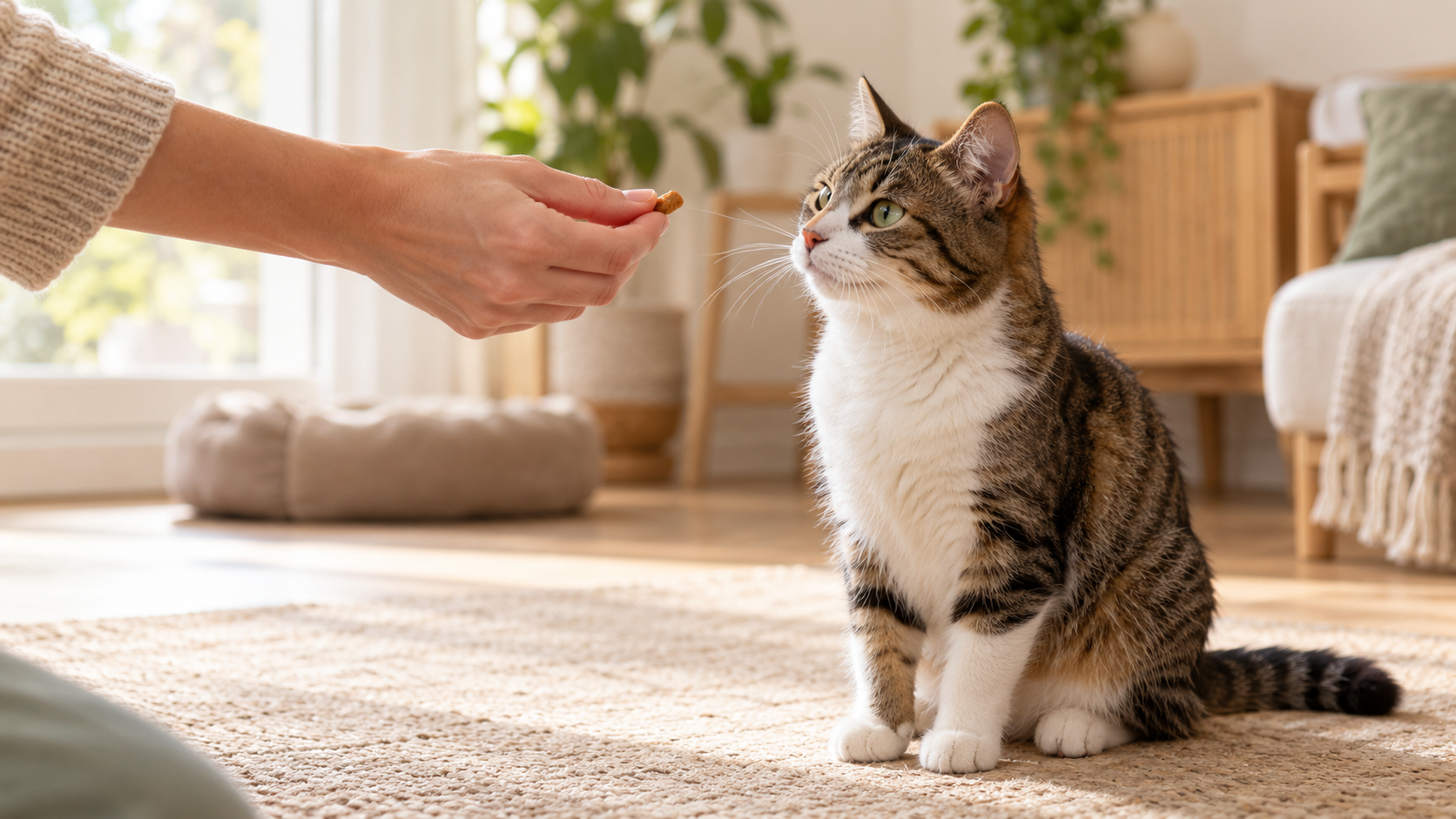
Types of Cat Treats
Treats fall into a few broad categories, each suited to a different purpose. None of these is a brand recommendation, and all of them still count toward the 10 percent calorie budget. Match the type to what you actually want, whether that is an everyday reward, dental support, a picky-eater option, or a functional aim.
Healthy, high-protein treats
Meat-first treats that fit a cat's carnivore diet
Cats are obligate carnivores, so treats built around real meat, poultry, or fish suit them better than starchy, sugary options. Look for a named protein as the first ingredient and a short list overall. These make good everyday rewards because they add flavor without loading up on filler carbohydrates.
Dental treats
Crunchy treats shaped to reduce plaque and tartar
Dental treats have a firmer texture and a shape that encourages chewing, which can help wipe plaque off the tooth surface. They support, but do not replace, brushing and veterinary dental care. If your cat has bad breath or you are weighing dental options, see our guide to cat bad breath below.
Freeze-dried single-ingredient treats
Pure meat or fish with nothing added
Freeze-dried treats are usually a single ingredient, such as chicken, salmon, or liver, with the moisture removed and no additives. They are protein-dense and highly palatable, which makes them useful for picky cats or training. Because they are concentrated, a little goes a long way, so count them toward the daily calorie budget.
Hairball and functional treats
Treats formulated to target a specific need
Functional treats add ingredients aimed at a goal, such as fiber to help move hairballs through, or omega fatty acids for skin and coat. They can be a convenient way to support a routine, but they are still treats and still carry calories. For persistent hairballs, review the underlying causes rather than relying on treats alone.
Whichever category you reach for, the amount matters more than the label. A high-protein treat given by the handful can add more calories than a single dental treat used sparingly. For dental support specifically, remember that treats supplement rather than replace brushing and vet care, and see our guides to cat bad breath and cat hairballs if those are your reason for buying functional treats.
Homemade Cat Treats: A Quick Note
You do not need a store-bought product to reward a cat. Small pieces of plain cooked meat, such as unseasoned chicken, turkey, or fish with no bones, make simple and appealing treats that fit a carnivore's diet well. Keep the pieces tiny, since it is the calories that count, not the shape.
Keep it plain and skip the seasoning. Avoid onion, garlic, and chives in any form, as these are harmful to cats, and steer clear of salty, sugary, or heavily seasoned foods along with known toxins like chocolate, grapes, raisins, and alcohol. When in doubt about a specific food, check with your vet before offering it.
Homemade treats are not calorie-free, so they belong inside the same 10 percent allowance as any packaged treat. A few slivers of chicken can easily use up a small cat's treat budget for the day.
Tying Treats Back to Daily Calories
Every treat, healthy or not, is part of the day's total. The reason cats gain weight from treats is almost never the treat itself, it is that the treat gets added on top of full meals rather than counted within them. The habit that keeps treats safe is simple bookkeeping.
- Find the daily calorie target. Use your cat's weight, age, and activity to estimate daily calorie needs, then treat that as the ceiling for everything, meals and treats combined.
- Set the treat budget at about 10 percent. Take 10 percent of that daily figure as the maximum for treats, and check the calories per treat on the package to see how many pieces that actually is.
- Reduce meals to make room. When you give treats, trim the main meal portions slightly so the day still lands on the same total rather than drifting above it.
- Track body condition over time. Weigh your cat and watch the trend, since a lean, well-proportioned body is the real goal rather than any single number on the label.
To put numbers behind this, run your cat through the Cat Nutrition Calculator for a daily calorie figure, and make sure the main diet is doing the heavy lifting with a good complete food, covered in our best cat food guide. Treats are the finishing touch on a balanced diet, not a substitute for one.
Frequently Asked Questions About Cat Treats
Common questions about choosing healthy cat treats and how many are too many
What are the healthiest cat treats?
The healthiest cat treats are built around real meat, poultry, or fish with a short ingredient list and no added sugar. Single-ingredient freeze-dried meat or fish treats are a strong choice because they are pure protein with nothing extra, and high-protein treats suit a cat's carnivore diet. Whatever type you pick, the healthiest option is one you keep to about 10 percent of your cat's daily calories so it does not unbalance the main diet.
How many treats can a cat have a day?
A good rule is that treats should make up no more than about 10 percent of your cat's total daily calories, and the rest of the diet should be reduced to make room. For a typical 8 to 10 lb adult cat eating roughly 180 to 250 calories a day, that leaves only about 18 to 25 calories for treats, which is a surprisingly small amount, often just a few small pieces. Check the calories per treat on the package and count them against your cat's daily needs rather than guessing.
Are dental treats good for cats?
Dental treats can help reduce plaque and tartar because their firm texture and shape encourage chewing against the tooth surface. They are a helpful supplement, not a substitute for brushing or professional dental cleaning. They still contain calories, so count them within the 10 percent treat allowance rather than adding them on top of a full diet.
Can cats eat human food as treats?
Small amounts of plain cooked meat, such as unseasoned chicken, turkey, or fish with no bones, can work as an occasional treat. Avoid onion, garlic, chives, chocolate, grapes, raisins, alcohol, and anything salty or heavily seasoned, as these can be harmful to cats. Keep any human-food treats to that same 10 percent share of daily calories, and check with your vet if you are unsure about a specific food.
Do treats make cats overweight?
Treats can absolutely cause weight gain when they are given on top of a full daily diet, because the extra calories add up quickly. The fix is not to cut treats entirely but to count them, keep them to about 10 percent of daily calories, and trim the main meals slightly to compensate. Tracking body condition and using a calorie calculator makes it easy to keep treats in the picture without overfeeding.
Keep Treats Within Your Cat's Calorie Budget
Use our free calculators to set daily calories and choose the right diet.
Free cat printables
Keep these cat care guides handy
A rotating selection of practical cat guides chosen from our free printable library.Cat Feeding Guide
Portions by weight, age, and life stage.
Cat Pregnancy Timeline
A week-by-week kittening calendar and checklist.
Kitten Growth Chart
Week-by-week weight and development milestones.