
Last updated: October 3, 2026
What Can Cats Eat? Safe and Toxic Human Foods
Wondering what human food cats can eat? Some everyday foods are fine as an occasional treat, while others are dangerous or even toxic. This guide covers which human foods are generally safe in small amounts, which ones to keep away from your cat, and how to offer extras without unbalancing the diet.
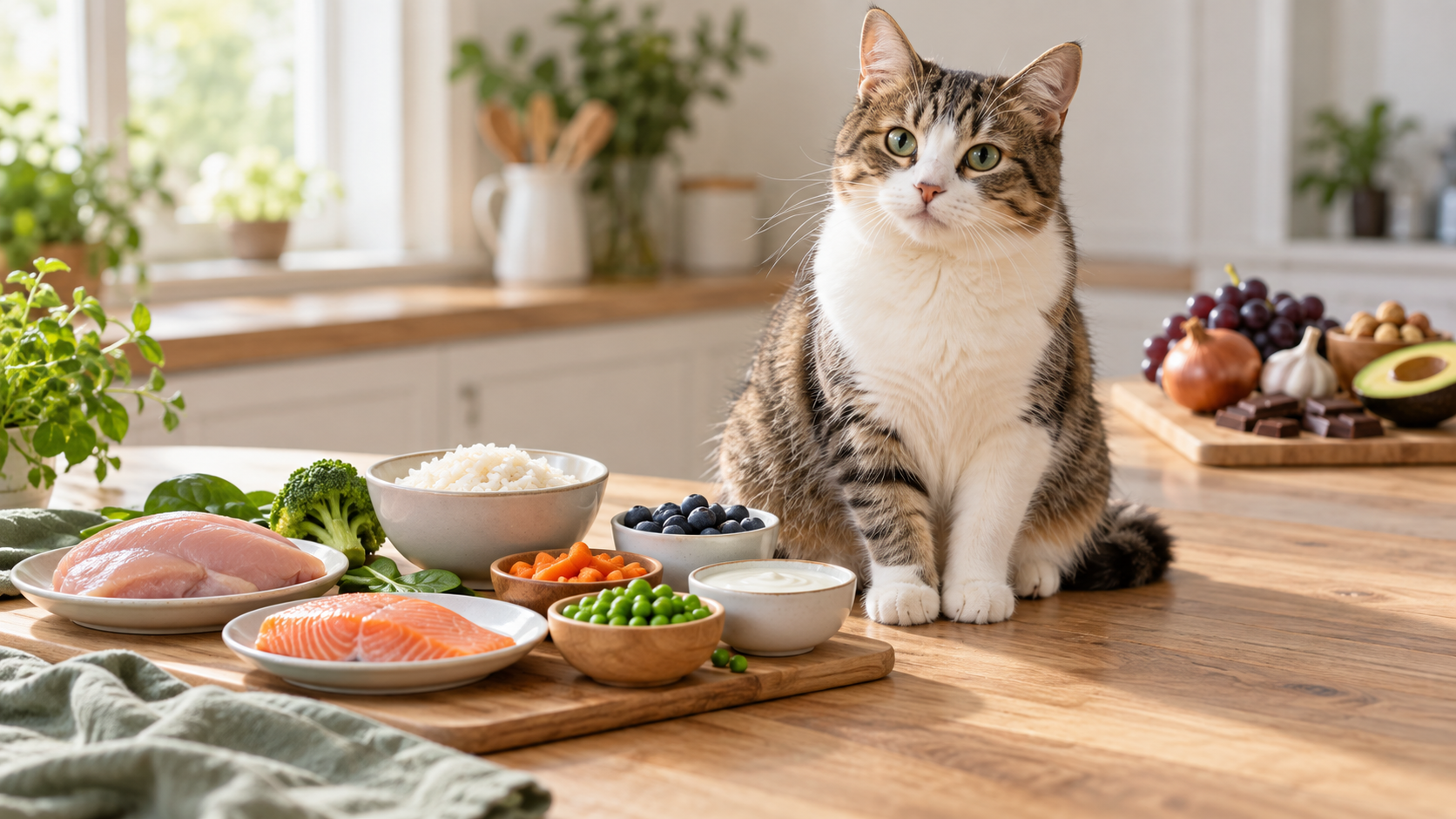
Read This First: Foods That Are Toxic to Cats
Some common human foods are toxic to cats even in small amounts. Never let your cat have onion, garlic, chives, or leeks (the whole allium family), chocolate, caffeine, grapes, raisins, alcohol, raw yeast dough, or anything containing the sweetener xylitol. These can cause serious illness and some can be life threatening.
If your cat eats any toxic food, contact your veterinarian or a pet poison helpline right away, even if your cat seems fine. This guide is general educational information, not veterinary advice, and it does not diagnose or treat any condition.
Cats Are Obligate Carnivores
Cats are obligate carnivores, which means their bodies are built to run on animal protein. Their diet must be built around a complete and balanced cat food, formulated to meet standards such as AAFCO or FEDIAF. That food supplies the taurine, animal protein, fatty acids, vitamins, and minerals your cat cannot get from human leftovers.
Human food should be an occasional extra, not a diet. A few bites of a safe food now and then is fine for most healthy cats, but people food is not balanced for cats and cannot replace their regular meals. Think of it as a small treat on top of a complete diet, never a substitute for it.
Human Foods That Are Generally Safe in Small Amounts
The foods below are generally safe for most healthy cats when they are plain, cooked where noted, unseasoned, and offered in very small amounts. Because cats are carnivores, plain cooked meat, poultry, fish, and egg are the most natural fit. A little plain vegetable or fruit is optional and only ever a tiny treat.
| Safe food (small amounts) | How to offer it |
|---|---|
| Cooked plain meat and poultry | Plain cooked chicken, turkey, or beef with no seasoning, sauce, or bones. A natural, high-protein treat. |
| Cooked fish | Fully cooked, boneless, plain fish such as salmon or tuna, in small amounts and only occasionally. |
| Cooked egg | Fully cooked, plain scrambled or boiled egg, with no butter, oil, or salt. Never raw. |
| Plain cooked carrot, green beans, squash | Soft, plain cooked vegetables in tiny pieces. Optional and only as an occasional treat. |
| Plain cooked or canned pumpkin | A small spoon of plain pumpkin (not pie filling) is a gentle, fiber-rich treat some cats tolerate well. |
| Small melon or a few blueberries | A tiny piece of melon or a couple of blueberries, washed and cut small. Fruit is only ever a rare treat. |
| Plain cooked rice | A small amount of plain, fully cooked rice with no seasoning. Not needed, but generally safe. |
Even safe foods should stay small and occasional. For a common question about greens, see our guide on whether cats can eat lettuce for an example of how to think about a single new food.
Foods That Are Toxic or Dangerous for Cats
The foods below range from outright toxic to simply risky for a cat digestive system. Some, like the allium family and chocolate, are dangerous even in small amounts. Keep every one of these away from your cat, and check with your vet before offering anything you are unsure about.
| Unsafe or toxic food | Why it is a problem |
|---|---|
| Onion, garlic, chives, leeks (alliums) | Damage red blood cells and can cause anemia, in any form including powder and cooked into other foods. |
| Chocolate and caffeine | Contain stimulants that are toxic to cats and can affect the heart and nervous system. |
| Grapes and raisins | Linked to kidney damage in pets, so they are best avoided entirely. |
| Alcohol | Toxic even in small amounts and can be rapidly life threatening for a small animal. |
| Raw yeast dough | Rises in the stomach and produces alcohol as it ferments, causing pain and dangerous effects. |
| Xylitol | A sweetener in some human foods and gum that is toxic to pets. Keep it well out of reach. |
| Milk and large amounts of dairy | Many cats are lactose intolerant, so milk and dairy can cause diarrhea and stomach upset. |
| Raw fish in quantity | Large amounts of raw fish contain an enzyme that destroys thiamine (vitamin B1), risking a deficiency. |
| Cooked bones | Can splinter and cause choking, internal injury, or a blockage. |
| Excessive liver | Too much liver leads to a dangerous buildup of vitamin A over time. |
| Salty and fatty foods | Very salty or fatty scraps can upset the stomach and are not suitable for a small cat. |
This is not a complete list of every food that can harm a cat. When in doubt, leave it out and ask your veterinarian or a pet poison helpline.
The 10 Percent Rule for Treats and Extras
A simple way to keep human food from unbalancing the diet is the 10 percent rule. Treats and extras, including any human food, should make up under about 10 percent of your cat daily calories. The other 90 percent or more should come from a complete and balanced cat food that is built to meet all of your cat nutrient needs.
Cats are small, so those calories add up quickly. A little cheese or a few bites of chicken can be a surprising share of a cat daily total, which is why extras stay small. Keeping treats within this limit protects a healthy weight and makes sure the complete food still does the nutritional heavy lifting.
How to Offer Human Food Safely
Keep it plain
Offer food with no salt, seasoning, oil, butter, sauce, or added sugar. Seasonings and sauces often hide onion, garlic, or other ingredients that are toxic to cats, so plain is always safest.
Use small pieces
Cut food into small, bite-sized pieces so it is easy to chew and swallow. Small portions also make it simple to stay within the 10 percent limit for treats.
Introduce one food at a time
Try only one new food at a time in a very small amount. If you introduce several at once and your cat reacts, you will not know which food caused it.
Watch for GI upset
After a new food, watch for vomiting, diarrhea, or a change in appetite or behavior. If anything seems off, stop the food and check in with your veterinarian.
Cook it through
Serve meat, poultry, fish, and egg fully cooked and boneless. Cooking lowers the risk of harmful bacteria, and removing bones avoids choking and internal injury.
Ask your vet for cats with health conditions
Cats with kidney disease, diabetes, food allergies, or those on a prescription diet should not be given human food without veterinary advice first. What is fine for one cat may not suit another.
Follow these steps and human food stays a safe, occasional bonus rather than a source of trouble. When you are unsure about a specific food, the safest move is to skip it and ask your veterinarian.
Not sure how much your cat should eat each day?
Estimate your cat's daily calorie needs based on weight, activity, and life stage, then keep treats and human food under about 10 percent of that total.
Try the Cat Nutrition Calculator →Build the Diet on Complete Cat Food
Human food can be a fun, safe extra, but the foundation of your cat diet should always be a complete and balanced cat food. That is what supplies the taurine, protein, fatty acids, vitamins, and minerals your cat needs, in the right amounts, day after day.
To go deeper, see our guides to the best cat food, choosing safe cat treats, and the balance and safety of homemade cat food. You can also browse everything in our Cat Weight Guides.
Frequently Asked Questions About What Cats Can Eat
Common questions about safe and toxic human foods for cats
What human food can cats eat safely?
Cats can eat small amounts of plain cooked meat and poultry, cooked fish, and cooked egg, since these match their natural high-protein diet. Small pieces of certain plain cooked vegetables, such as carrot, pumpkin, green beans, and squash, are generally safe, as are tiny amounts of melon or a few blueberries and plain cooked rice. Everything should be plain, cooked, unseasoned, and offered in very small amounts. Human food should be an occasional extra, not a meal replacement, because only a complete cat food is balanced for all of a cat feline nutrient needs.
What human foods are toxic to cats?
Onion, garlic, chives, and leeks (the whole allium family) are toxic and damage red blood cells. Chocolate, caffeine, grapes, raisins, alcohol, raw yeast dough, and the sweetener xylitol are all dangerous and can be life threatening. Large amounts of milk or dairy, a lot of raw fish, cooked bones, too much liver, and very salty or fatty foods can also cause harm. Keep all of these away from your cat, and call your veterinarian or a pet poison line right away if your cat eats any of them.
How much human food can I give my cat?
Treats and human food extras should stay under about 10 percent of your cat daily calories, with the other 90 percent coming from a complete and balanced cat food. Cats are small, so even a little human food adds up fast. Because human foods are not balanced for cats, giving too much can crowd out the nutrients your cat needs and lead to weight gain. When in doubt, offer only a tiny taste and keep the bulk of the diet as complete cat food.
Can cats eat vegetables and fruit?
Cats are obligate carnivores and do not need vegetables or fruit, but small amounts of certain plain options are usually safe as an occasional treat. Plain cooked carrot, pumpkin, green beans, and squash are gentle choices, and a little melon or a few blueberries can be offered. Avoid onion, garlic, grapes, and raisins entirely, since these are toxic. For a common example, see our guide on whether cats can eat lettuce. Always introduce any new food in a tiny amount and watch for stomach upset.
What is the safest way to offer human food to my cat?
Offer human food plain, with no salt, seasoning, oil, sauce, or added sugar, and cut it into small pieces so it is easy to eat. Introduce only one new food at a time in a very small amount, then wait to see how your cat handles it before offering more. Watch for vomiting, diarrhea, or any change in appetite or behavior. Cats with health conditions, or those on a prescription diet, should not be given human food without checking with your veterinarian first.
Feed Your Cat With Confidence
Use our free calculators, then confirm any diet change with your veterinarian.
Free cat printables
Keep these cat care guides handy
A rotating selection of practical cat guides chosen from our free printable library.Cat Body Condition Chart
A printable body condition reference for cats.
Kitten Growth Chart
Week-by-week weight and development milestones.
Cat Feeding Guide
Portions by weight, age, and life stage.