
Last updated: October 3, 2026
Raw Feeding for Cats: Balance and Safety
Cats are obligate carnivores, so a raw, meat-based diet appeals to a lot of owners. It can be done well, but only when the diet is complete and balanced and handled with real care. This guide explains what a balanced raw cat diet requires, the food-safety risks that come with raw meat, and how much to feed, so you can make an informed decision with your vet.
Read This First: The Safety Message
Raw feeding carries two kinds of risk that a bag of complete commercial food does not: the diet can be nutritionally incomplete, and raw meat can carry bacteria and parasites that make cats and people sick. Major veterinary and public health organizations advise caution with raw diets, and some advise against them, especially in homes with young children, older adults, pregnant people, or anyone with a weakened immune system.
None of that means raw feeding cannot be done, but it does mean you should not improvise it from a recipe online. If you want to feed raw, work with your veterinarian, use a diet formulated by a board-certified veterinary nutritionist or a reputable complete commercial raw product, and follow strict food-safety rules. This page is general educational information, not veterinary advice, and it does not diagnose or treat any condition.
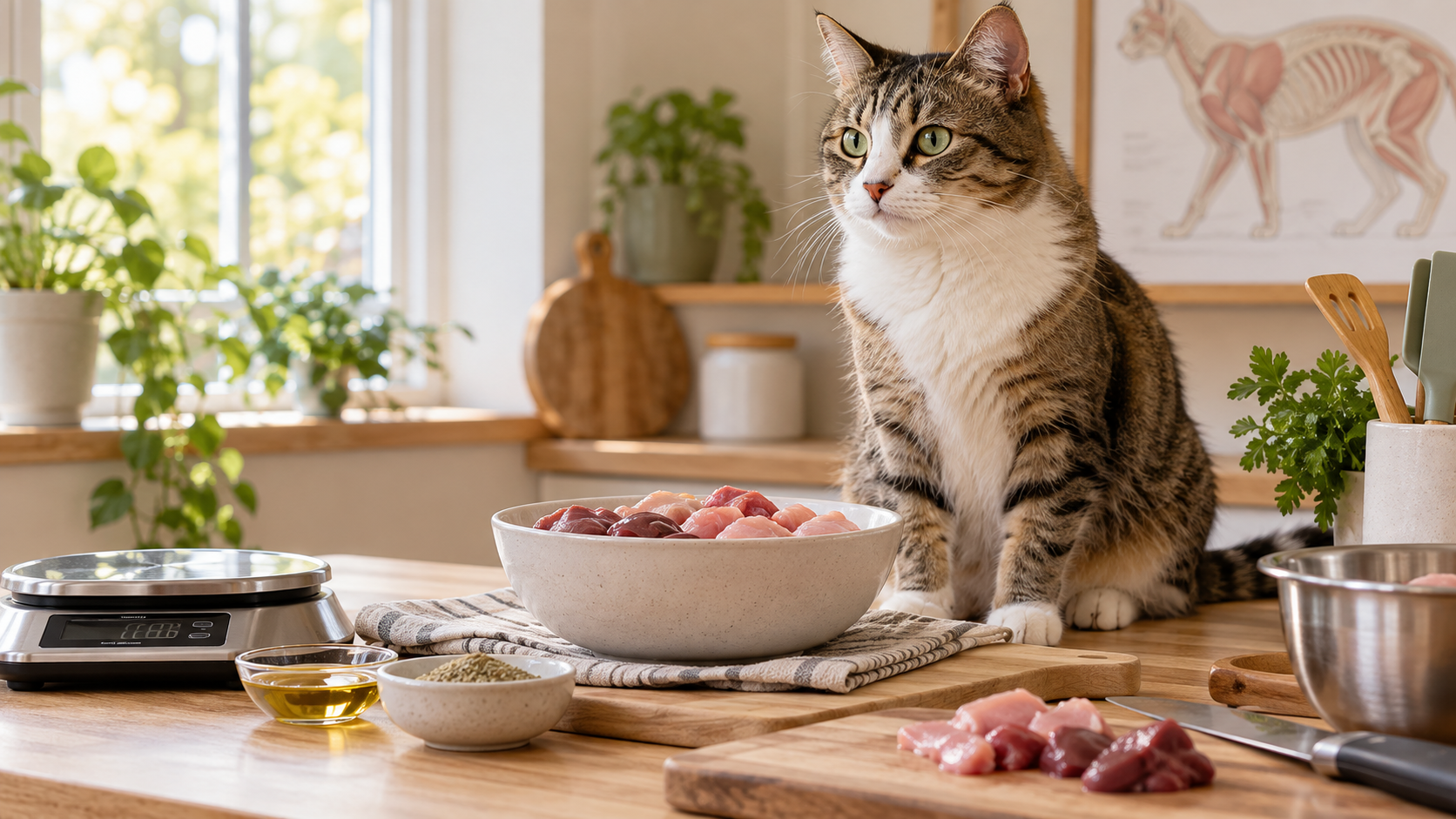
Why Raw Appeals, and Where It Goes Wrong
Cats are obligate carnivores. Their bodies are built to run on animal tissue, they need a high-protein diet, and they have specific requirements that plant foods cannot meet. A raw, meat-based diet is closer to what a cat would eat in the wild, and supporters point to good coat condition, small stools, and enthusiasm at mealtimes.
The problem is not the meat, it is the balancing. A whole mouse is a complete meal because it includes muscle, organs, bone, and everything in the right proportions. A bowl of raw chicken breast is not. Feeding muscle meat alone leaves a cat short on calcium, unbalanced in calcium and phosphorus, and often low on taurine and several vitamins. This is exactly where unsupervised raw diets fail, and the damage can be permanent.
The Nutrients a Raw Cat Diet Must Get Right
Taurine (critical)
Taurine is an essential amino acid cats cannot make in sufficient amounts. A deficiency causes irreversible blindness and dilated cardiomyopathy, a heart condition that can be fatal. Raw meat contains taurine, but grinding, freezing, and storage reduce it, so a complete raw diet usually still adds taurine in an amount set by a professional. Learn more in our taurine for cats guide.
Calcium and phosphorus balance (critical)
Muscle meat is high in phosphorus and very low in calcium. Without a calcium source, the calcium-to-phosphorus ratio is dangerously out of balance, which can weaken bones, especially in growing kittens. Raw diets balance this with finely ground edible bone or a calcium supplement in a carefully calculated amount.
Organ meat, in the right amount
A small amount of organ meat, such as liver, supplies vitamins and minerals muscle meat lacks. Too much liver, though, causes a dangerous vitamin A buildup, so the proportion has to be controlled rather than eyeballed.
Vitamins, minerals, and fatty acids
Cats need preformed vitamin A, vitamin D, vitamin E, B vitamins, trace minerals, and essential fatty acids in the right amounts. Some are easy to under or over supply. A complete raw diet accounts for all of them, which is why a recipe should be formulated, not assembled from guesswork.
Missing any one of these can cause harm over time, and some deficiencies are not reversible once damage is done. A raw diet is not automatically balanced just because it is made of meat. Balance is the whole job.
Have a Raw Diet Formulated and Cleared by a Professional
Before you switch to raw, talk to your veterinarian, and have the diet designed by a board-certified veterinary nutritionist or choose a reputable complete and balanced commercial raw product. They will set the exact ratios and supplements for your individual cat, including age, weight, and any health conditions. This matters most for kittens, pregnant or nursing cats, and cats with kidney, thyroid, or other health issues.
This page is educational and is not a substitute for advice from your own veterinarian.
The Food-Safety Risks You Have to Manage
Unlike a nutrient gap, which builds up slowly, a food-safety problem can hit fast and can affect the people in your home as well as your cat. These are the risks to take seriously with any raw diet.
Bacteria
Raw meat can carry Salmonella, Listeria, E. coli, and Campylobacter. Cats can shed these in their stool even when they seem fine, which puts household members at risk, especially children, older adults, and anyone immunocompromised.
Parasites
Raw meat can carry parasites such as Toxoplasma. Freezing meat for an appropriate period before feeding lowers some parasite risk but does not make raw meat sterile of bacteria.
Bones and teeth
Whole or cooked bones can crack teeth, splinter, or cause a blockage. Ground raw bone in a formulated diet avoids this, which is another reason to follow a proper recipe rather than feed bone-in cuts freehand.
Hygiene rules if you feed raw
- Buy meat from a trusted source, keep it frozen or refrigerated, and never feed meat that is spoiled or past date.
- Wash hands, bowls, utensils, and surfaces with hot soapy water immediately after handling raw food.
- Do not leave raw food sitting out. Refrigerate leftovers promptly and discard uneaten food after a short time.
- Keep raw pet food separate from human food in the fridge and freezer, and clean the litter box carefully.
- Take extra care, or avoid raw entirely, in homes with infants, elderly, pregnant, or immunocompromised people.
How Much Raw Food to Feed: A Percent of Body Weight Framework
Raw feeders usually start from a percentage of the cat's ideal body weight per day, then adjust based on body condition. These are general starting points, not exact amounts, and they assume a complete and balanced raw diet. Always base an adult cat's amount on their ideal weight, not their current weight if they are overweight.
| Life stage | Typical daily amount | Notes |
|---|---|---|
| Average adult cat | About 2.5 to 3 percent of ideal body weight | A good starting point for a neutered indoor adult at a healthy weight. |
| Active or lean adult | About 3 to 4 percent of ideal body weight | Very active cats or those needing to gain may need the higher end. |
| Overweight adult (weight loss) | About 2 percent of ideal (target) body weight | Base it on target weight and reduce slowly under vet guidance. |
| Kitten (still growing) | About 5 to 10 percent of current body weight | Kittens eat far more per pound and need a growth-formulated diet. Vet supervision advised. |
| Pregnant or nursing cat | Well above adult amounts, fed to appetite | Needs greatly increased intake. Formulate and monitor with your vet. |
As a quick example, a cat with an ideal weight of 10 lbs (about 4.5 kg) fed at 3 percent would eat roughly 4.8 oz (about 135 g) of a complete raw diet per day, split across meals. Treat that as a starting figure only. Weigh your cat, check body condition every couple of weeks, and adjust up or down so the ribs stay easy to feel with a visible waist.
Cross-check the amount against your cat's calorie needs
Percent-of-body-weight is a rule of thumb. Estimate your cat's daily calories by weight, activity, and life stage, then match the food amount to that.
Try the Cat Nutrition Calculator →Switching to Raw Without Upsetting Your Cat
Cats can be fussy and can form strong food preferences, so a sudden switch often leads to refusal or stomach upset. Once your vet has cleared a complete and balanced raw diet, transition gradually over one to two weeks or longer, mixing a small amount of the new food into the current food and slowly shifting the ratio. A cat that skips meals for more than a day or two needs veterinary attention, because cats can develop a serious liver problem if they stop eating.
If raw feeding turns out not to suit your cat or your household, that is fine. A complete and balanced commercial diet meets every requirement without the food-safety risk. Compare options in our guide to the best cat food, and if you are drawn to home preparation, read our safety-forward guide to homemade cat food as well.
Frequently Asked Questions About Raw Feeding for Cats
Common questions about safety, balance, and how much to feed
Is raw feeding safe for cats?
A raw diet can be fed safely only when it is complete and balanced, handled with strict hygiene, and cleared with your veterinarian first. The main risks are a nutrient gap (especially taurine, calcium, and the calcium-to-phosphorus balance), bacterial contamination such as Salmonella and Listeria, and parasites in raw meat. Major veterinary and public health bodies caution against raw diets for these reasons, particularly in homes with young children, older adults, or anyone with a weakened immune system. If you feed raw, use a professionally formulated recipe or a reputable complete commercial raw product, and follow food-safety rules carefully.
How much raw food should I feed my cat?
Raw diets are commonly fed at roughly 2 to 4 percent of an adult cat's ideal body weight per day, with most cats around 2.5 to 3 percent. Kittens and pregnant or nursing cats need much more, often 5 to 10 percent of current body weight, because they are still growing. These are only starting points. The right amount depends on your cat's ideal weight, age, activity, and the calorie density of the food, so weigh your cat, monitor body condition, and adjust. Our cat nutrition calculator gives a calorie-based estimate you can cross-check.
Do raw-fed cats still need taurine?
Yes. Taurine is an essential amino acid cats cannot make in sufficient amounts, and a deficiency causes irreversible blindness and dilated cardiomyopathy, a heart condition that can be fatal. Raw muscle meat contains taurine, but freezing, grinding, and storage reduce it, and organ balance matters. A complete raw diet usually still includes added taurine, and the amount must be set by a professional rather than guessed. Never assume that raw automatically means enough taurine.
Does raw meat give cats enough calcium?
No, not on its own. Muscle meat is high in phosphorus and very low in calcium, so a diet of meat alone leaves the calcium-to-phosphorus ratio dangerously out of balance and can weaken bones, especially in kittens. Raw diets balance this with edible ground bone or a calcium supplement in a carefully calculated amount. Getting the calcium and phosphorus balance right is one of the main reasons a raw diet must be professionally formulated.
Can kittens eat a raw diet?
Kittens can be raised on raw food only if the diet is complete and balanced for growth and formulated by a professional, because errors in calcium, phosphorus, and taurine do the most damage while a kitten is still growing. Kittens also eat far more relative to their size than adults. Given the higher stakes and the food-safety risks, many vets suggest a complete commercial kitten diet, or at least close veterinary supervision, for the first year. Talk to your vet before feeding any kitten a raw diet.
What are the risks of raw feeding for cats?
The three main risks are nutritional imbalance, bacterial contamination, and parasites. An unbalanced raw diet can cause taurine deficiency and bone problems over time. Raw meat can carry Salmonella, Listeria, E. coli, and other pathogens that can make both the cat and the people in the home sick, since cats can shed bacteria in their stool. Raw meat and bones can also carry parasites, and whole bones can crack teeth or cause blockages. Strict hygiene, safe sourcing, freezing where appropriate, and a professionally balanced recipe reduce but do not fully remove these risks.
Feed Your Cat With Confidence
Use our free calculators, then confirm any diet change with your veterinarian.
Free cat printables
Keep these cat care guides handy
A rotating selection of practical cat guides chosen from our free printable library.Cat Pregnancy Timeline
A week-by-week kittening calendar and checklist.
Cat Feeding Guide
Portions by weight, age, and life stage.
Kitten Growth Chart
Week-by-week weight and development milestones.