
Last updated: October 3, 2026
Taurine for Cats: Why It Is Essential
Taurine is an amino acid that every cat needs, yet cats cannot make enough of it on their own and must get it from animal-based food. Too little taurine over time can cause serious heart disease and permanent blindness. This guide explains what taurine does, where it comes from, and when a cat actually needs a supplement.
What Taurine Is and Why Cats Must Get It From Food
Taurine is an amino acid, one of the building blocks the body uses, but it is not built into protein the way most amino acids are. It plays a role in heart function, vision, digestion, reproduction, and the health of many tissues. In many animals the body can make its own taurine from other amino acids. Cats are different.
Cats are obligate carnivores, which means their bodies are built to run on animal tissue. They can only produce a very small amount of taurine on their own, far less than they need, so for a cat taurine is an essential nutrient that has to come from the diet. Taurine is found in animal tissue and is essentially absent from plants, which is one of the core reasons cats cannot thrive on a vegetarian diet or on food made for dogs.
Because cats cannot store large reserves of taurine and lose some of it every day, they need a steady dietary supply. When that supply falls short for long enough, the effects can be severe.
Why Taurine Is Essential: What a Deficiency Can Do
A long-term taurine deficiency is not a minor issue. It is linked to dilated cardiomyopathy (DCM), a serious heart disease in which the heart muscle stretches and weakens and can progress to heart failure and death. It also causes central retinal degeneration, in which the light-sensing part of the eye breaks down and leads to irreversible blindness. Deficiency can additionally cause reproductive failure in queens and poor growth in kittens.
Some of this damage, especially the vision loss, cannot be undone once it has happened. This is why taurine gets so much attention in cat nutrition. This page is general educational information, not veterinary advice, and it does not diagnose or treat any condition. A cat you are worried about needs to be seen by a veterinarian.
Signs of Taurine Deficiency
One of the difficult things about taurine deficiency is that it is often silent until it is advanced. A cat can be running low for months, with damage building quietly, before there is anything obvious to see. By the time signs appear, the underlying problem may already be serious. The possible signs below are general and are not a diagnosis.
Vision problems can show up as a cat that is hesitant in dim light, bumps into things, or has changes a vet can see at the back of the eye. Heart involvement can cause weakness, tiredness, poor appetite, faster or labored breathing, and reduced exercise tolerance as the heart struggles. Kittens may grow poorly, and breeding cats may have trouble with pregnancy.
None of these signs are unique to taurine deficiency, and several of them can point to other serious conditions. If your cat is weak, lethargic, breathing hard, going off food, or seeming to lose its sight, do not try to treat it at home with supplements. See your veterinarian promptly so the real cause can be found and treated.
Where Taurine Comes From
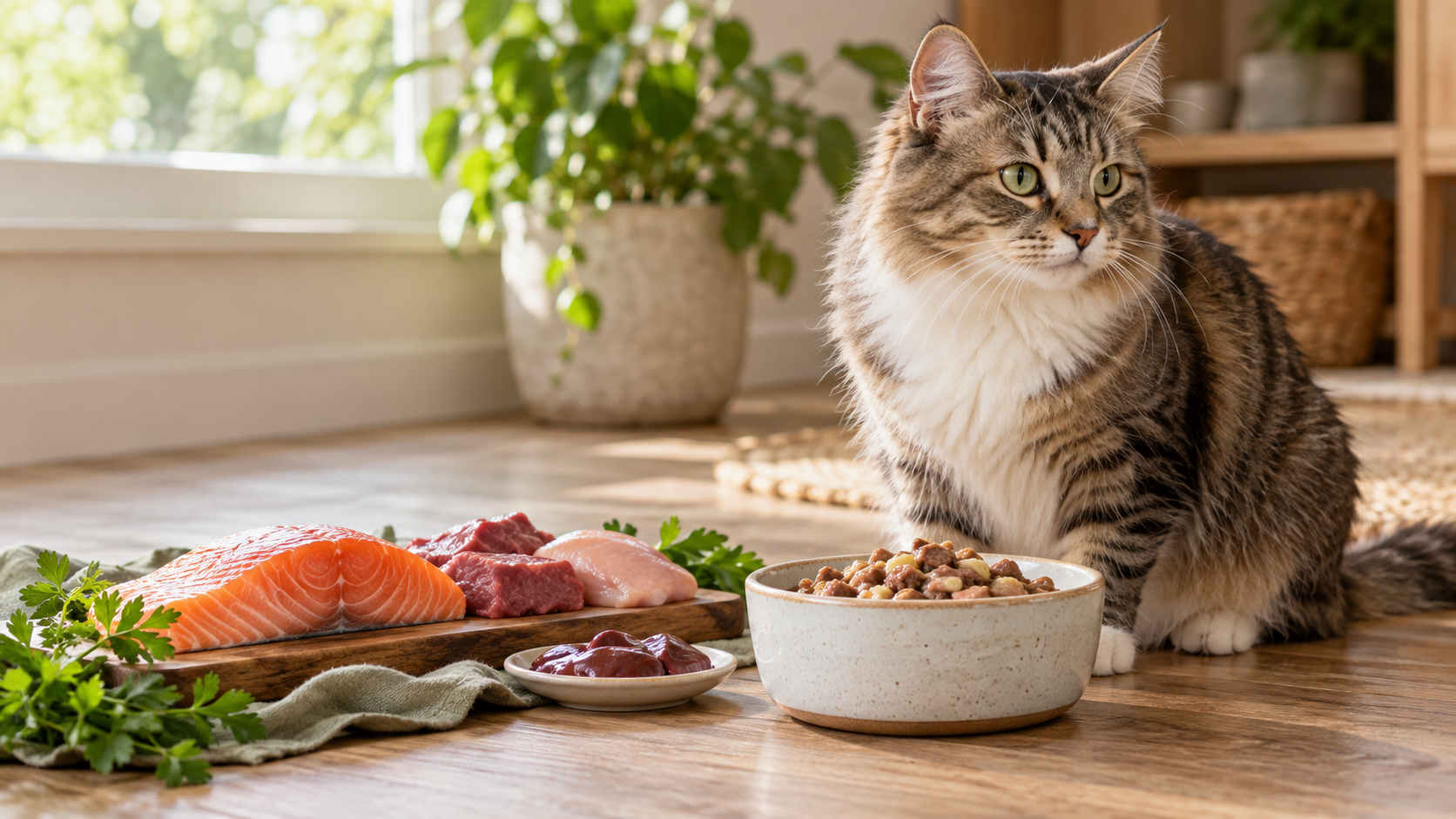
Taurine is concentrated in animal tissue, and different tissues carry very different amounts. Muscle that works hard, such as the heart, tends to be especially rich in it. Plant foods contain essentially none, which is why a meat-free diet cannot supply what a cat needs. The table below shows general sources, from richer to more modest.
| Food source | Notes on taurine content |
|---|---|
| Heart (chicken, beef, turkey) | One of the richest natural sources, since hard-working muscle is high in taurine. |
| Dark poultry meat (thigh, leg) | Dark meat generally carries more taurine than light breast meat. |
| Shellfish (clams, mussels, shrimp) | Naturally high in taurine, though used only as part of a balanced diet, not a meal on its own. |
| Fish (such as salmon and tuna) | A good source, but fish has its own cautions and should not be the whole diet. |
| Organ meat such as liver and kidney | Contains taurine along with other nutrients, but the amount fed must be controlled to avoid vitamin excess. |
| Muscle meat (breast, lean cuts) | Provides some taurine, generally less than heart or dark meat. |
| Plant foods (grains, vegetables) | Essentially no taurine, which is why cats cannot rely on a plant-based diet. |
How the food is handled matters too. Taurine dissolves in water, so cooking, boiling, freezing and thawing, and grinding can all lower how much stays in the meat, with a good deal of it lost into the cooking liquid or drip. This is a big reason a meat-based homemade or raw diet can still fall short on taurine unless it is carefully balanced.
Taurine in Commercial, Homemade, and Raw Diets
Complete commercial cat food
Cat foods labeled complete and balanced to AAFCO or FEDIAF standards already include enough taurine, because added taurine is standard in these diets. If your cat eats one of these foods as its main diet, taurine is generally taken care of and no extra supplement is usually needed.
Dog food is not adequate
Dog food is not a safe substitute for cat food. Dogs can make much of their own taurine, so dog diets are not required to guarantee the level a cat needs, and they differ in protein and other nutrients too. Feeding a cat dog food long-term can lead to taurine deficiency and other problems.
Homemade diets
Home-cooked cat food often needs added taurine, because cooking in water can wash taurine out of the meat. The right amount should be set by a board-certified veterinary nutritionist as part of a fully balanced recipe, not guessed from a generic recipe online.
Raw diets
Raw meat keeps more of its natural taurine than cooked meat, but grinding, freezing, and thawing still cause losses, and the total amount depends on which tissues are used. Raw diets should also be professionally formulated so taurine and every other nutrient land in the right range.
The short version is that a complete commercial diet does the balancing for you, while homemade and raw diets put that responsibility on the person preparing the food. That is why any homemade or raw plan should be built with professional help. You can read more in our guides to homemade cat food and raw feeding for cats.
Do Cats Need Taurine Supplements?
For most cats on a complete and balanced commercial diet, the answer is no. The taurine has already been added and balanced, so a separate supplement is generally unnecessary and adding one on your own does not make a healthy diet better.
Supplements become important in two situations. The first is a homemade or raw diet, where added taurine is often part of the recipe and the amount should be set by a professional. The second is when a veterinarian recommends taurine for a specific medical reason, such as managing a cat diagnosed with a taurine-related heart condition. In both cases the dose is chosen for that cat rather than guessed.
Do not load up on taurine or any other supplement without guidance. More is not automatically better, and self-supplementing can hide a real problem or throw off a diet that was already balanced. If you feed homemade or raw food, or if you think your cat may be at risk, work with your veterinarian so the taurine level is correct for your cat.
Wondering how much your cat should eat each day?
Estimate your cat's daily calorie needs based on weight, activity, and life stage, then discuss the diet itself with your vet.
Try the Cat Nutrition Calculator →The Simple Takeaway
Taurine is essential for cats, it comes from animal food, and cats cannot make enough of it themselves. A complete and balanced commercial diet handles taurine for you, while homemade and raw diets need it added in the right amount by a professional. Dog food and plant-based diets do not fit the bill.
To compare complete and balanced options, see our guides to the best cat food and wet vs dry cat food. If your cat has a health condition such as kidney disease, diet choices should be made with your vet. You can also browse more resources in our Cat Weight Guides.
Frequently Asked Questions About Taurine for Cats
Common questions about why cats need taurine and where they get it
Why do cats need taurine in their diet?
Taurine is an essential amino acid for cats, which means their bodies cannot make enough of it and they must get it from food. Cats are obligate carnivores, and taurine is found almost entirely in animal tissue, not in plants. Without enough taurine over time, a cat can develop serious heart disease and permanent vision loss. A complete cat food already provides enough, but taurine is one of the main reasons cats cannot live on a vegetarian diet or on dog food.
What happens if a cat does not get enough taurine?
A long-term taurine deficiency can cause dilated cardiomyopathy, a serious heart condition where the heart muscle weakens and can fail, and central retinal degeneration, which leads to irreversible blindness. It can also cause reproductive problems and poor growth in kittens. These changes often build silently before any signs appear, and some of the damage, such as the vision loss, cannot be reversed. A cat showing weakness, breathing trouble, or vision problems needs to see a veterinarian.
Which foods are highest in taurine?
Taurine is concentrated in animal tissue, especially heart muscle, dark poultry meat, shellfish, fish, and other organ meats such as liver. Plant foods contain essentially none. Cooking, freezing, grinding, and cooking in water can all reduce how much taurine remains in meat, because taurine leaches out into the cooking liquid. This is one reason homemade and raw diets often need added taurine even though they are meat based.
Do I need to give my cat a taurine supplement?
Usually not, if your cat eats a complete and balanced commercial food formulated to AAFCO or FEDIAF standards, because taurine is already added to those diets. Supplements matter mainly for cats on homemade or raw diets, or when a veterinarian recommends one for a specific medical reason. Do not add large amounts of taurine on your own without guidance, and have any homemade or raw diet formulated by a professional so the taurine level is correct.
Is the taurine in dog food enough for a cat?
No. Dog food is not formulated for cats and is not a safe long-term diet for them. Dogs can make much of their own taurine, so many dog foods are not required to add enough for a cat, and they also differ in protein and other nutrients cats need. Feeding a cat dog food over time can lead to taurine deficiency and other problems. Cats need food made specifically for cats.
Feed Your Cat With Confidence
Use our free calculators, then confirm any diet change with your veterinarian.
Free cat printables
Keep these cat care guides handy
A rotating selection of practical cat guides chosen from our free printable library.Cat Feeding Guide
Portions by weight, age, and life stage.
Kitten Calorie Guide
Calorie targets by kitten age and weight.
Cat Quality of Life Checklist
Track the HHHHHMM quality-of-life measures.