Last updated: October 3, 2026
Dog Health
Bloat in Dogs (GDV)
Bloat, and especially GDV where the stomach fills with gas and twists, is one of the fastest-moving emergencies a dog can face. It can kill within hours. This guide explains the warning signs, why it is a true emergency, which dogs are at risk, and exactly what to do if you suspect it.
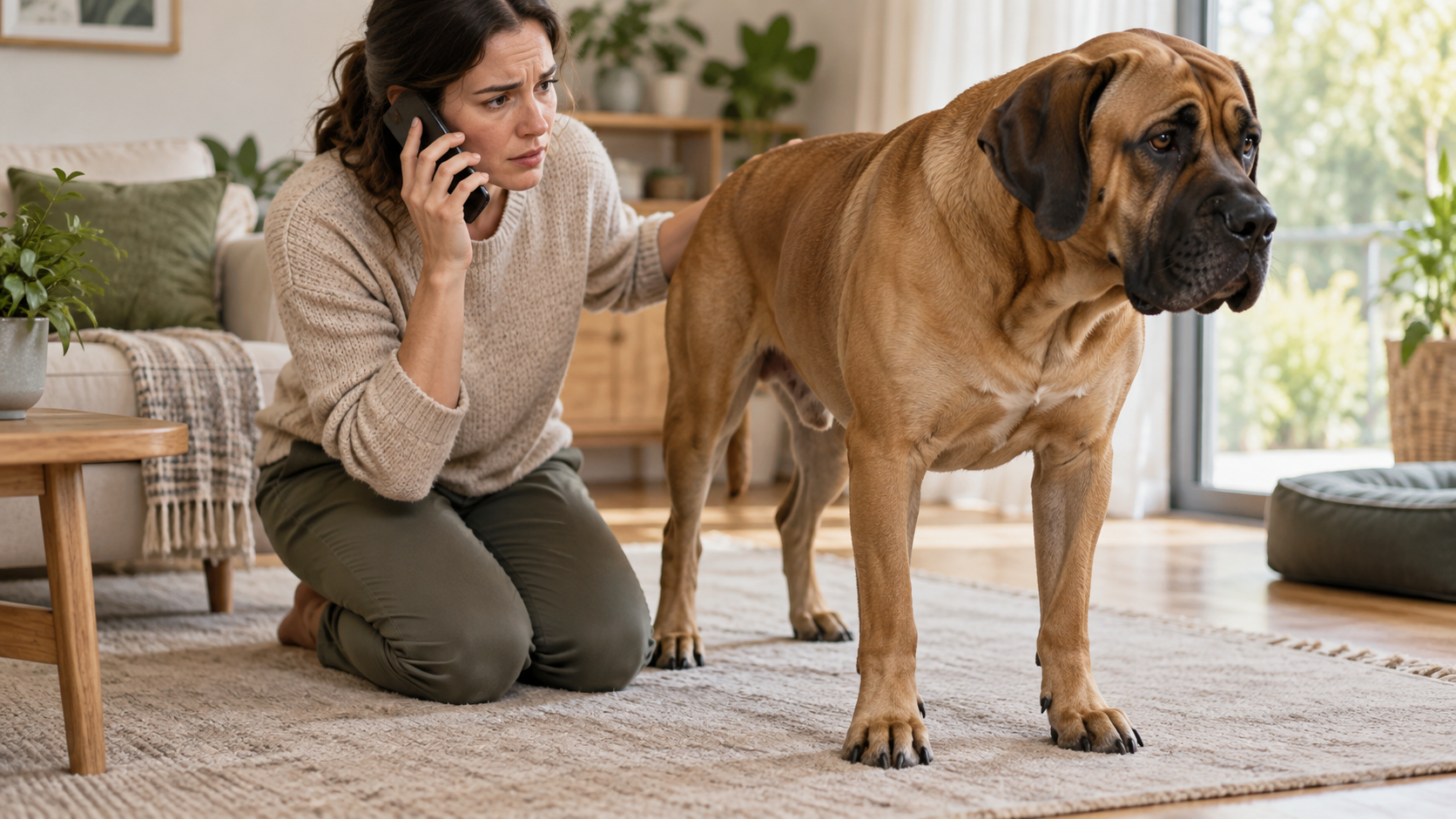
This guide is general information, not veterinary advice. Bloat and GDV are life-threatening emergencies. If you think your dog is bloating, do not use this page to decide whether to wait. Contact your nearest emergency veterinarian right now, who can assess and treat your dog without delay.
This is a medical emergency. Get to a vet immediately.
If your dog shows any of these signs, do not wait and watch at home. Call the nearest emergency vet to say you are on the way, then go straight there:
- A swollen, bloated, or distended belly that feels hard or tight
- Unproductive retching, trying to vomit again and again with nothing coming up
- Heavy drooling, restlessness, and pacing, unable to get comfortable
- A hunched or "praying" posture, with the front end down
- Pale gums, rapid or labored breathing, weakness, or collapse
Bloat can turn into life-threatening GDV within hours. Do not try home remedies, do not try to make your dog vomit, and do not give anything by mouth. The only thing that helps is getting to a vet fast.
Warning Signs of Bloat
What bloat looks like, so you can recognize it fast
A swollen, hard belly
The most recognizable sign is a distended abdomen. The belly may look swollen or blown up, especially behind the ribs, and feel tight or hard like a drum. It can come on suddenly. Do not wait for the belly to look dramatic, as a twist can happen before major swelling is obvious.
Unproductive retching
A dog with bloat often tries to vomit repeatedly but brings up little or nothing, sometimes just foam or saliva. This unproductive retching is a hallmark of GDV and a red flag that the stomach may already be twisting. Take it seriously even if your dog seems otherwise alert.
Drooling, pacing, and restlessness
Excessive drooling, pacing, whining, and an inability to settle or lie down comfortably are common early signs. Your dog may look anxious or distressed and keep changing position. A hunched posture with the front end lowered can also appear as the discomfort builds.
Signs of shock
As GDV progresses, blood supply is cut off and the dog can go into shock. Watch for pale or grayish gums, rapid or heavy breathing, a racing heart, weakness, and collapse. These are late, dangerous signs. If you see them, every second counts and you must get to a vet immediately.
Why Bloat Is an Emergency (GDV)
Bloat begins when the stomach fills with gas, food, or fluid and stretches, which is sometimes called simple bloat or gastric dilatation. The dangerous form is gastric dilatation-volvulus, or GDV, where that enlarged stomach then rotates and twists on itself. Once it twists, the situation goes from serious to life-threatening very quickly.
A twisted stomach seals off both ends, so the trapped gas has nowhere to go and the stomach keeps swelling. The rotation pinches major blood vessels and cuts off the blood supply to the stomach wall and other organs. Tissue begins to die, toxins build up, and the pressure presses on the diaphragm and large veins, making it hard to breathe and starving the heart of returning blood.
The result is shock, and it can develop within hours. This is why bloat is never a wait-and-see problem. There is no safe way to manage a suspected GDV at home, and no home remedy can untwist a stomach. The dogs that do best are the ones that reach an emergency vet the fastest, so recognizing the signs and acting immediately is what saves lives.
Risk Factors for Bloat
Knowing your dog's risk helps you take the right precautions. Talk to your vet about prevention if several of these apply.
| Risk factor | Why it matters | What you can do |
|---|---|---|
| Large and giant deep-chested breeds | A deep, narrow chest gives the stomach more room to swing and twist. Great Danes, German Shepherds, Weimaraners, Standard Poodles, Setters, and similar builds are at the highest risk. | Know that your breed is at risk, learn the signs, and talk to your vet about a preventive gastropexy, ideally before or during a spay or neuter. |
| Eating one large meal fast | A big, quickly gulped meal fills the stomach with food and swallowed air, stretching it and making twisting more likely. | Feed two or three smaller meals a day instead of one large one, and slow rapid eaters with a slow-feeder bowl or food puzzle. |
| Vigorous exercise around meals | Hard running or play with a full stomach can let a heavy, gas-filled stomach move and rotate. | Keep activity calm for about an hour before and after meals. Save vigorous exercise for well away from mealtimes. |
| Stress and temperament | Anxious or easily stressed dogs, and stressful events such as boarding or travel, are linked to a higher risk of bloat. | Reduce mealtime stress, feed in a calm setting, and avoid feeding right before or after a known stressful event. |
| Older age and family history | Risk rises with age, and dogs with a close relative that has bloated are more likely to bloat themselves. | Be extra vigilant as an at-risk dog ages, and mention any family history of bloat to your vet when planning prevention. |
| Raised or elevated bowls | Once recommended, elevated feeding is now debated and has been linked in some studies to higher, not lower, risk in large breeds. | Do not assume a raised bowl prevents bloat. Ask your vet what is right for your individual dog rather than following a blanket rule. |
What to Do If You Suspect Bloat
If you think your dog is bloating, act as though it is a true emergency, because it is. Speed is everything, and the steps are simple:
- Call the nearest emergency vet now. Phone ahead so the team is ready for you, but do not delay leaving. If your regular clinic is closed, head to the closest emergency or after-hours hospital.
- Go immediately. Get your dog into the car and drive straight there. Bloat can progress to GDV and shock within hours, so minutes matter.
- Do not try home remedies. Do not try to make your dog vomit, do not give food, water, medication, or any home treatment, and do not attempt to relieve the gas yourself. None of it works on a twisted stomach and it only wastes time.
- Keep your dog as calm and still as you can. Handle gently and avoid extra stress on the way, but never let calming efforts delay the drive to the clinic.
The single most important message is not to wait and watch. If you are unsure whether it is bloat or something milder, treat it as an emergency and let the vet decide. If your dog is throwing up yellow but is comfortable, alert, and has a normal-looking belly, that is a different situation from the repeated unproductive retching of bloat, but when in doubt, get seen.
Treatment for Bloat and GDV
At the clinic, the veterinary team works fast and usually in overlapping stages. The first priority is stabilization, treating shock with intravenous fluids and pain relief while checking the heart and taking an X-ray to confirm whether the stomach has twisted.
Next comes decompression, relieving the built-up gas and pressure. The vet may pass a tube into the stomach or use a needle through the body wall to release gas, which takes pressure off the blood vessels and lungs and buys time. When the stomach has twisted, this is only a temporary measure, because it does not fix the rotation.
For confirmed GDV, surgery is the definitive treatment. The surgeon untwists the stomach, checks whether the stomach wall and spleen are still healthy, and removes any tissue that has died. During the same operation the vet usually performs a gastropexy, tacking the stomach to the body wall so it cannot rotate again. Even with excellent care, GDV is serious, and outcomes are best when treatment starts early, which is another reason acting quickly matters so much.
Preventing Bloat
You cannot remove the risk entirely, but you can lower it, and for at-risk breeds there is a surgical option that helps a great deal. Sensible everyday habits include:
- Feed smaller, more frequent meals. Two or three modest meals a day are easier on the stomach than one large one, which stretches it and increases risk.
- Slow down fast eaters. A slow-feeder bowl, food puzzle, or portioning tricks reduce the gulped air and rapid filling that come with wolfing food down.
- Keep vigorous exercise away from mealtimes. Allow calm time for about an hour before and after eating, and avoid hard running or rough play on a full stomach.
- Manage stress around food. Feed in a calm, quiet spot, and try not to feed right before or after stressful events such as travel or boarding.
- Discuss a preventive gastropexy. For high-risk breeds, a prophylactic gastropexy that tacks the stomach in place is the most effective prevention. It is often done during a spay or neuter, so ask your vet whether it is right for your dog.
Portioning meals sensibly is part of good prevention. Our dog feeding calculator can help you split the daily amount into smaller meals, and our dog water intake calculator helps you gauge normal drinking so you can spot changes. Keeping your dog at a healthy weight matters too, and you can check that with our dog weight calculator and our guide to the dog body condition score.
Frequently Asked Questions About Bloat in Dogs
Common questions about the warning signs, urgency, and prevention of bloat and GDV
What are the first signs of bloat in a dog?
The classic early signs are a swollen, hard, or distended belly, and unproductive retching, where your dog tries to vomit again and again but little or nothing comes up. Many dogs also drool heavily, pace, act restless, and cannot get comfortable. If you see these together, treat it as an emergency and get to a vet immediately. Do not wait to see if it passes.
How quickly can bloat kill a dog?
Bloat, and especially GDV where the stomach twists, can become fatal in a matter of hours. Once the stomach rotates it cuts off its own blood supply and traps gas, and the dog can go into shock quickly. There is no safe amount of time to wait and watch at home. The sooner your dog reaches an emergency vet, the better the chance of survival.
What should I do if I think my dog has bloat?
Call the nearest emergency vet to say you are coming, then go straight there. Do not try home remedies, do not try to make your dog vomit, and do not give anything by mouth. Nothing you can do at home fixes a twisted stomach, and every minute spent trying delays the surgery that can save your dog. Getting to the clinic fast is the single most important thing.
Which dogs are most at risk of bloat?
Large and giant deep-chested breeds are most at risk, including Great Danes, German Shepherds, Weimaraners, Standard Poodles, and Setters. Eating fast from one big meal, vigorous exercise around mealtimes, stress, older age, and a family history of bloat all add to the risk. Smaller dogs can bloat too, but it is far less common than in the big, deep-chested breeds.
Can bloat in dogs be prevented?
You can lower the risk with everyday habits: feed smaller, more frequent meals, slow down fast eaters with a slow-feeder bowl, and keep vigorous exercise away from mealtimes. For high-risk breeds, the most effective step is a preventive gastropexy, a surgery that tacks the stomach in place so it cannot twist, often done during a spay or neuter. Discuss it with your vet.
Explore More Dog Health Guides
Understand your dog's symptoms and know when a situation is an emergency.
Free dog printables
Keep these dog care guides handy
A rotating selection of practical dog guides chosen from our free printable library.Dog Body Condition Chart
A printable 1–9 body condition reference.
Dog Quality of Life Checklist
Track the HHHHHMM quality-of-life measures.
Puppy Calorie Guide
Calorie targets by breed size and age.