
Last updated: October 3, 2026
Dog Health
Why Do Dogs Eat Grass?
Watching your dog munch a mouthful of lawn can be puzzling, but it is one of the most common and usually most harmless things dogs do. Here is what the behavior really means, whether it points to a diet problem, the times it is worth a closer look, and how to gently cut it down.
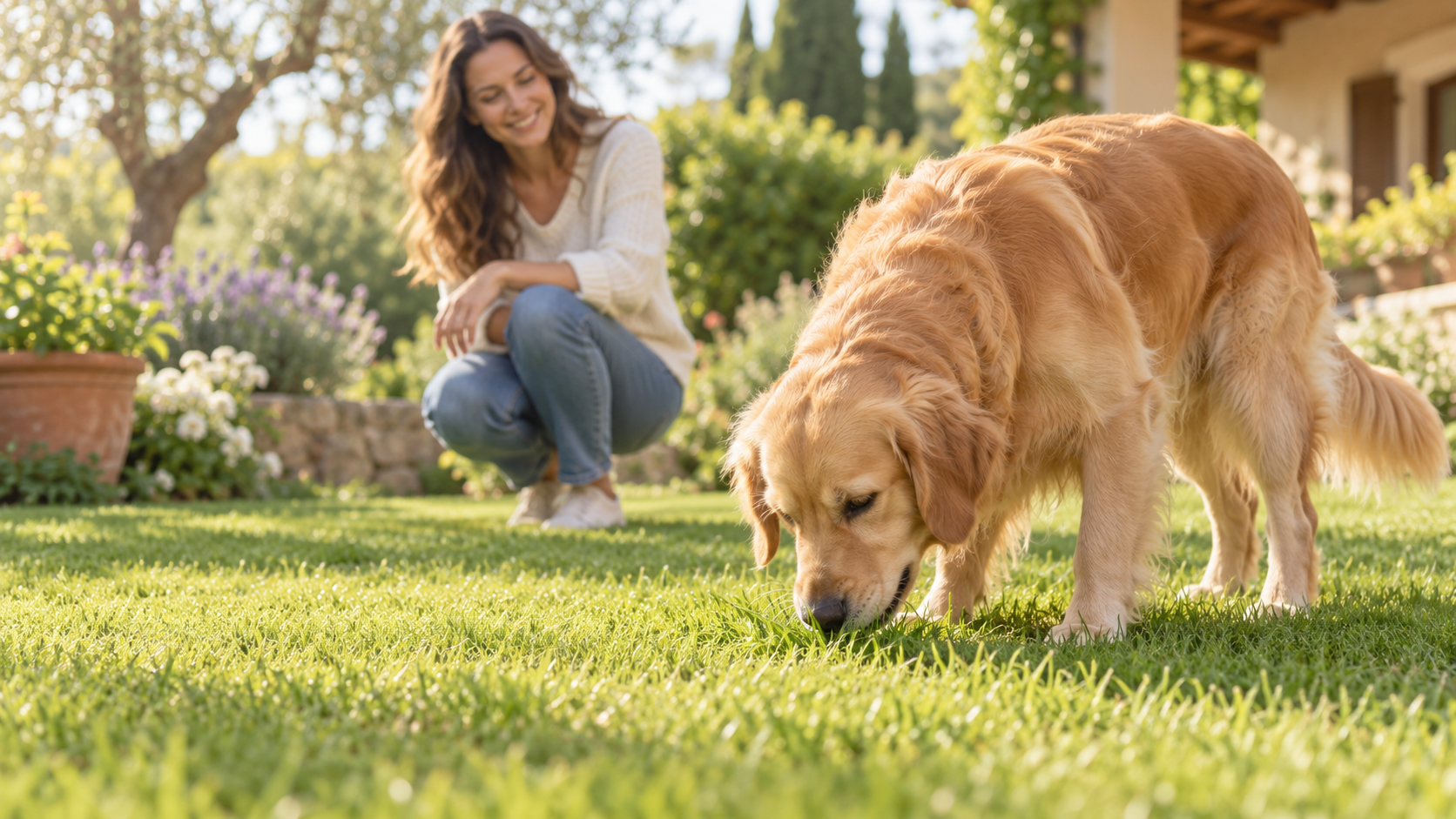
This guide is general information, not veterinary advice. Every dog is different. If your dog's grass eating changes suddenly, becomes intense, or comes with other signs of illness, contact your veterinarian, who can examine your dog and rule out an underlying cause.
The grass matters more than the grazing
The behavior itself is usually fine. The bigger risks come from what is on or near the grass, and from grass eating paired with other symptoms.
- Grass treated with pesticides, herbicides, or fertilizers can be toxic, so avoid treated lawns, verges, and public areas that may have been sprayed
- Toxic plants and lawn weeds can be mistaken for grass, and some are dangerous if eaten
- Grass in some areas can carry parasite eggs or larvae picked up from other animals
- Grass eating with repeated vomiting, diarrhea, lethargy, or loss of appetite needs a vet, as it may point to illness rather than habit
Common Reasons Dogs Eat Grass
Grazing is normal for most dogs, and there is usually a simple, harmless explanation
Instinct and ancestral behavior
Eating plants is part of a dog’s natural, inherited behavior. Wild relatives of dogs regularly consume plant material, and grazing on grass appears to be a normal instinct rather than a sign that something is wrong. For many dogs, nibbling grass is simply part of exploring the world.
Boredom and too little stimulation
A dog with time on its paws and little to do may graze the way we might snack out of boredom. Under-exercised or under-stimulated dogs often eat more grass, and the behavior tends to ease when they get more activity, play, and mental enrichment during the day.
Taste, texture, and enjoyment
Some dogs simply seem to like it. Fresh grass has a taste and texture many dogs enjoy, and spring growth in particular can be appealing. If your dog grazes calmly, then carries on happily, enjoyment is often the whole story.
Fiber or a dietary craving
Grass is a source of roughage, and some dogs may nibble it as a way of adding fiber or bulk to their diet. Occasionally a dog eats grass when its stomach feels off, though it is worth knowing that most dogs do not vomit afterward and do not appear unwell beforehand, so the upset-stomach theory is easy to overstate.
Is It a Nutritional Deficiency?
It is a common worry, but in most cases grass eating is not a sign that your dog’s diet is lacking something. Dogs on complete, balanced foods graze just as readily as any other dog, and the behavior is so widespread that it is a poor indicator of a specific deficiency. For the great majority of dogs, grazing is ordinary behavior, not a nutritional cry for help.
That said, diet can still play a supporting role. A complete, well-formulated food with adequate fiber gives your dog what it needs and may reduce grazing in some individuals. If you want to check you are feeding an appropriate amount and a balanced ration, our dog nutrition calculator and dog feeding calculator can help you set sensible targets.
There is one pattern worth flagging. If your dog eats not just grass but also dirt, rocks, fabric, or other non-food items, that is called pica. Pica is different from ordinary grazing and can sometimes have a medical or behavioral cause, so it is worth raising with your vet rather than assuming it is only a quirk.
Reading Your Dog's Grass Eating
Use this as a starting point, not a diagnosis. The pattern and any other symptoms matter more than the grazing on its own.
| Behavior pattern | Likely meaning | What to do |
|---|---|---|
| Occasional nibbling on a walk, then carries on as normal | Almost always normal. Grazing is a common, instinctive dog behavior and rarely signals a problem. | No action needed. Just steer them away from treated or roadside grass and keep an eye on the amount. |
| Grazes when bored, under-exercised, or left alone | Often a sign of too little stimulation rather than a health issue. Grass becomes something to do. | Add exercise, play, and enrichment. A tired, engaged dog usually grazes less. |
| Eats grass, then vomits once, and seems fine after | Sometimes linked to a passing upset stomach, though most grass eating does not lead to vomiting at all. | Watch for a repeat. A single episode in an otherwise bright dog is usually not urgent. |
| Sudden increase in grass eating, or eats it frantically | A change in pattern is more meaningful than the behavior itself and can point to nausea or discomfort. | Note when it started and any other signs, and mention it to your vet if it continues. |
| Grazes then repeatedly vomits, is off food, or is lethargic | This combination is the one to take seriously, as it may reflect an underlying illness rather than habit. | Contact your vet promptly for an exam rather than waiting to see if it passes. |
When Grass Eating Is a Concern
Because occasional grazing is so normal, the thing to watch is not the behavior itself but changes in it and the company it keeps. The following situations are the ones worth paying attention to:
- A sudden increase. A dog that rarely grazed and now eats grass a lot, especially over a short time, is showing a change worth noting.
- Grass eating with repeated vomiting. One episode followed by feeling fine is usually harmless. Grazing and then vomiting again and again is not, and points toward an upset that needs looking into.
- Other signs of illness. Lethargy, loss of appetite, diarrhea, or a dog that just seems off alongside the grazing changes the picture from habit to possible illness.
- Frantic or compulsive grazing. Eating grass intensely, urgently, or in a way that is hard to interrupt is different from casual nibbling and deserves a closer look.
- Risk of exposure. If the grass may have been treated with pesticides or herbicides, is near toxic plants, or could carry parasites, eating it is a concern regardless of the amount.
If your dog is grazing and then bringing up food, our guide to a dog throwing up yellow can help you make sense of what you are seeing, and a short spell on a bland diet for dogs is sometimes suggested by vets for a mild, settling stomach.
How to Reduce Grass Eating
If the grazing is safe and occasional, you do not have to stop it at all. When you want to cut it down, whether for peace of mind or because your lawn may not be clean, a few practical steps tend to work better than telling your dog off:
- Add enrichment and play. Puzzle feeders, training games, sniffing walks, and interactive toys give a bored dog something better to do than graze.
- Make sure exercise is enough. A well-exercised dog is calmer and less likely to snack on grass out of restlessness. If you are unsure how much your dog needs, our dog exercise calculator can give you a starting point.
- Feed a balanced diet with enough fiber. A complete food that meets your dog’s needs, with adequate fiber, may reduce the urge to graze in some dogs.
- Offer safe chew alternatives. Appropriate chews and long-lasting treats give your dog an acceptable outlet for the urge to nibble and chew.
- Avoid treated lawns and redirect gently. Steer clear of grass that may have been sprayed, keep away from toxic plants, and calmly guide your dog away rather than punishing, which works better and keeps grazing from becoming a game.
When to See a Vet
For most dogs, grass eating never needs a vet visit. Reach out to your veterinarian if the behavior changes suddenly, becomes frantic or compulsive, or comes with repeated vomiting, diarrhea, lethargy, or a loss of appetite. The same applies if you think your dog may have eaten grass treated with chemicals or a toxic plant, since that is about the exposure rather than the grazing.
Your vet can examine your dog, check for an underlying cause, and reassure you when the grazing is simply a harmless habit. Trust your sense of your own dog: a bright, happy grazer is usually just being a dog, while a change in behavior paired with feeling unwell is the signal to pick up the phone.
Frequently Asked Questions About Dogs Eating Grass
Common questions about why dogs eat grass, what it means, and when to worry
Why does my dog eat grass?
Most dogs eat grass simply because it is a normal, instinctive behavior. Common reasons include curiosity, boredom, the taste and texture, or a mild craving for extra fiber. The old idea that dogs eat grass mainly to make themselves sick is largely a myth, since studies show most dogs do not vomit afterward and do not appear unwell before grazing. In the large majority of cases it is harmless grazing rather than a sign of a problem.
Is my dog eating grass because of a nutritional deficiency?
Usually not. Grass eating is common even in dogs on complete, balanced diets, so it is rarely a reliable sign of a specific deficiency. That said, a well-formulated diet with adequate fiber may reduce grazing in some dogs. If your dog also eats dirt, rocks, or other non-food items, that is called pica and is worth discussing with your vet, since it can occasionally have a medical cause.
Should I stop my dog from eating grass?
You do not need to stop occasional grazing on clean, untreated grass, as it is generally harmless. The real concern is what is on the grass rather than the grass itself. Avoid lawns treated with pesticides, herbicides, or fertilizers, keep your dog away from toxic plants, and be aware that grass in some areas can carry parasite eggs or larvae. If you cannot be sure the grass is safe, it is sensible to redirect your dog.
When should I worry about my dog eating grass?
Be concerned if grass eating suddenly increases, becomes frantic or compulsive, or is paired with other signs such as repeated vomiting, diarrhea, loss of appetite, or lethargy. Eating grass and then vomiting again and again is different from a single harmless episode. A change in the usual pattern, especially alongside a dog that seems unwell, is a good reason to call your vet.
How can I get my dog to stop eating grass?
Since boredom is a frequent driver, more exercise, play, training, and enrichment such as puzzle feeders often help. Make sure the diet is complete and provides enough fiber, and offer safe chew alternatives so your dog has an acceptable outlet. Redirect gently rather than punishing, and always avoid chemically treated lawns. If grazing is intense or sudden, rule out a medical cause with your vet first.
Explore More Dog Health Guides
Understand your dog's behavior and know when to call the vet.
Free dog printables
Keep these dog care guides handy
A rotating selection of practical dog guides chosen from our free printable library.Dog Budget Checklist
Plan monthly, annual, and one-time dog costs.
Raw Feeding Reference Card
A printable BARF and 80/10/10 portion guide.
Dog Feeding Guide
Portion guidance by weight, age, and life stage.