
Last updated: October 3, 2026
Dog Health
Pale Gums in Dogs
Pale gums in dogs can be a serious warning sign. Healthy gums are a moist, bubblegum pink, so gums that turn pale or white often mean anemia, shock, or blood loss, and they can signal a true emergency. This guide explains how to check your dog’s gums, what the common causes are, and when to get to a vet right away.
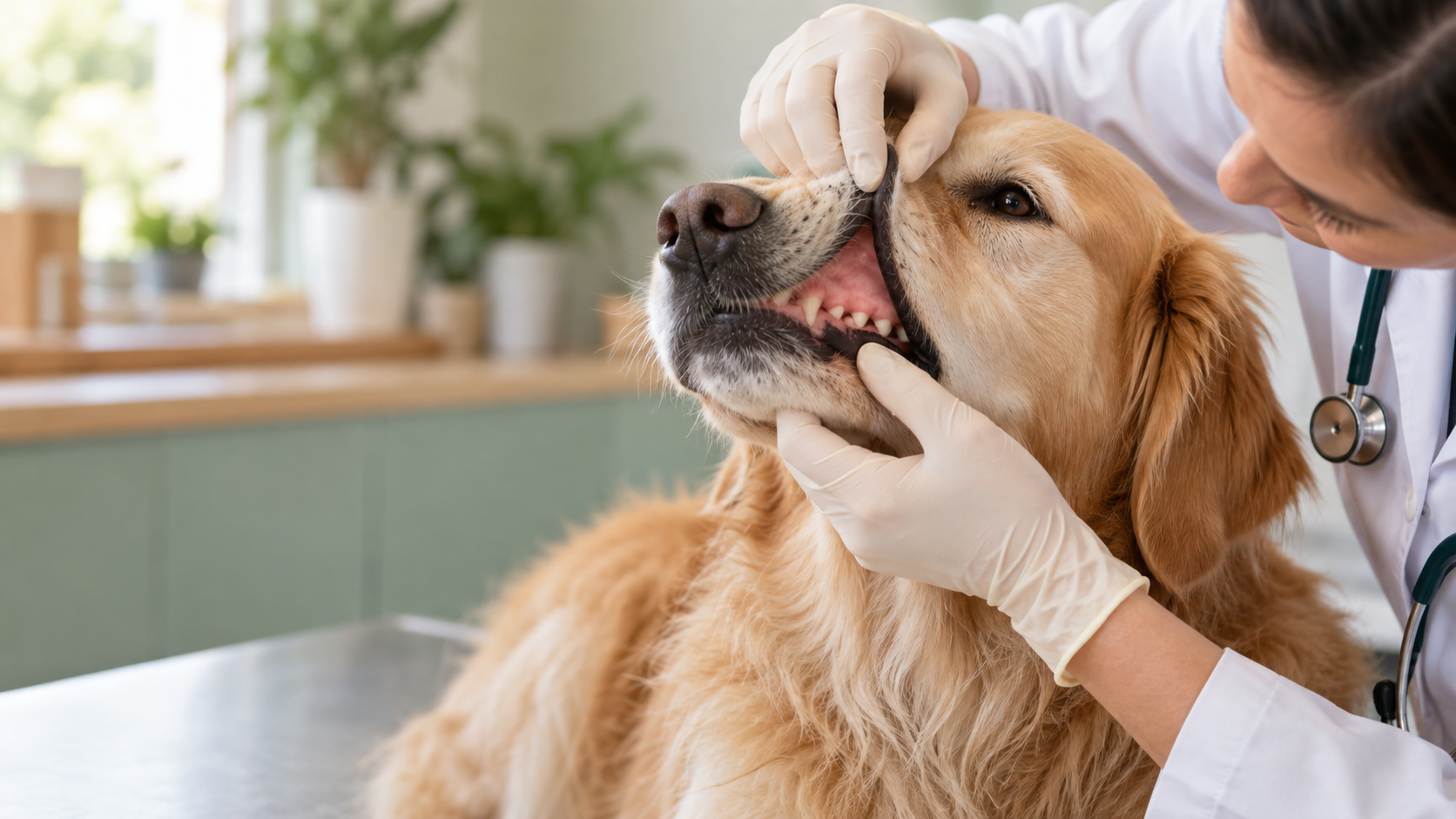
This guide is general information, not veterinary advice. Pale or white gums can be a sign of a life-threatening problem. If your dog’s gums look pale, do not use this page to decide whether to wait. Contact your veterinarian or nearest emergency clinic, who can examine your dog without delay.
White or very pale gums are often an emergency. Go now.
Call your nearest emergency vet and go straight there if your dog has white or very pale gums, especially with any of these:
- Weakness or collapse
- Fast or labored breathing
- A swollen or distended belly
- Known trauma, such as a fall or being hit by a car
- A suspected toxin or poisoning
How to check the gums: press a pink area of the gum with a fingertip. It should blanch white, then return to pink in under 2 seconds. Some dogs have naturally black-pigmented gums, so check a pink area or the inside of the lip.
Do not wait and watch. With pale gums, the sooner your dog reaches a vet, the better the chance of a good outcome.
What Gum Color Tells You
A quick guide to what different gum colors can mean, and why each one points back to your vet
Healthy pink
Moist, bubblegum-pink gums with a capillary refill of under 2 seconds are what you want to see. This is a good sign that oxygen-rich blood is reaching the tissues. If you are unsure what is normal for your dog, ask your vet to show you at the next visit so you have a baseline to compare against.
Pale or white
Gums that look pale, washed out, or white suggest anemia or poor circulation and shock, both of which reduce the oxygen reaching the body. This is a red flag. Whether the change came on suddenly or slowly, have your dog seen by a vet, and treat white gums with other signs of illness as an emergency.
Blue or purple
A bluish or purple tinge is called cyanosis and means the blood is not carrying enough oxygen. This is an emergency that can come from breathing or heart problems. Get to a vet immediately rather than trying to work out the cause at home.
Yellow or brick red
Yellow gums suggest jaundice, often from a liver or red blood cell problem, while very red or brick-colored gums can point to heatstroke, certain toxins, or gum disease. Both are abnormal and should be checked, so see your vet to find out what is behind the color change.
Common Causes of Pale Gums
Use this as a starting point, not a diagnosis. Only a vet can confirm the cause and how urgent it is.
| Cause | What else you might see | Urgency |
|---|---|---|
| Blood loss | Weakness, fast breathing, cold limbs, or a swollen belly, following trauma, internal bleeding, or a bleeding tumor. | Emergency |
| Anemia from parasites | Weakness and poor growth from a heavy flea or hookworm burden, especially in puppies and small dogs. | Urgent vet visit |
| Immune-mediated or tick-borne anemia | Lethargy, dark or orange urine, and fever as red blood cells are destroyed faster than they are replaced. | Urgent vet visit |
| Shock or GDV (bloat) | A swollen, tight belly, unproductive retching, restlessness, and collapse. | Emergency |
| Heart or circulation problems | Coughing, tiring quickly, exercise intolerance, and general weakness. | Prompt vet visit |
Why Pale Gums Are a Warning Sign
Gum color is a window onto your dog’s circulation. The pink you see comes from oxygen-rich blood flowing through the small vessels near the surface. When the gums turn pale, it usually comes down to one of two problems, and both reduce how much oxygen reaches the body.
The first is anemia, which means there are too few red blood cells to carry oxygen. This can happen because the body is losing blood, destroying its own red cells, or not making enough of them. A heavy flea or worm burden, immune-mediated disease, tick-borne infections, and chronic illness are all possible drivers.
The second is shock and poor perfusion, where blood is not being pumped and distributed properly, so the vessels near the gums empty out. This is what happens with severe blood loss, heart problems, and conditions such as bloat. In both cases the tissues are starved of oxygen, which is why pale gums are never something to brush off.
How to Check Your Dog’s Gums
Checking the gums takes only a few seconds once you know what to look for, and it is worth practicing when your dog is healthy so you know their normal:
- Lift the lip. Gently raise your dog’s upper lip so you can see the gum above the teeth. Do this when your dog is calm, and never risk a bite.
- Look at the color. Healthy gums are moist and bubblegum pink. Pale, white, blue, yellow, or brick-red gums are all abnormal.
- Test the refill. Press a pink area with a fingertip until it blanches white, then release. The pink should return in under 2 seconds. A slow refill suggests poor circulation.
- Mind the pigment. Some dogs have naturally black or spotted gums. On these dogs, check a pink area or the inside of the lip instead.
Parasites are one of the more preventable causes of pale gums, so it is worth ruling them out. Our guides to fleas on dogs, worms in dogs, and the dog tapeworm explain the burdens that can drain enough blood to cause anemia, especially in puppies.
What to Do
Treat pale gums as urgent. Do not wait to see whether the color improves, because the causes that turn gums pale, from internal bleeding to shock, tend to get worse rather than better. Call your vet or nearest emergency clinic, describe what you are seeing, and follow their guidance on coming in.
Before you go, it helps to note anything that could point to a cause: a recent injury or fall, possible access to a toxin or medication, a known illness, or symptoms such as vomiting, dark urine, or a swollen belly. Pale gums alongside a distended abdomen and unproductive retching can be a sign of shock from bloat in dogs (GDV), which is a fast-moving emergency. Sharing this history helps your vet act quickly, and you can find more symptom guides in our dog health hub.
Frequently Asked Questions About Pale Gums in Dogs
Common questions about gum color, causes, and when to worry
What do pale gums mean in a dog?
Pale or white gums usually mean that less oxygen-carrying blood is reaching the tissues, which points to either anemia (too few red blood cells) or shock and poor circulation. Both are serious. Common triggers include blood loss from injury or internal bleeding, anemia from heavy flea or worm burdens, immune-mediated or tick-borne disease, bloat, and heart problems. Because the causes range from parasites to life-threatening emergencies, pale gums are always a reason to contact your vet, and often a reason to go straight in.
What color should a dog’s gums be?
Healthy gums are a moist, bubblegum pink. When you press a pink area with a fingertip it briefly turns white, then the pink color should return in under 2 seconds. Some dogs naturally have black or spotted pigment in their gums, which is normal, so on those dogs you check a pink area or lift the lip to look at a pink patch. Gums that are pale, white, blue, purple, yellow, or brick red are all abnormal and worth a call to your vet.
Are pale gums always an emergency?
Not always, but you should treat them as urgent until a vet says otherwise. White or very pale gums, especially alongside weakness, collapse, fast or labored breathing, a swollen belly, known trauma, or a suspected toxin, are an emergency and need care right now. Gums that are only slightly paler than usual, with a dog that seems well, still warrant a prompt vet call rather than waiting, because the underlying causes can worsen quickly. When in doubt, have your dog seen.
Can fleas or worms cause pale gums?
Yes. A heavy flea infestation or an intestinal parasite burden, such as hookworms, can drain enough blood to cause anemia and pale gums, and this is a particular danger in puppies and small dogs, where blood loss adds up fast. If you find fleas or suspect worms in a dog with pale gums, see your vet, who can confirm anemia and treat both the parasites and the blood loss. Routine parasite control helps prevent this from happening in the first place.
How do I check my dog’s gums?
Gently lift your dog’s upper lip so you can see the gum above the teeth. Healthy gums look moist and bubblegum pink. Press a pink area lightly with a fingertip until it blanches white, then release and count how long the pink takes to come back: under 2 seconds is normal. If your dog has naturally dark, pigmented gums, check a pink area or the inside of the lip instead. Do this when your dog is calm, and never risk a bite. If the gums look pale or the color is slow to return, call your vet.
Explore More Dog Health Guides
Understand your dog's symptoms and know when a situation is an emergency.
Free dog printables
Keep these dog care guides handy
A rotating selection of practical dog guides chosen from our free printable library.Dog Feeding Guide
Portion guidance by weight, age, and life stage.
Dog Body Condition Chart
A printable 1–9 body condition reference.
Puppy Calorie Guide
Calorie targets by breed size and age.