
Last updated: October 3, 2026
Dog Food for Australian Shepherds: How to Choose the Right Diet
Australian Shepherds are athletic, high-energy herding dogs, and that shapes what to look for in their food. This guide is about choosing the right kind of diet for an Aussie, not exact portions. For how much to feed, we link to our dog feeding calculator and Australian Shepherd weight calculator below.
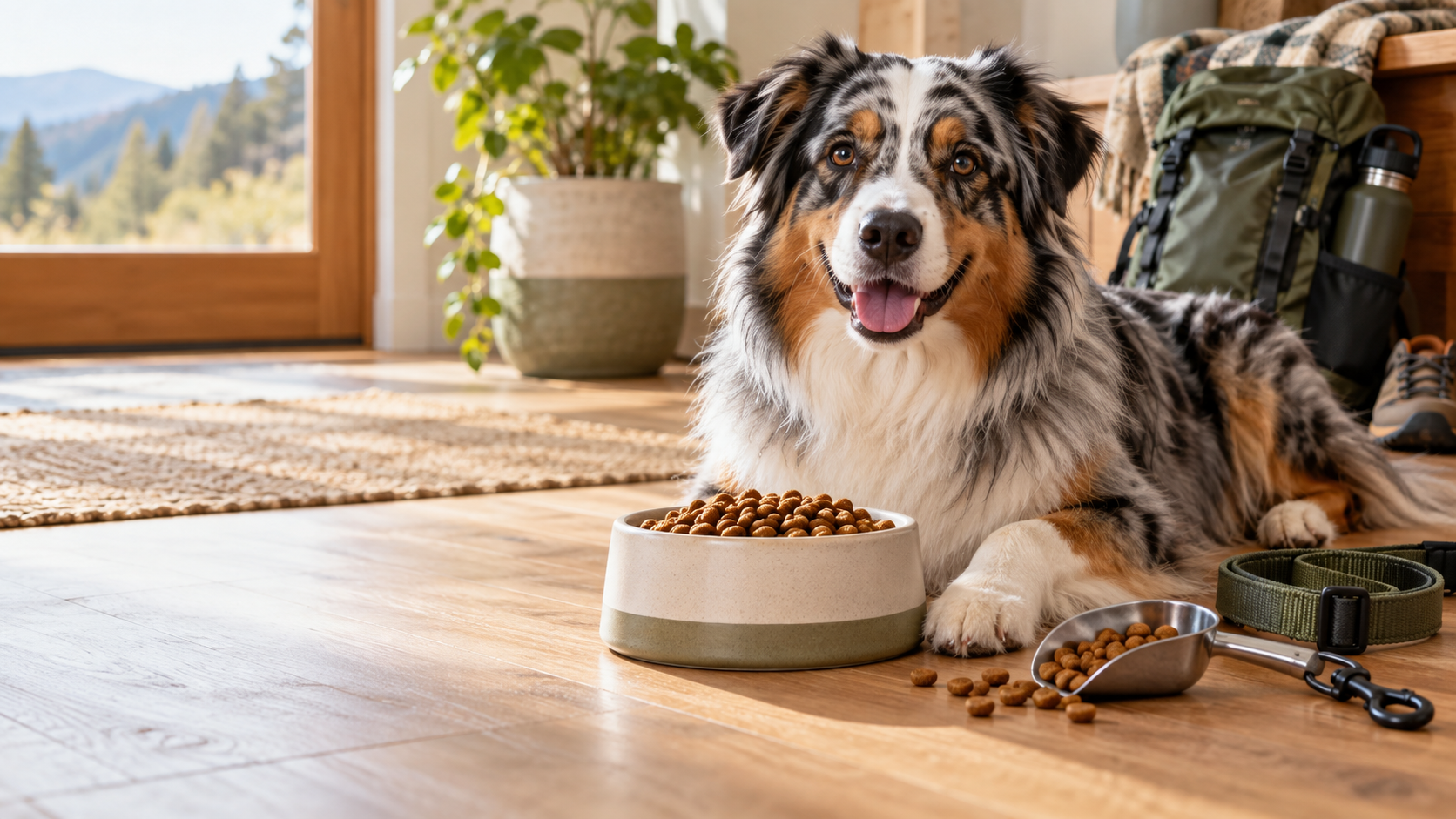
What Makes an Australian Shepherd's Food Needs Different
Australian Shepherds are medium-sized working dogs bred to herd for hours across open country. A typical adult weighs roughly 40 to 65 pounds, with males larger than females, but the number that really matters is their energy output. Aussies have exceptional stamina and drive, and many are happiest with a job to do. That athletic, high-output nature is the single fact that shapes their nutrition more than anything else.
A hard-working body needs plenty of high-quality animal protein to build and maintain lean muscle, and enough dietary fat to supply dense, sustained energy. A dog that spends the day herding, running agility, or hiking burns far more than a companion Aussie who gets a couple of walks and some backyard play. The same breed can therefore need very different calorie amounts depending on the individual dog lifestyle, which is why matching food to real activity level is so important.
Their active life also loads the joints, and the breed can be prone to hip dysplasia, so nutrients that support joint health are worth having in the diet. Separately, Australian Shepherds and other herding breeds often carry the MDR1 gene mutation, which affects how they process certain medications. That is a veterinary and medication concern rather than a diet one, but it is worth knowing about and discussing with your vet. On the food side, the priorities stay the same: a complete, balanced diet with quality protein, adequate fat, and calories matched to how much your dog moves.
What to Look For in Australian Shepherd Food
You do not need a food with "Australian Shepherd" on the bag. What you need is a food that meets the priorities below. Read the label rather than the marketing, and pick based on the life stage, the protein and fat levels, and the calorie level that suit your individual dog.
Complete and balanced
Check for a statement that the food is complete and balanced to AAFCO or FEDIAF standards for the right life stage. This is the single most important line on the label, because it means the food supplies every nutrient your dog needs in the right amounts.
High-quality animal protein, named meat first
An athletic, muscular herding breed benefits from generous animal protein, ideally around 25 percent or more for active adults and higher for working dogs. Look for a named meat such as chicken, lamb, beef, or salmon near the top of the ingredient list rather than vague terms or a plant protein as the main source.
Adequate fat for energy
Fat is the most concentrated energy source in the bowl, and a high-stamina breed needs enough of it. A range of roughly 12 to 18 percent fat suits most active Aussies, with working and sport dogs at the higher end. Very active dogs use it as fuel, while quieter dogs need less to avoid weight gain.
Calories matched to activity
This is the priority that matters most for Aussies. A hard-working herding dog can need substantially more calories than a mostly sedentary companion of the same weight. Choose the food and portion around your dog real activity level, and adjust as their routine and season change.
Joint-support nutrients
Because Aussies are so active and the breed can be prone to hip dysplasia, foods that include omega-3 fatty acids such as EPA and DHA, and sometimes glucosamine or chondroitin, can support joint health. These are a helpful bonus rather than a substitute for a complete diet.
Whole-food quality, no unnecessary fillers
Favor foods built around identifiable, quality ingredients rather than a long list of low-value fillers or vague by-products. Wholesome carbohydrates and fiber are fine and useful, but the diet should be centered on animal protein and fat that actually fuel an active dog.
If a food meets these priorities, it is a reasonable choice for an Australian Shepherd whether or not the packaging is breed-specific. Focus on the guaranteed analysis, the ingredient list, and the life stage statement.
Puppy vs Adult vs Senior Food for Australian Shepherds
An Australian Shepherd nutritional priorities shift as it grows and ages. The table below sums up what to emphasize at each stage. Activity level runs through all of them, since a working Aussie and a couch companion of the same age can have very different calorie needs.
| Life stage | Food type | What to prioritize |
|---|---|---|
| Puppy (growth) | Complete and balanced puppy or growth formula | Higher protein and fat to fuel steady growth, with controlled portions so a fast-growing pup gains at a healthy rate rather than too quickly. Feed multiple smaller meals a day. |
| Adult (maintenance) | Complete and balanced adult maintenance formula | Generous animal protein to maintain muscle, adequate fat for energy, and calories matched to real activity. Working and sport dogs need more, quieter companions need less. |
| Senior | Senior or age-appropriate formula, per your vet | Easily digestible protein to protect muscle, calories eased down as activity slows, and continued joint support. Some seniors need diet adjustments for specific health conditions. |
Transitions between stages should be gradual, over about a week, to avoid digestive upset. Your veterinarian is the best guide for exactly when to switch and how much to feed, because it depends on your individual dog growth, activity, and body condition rather than a fixed date.
How Much to Feed an Australian Shepherd
With a medium, athletic breed like the Aussie, activity level drives the portion far more than weight alone. A herding dog working long days, or a sport dog training hard, can need considerably more food than a companion of the same size who gets moderate exercise. Two Aussies that both weigh 55 pounds can have daily calorie needs that differ by a wide margin, so the amount on the back of the bag is only a starting point.
This page is about what kind of food to choose. For exact amounts, use our dedicated tools: the dog feeding calculator estimates daily portions for your individual dog, and the dog nutrition calculator helps with a general daily calorie estimate. To check where your dog sits against breed ranges, see the Australian Shepherd weight calculator or the general dog weight calculator.
Keeping an Australian Shepherd at a Healthy Weight
A thick double coat can hide the shape underneath, so it is easy to miss when an Aussie is carrying extra weight. The best measure is body condition, not the number on the scale. In a dog at a healthy weight, you should be able to feel the ribs with a light touch, see a visible waist from above, and notice a tucked-up belly from the side. Weight management matters most for less-active pets, whose calorie needs are lower than a working dog even at the same size.
Because an active breed already loads the joints, keeping an Aussie lean is one of the most useful things you can do for its long-term health. Weigh your dog regularly, watch its body condition, and adjust portions rather than relying on a fixed cup measure. To learn the hands-on method, see our guide to the dog body condition score, and if the scale is creeping up, our guide on the overweight dog can help.
Want exact amounts for your Australian Shepherd?
Estimate daily portions for your individual dog based on weight and activity, then choose a food that meets the priorities on this page.
Try the Dog Feeding Calculator →Putting It Together
Choosing food for an Australian Shepherd comes down to a few clear priorities: a complete and balanced formula for the right life stage, plenty of high-quality animal protein, adequate fat for energy, joint support given the active build, and above all calories matched to how much your dog actually moves. Breed-specific packaging is optional, but reading the label is not.
If you are curious about lightly processed options, our guide to air-dried dog food is a useful read, and you can explore more resources in our Dog Weight Guides.
Frequently Asked Questions About Australian Shepherd Food
Common questions about choosing the right diet for an Australian Shepherd
What should I look for in dog food for an Australian Shepherd?
Look for a food that is complete and balanced to AAFCO or FEDIAF standards for the right life stage, with a named animal protein such as chicken, lamb, beef, or salmon listed first. Because Australian Shepherds are active herding dogs, generous animal protein and enough fat for energy matter, and joint-support nutrients like omega-3 fatty acids and glucosamine are a useful bonus. Most importantly, match the calories to how active your dog actually is. There is no single required brand, so focus on the label and life stage rather than packaging that simply says "for Australian Shepherds".
How much protein and fat does an Australian Shepherd need?
As a rough guide, an active adult Australian Shepherd does well on a food with around 25 percent or more crude protein and roughly 12 to 18 percent fat, with working or sport dogs sitting at the higher end. Protein maintains lean muscle and supports the breed athletic build, while fat is a dense energy source that fuels their stamina. Puppies need higher protein and fat to fuel growth. These are general ranges, so read the guaranteed analysis on the label and let your dog body condition and activity level guide the exact choice.
How much should I feed an Australian Shepherd?
A typical adult Australian Shepherd weighs about 40 to 65 pounds, with males larger than females, but the right amount of food depends far more on activity than on weight alone. A hard-working herding or sport dog can need considerably more calories than a mostly sedentary companion of the same size. Rather than guessing, start from a calorie target and adjust based on body condition. Our dog feeding calculator and Australian Shepherd weight calculator help you size portions, and this page focuses on what kind of food to choose rather than exact amounts.
Do Australian Shepherds need grain-free or breed-specific food?
There is no strict requirement to buy a grain-free or Australian Shepherd specific food. What matters is that the diet is complete and balanced for the life stage, built around high-quality animal protein, and portioned to keep your dog lean. Grain-free diets are not automatically better and have been studied in connection with heart concerns in dogs, so many owners choose a well-formulated food with grains unless a veterinarian has diagnosed a specific need. Read the label and match calories to activity rather than following marketing.
Does the MDR1 gene affect what I feed my Australian Shepherd?
The MDR1 gene mutation is common in Australian Shepherds and other herding breeds, and it affects how a dog processes certain medications, not their everyday food. It is a medication and veterinary safety issue rather than a diet issue, so it does not change which complete and balanced dog food you choose. It is still worth knowing about: ask your veterinarian about MDR1 testing so they can prescribe medications and doses safely for your dog.
Feed Your Australian Shepherd With Confidence
Use our free calculators to size portions, then choose a food that fits the breed.
Free dog printables
Keep these dog care guides handy
A rotating selection of practical dog guides chosen from our free printable library.Dog Budget Checklist
Plan monthly, annual, and one-time dog costs.
Raw Feeding Reference Card
A printable BARF and 80/10/10 portion guide.
Dog Body Condition Chart
A printable 1–9 body condition reference.