
Last updated: October 3, 2026
Dog Weight Guides
Dog Bed Size Guide
Getting the right bed size is mostly a matter of measuring your dog and matching that to how they sleep. This guide shows you how to measure, gives you a weight-to-bed-size chart with typical dimensions and example breeds, and explains how sleep style, puppy growth, and joint support should shape your choice.
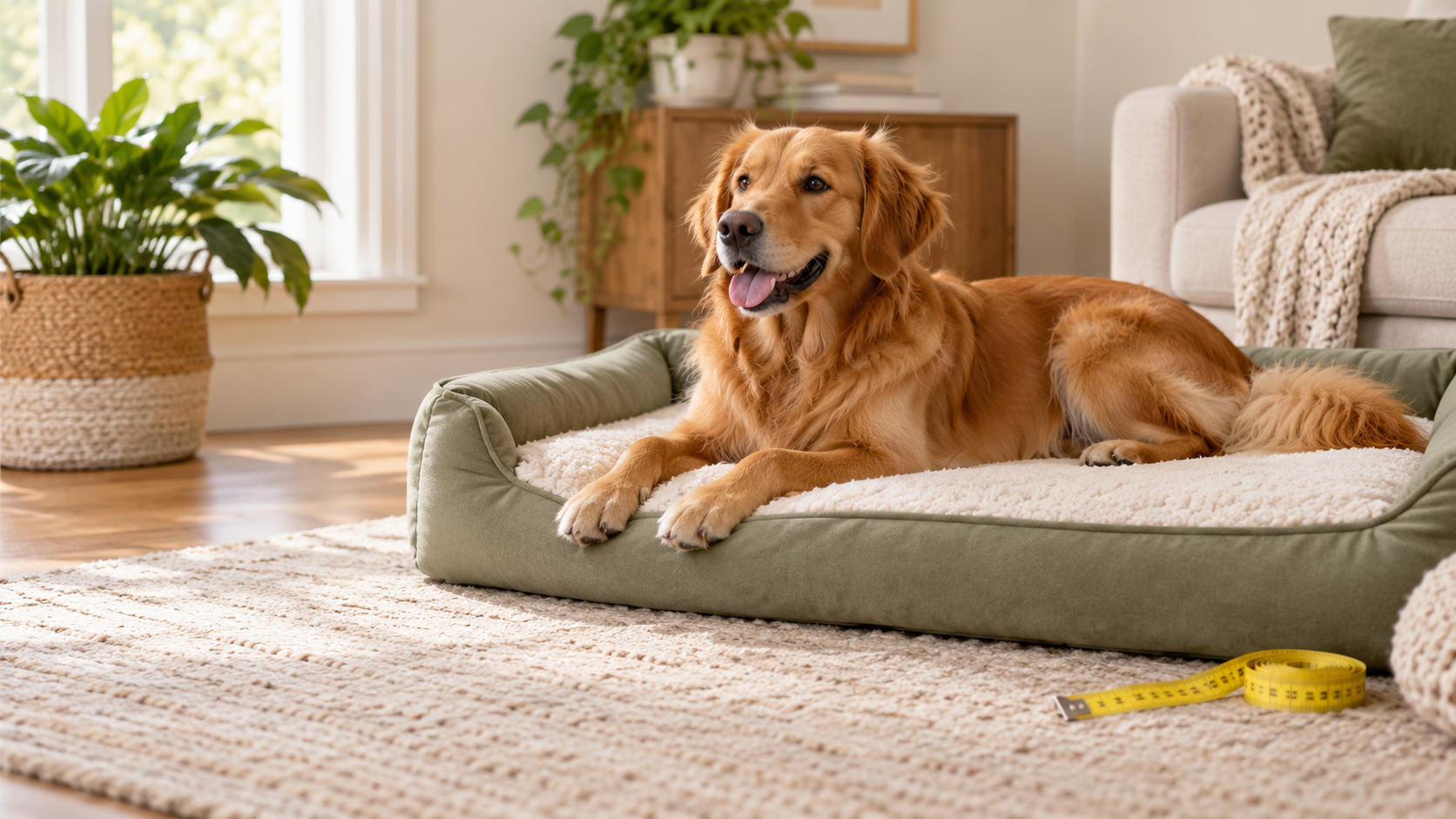
How to Measure Your Dog for a Bed
Two quick measurements decide the right size more reliably than guessing by eye
Measure nose to tail
With your dog standing or lying stretched out, measure from the tip of the nose to the base of the tail. This length is the number to build the bed size around. Take it while the dog is relaxed and extended rather than curled, since a curled measurement will always come out too short and lead to a bed that is too small.
Add room to stretch
For a comfortable rectangular bed, add roughly 6 to 12 inches to that nose-to-tail length. A dog that likes to sprawl on their side or throw their legs out needs the larger end of that range, while a dog that stays fairly compact can use the smaller end. When a dog falls between two bed sizes, sizing up is almost always the safer choice.
Watch how they sleep
Before you buy, spend a few nights noticing the positions your dog settles into. Sprawlers and stretched-out sleepers need a bigger, flatter, rectangular bed with open space. Curlers who tuck into a ball are happy in a smaller round or bolster bed with sides to lean on. The sleep style matters as much as the raw measurement.
Factor in weight and build
Weight is a handy cross-check and the basis for the chart below, but two dogs of the same weight can have very different frames. A long, low dog and a tall, leggy dog can weigh the same yet need different bed footprints, so use the weight chart to get close and the nose-to-tail measurement to confirm.
Dog Bed Size Chart by Weight
Use weight to find the right size range, then confirm with your dog's nose-to-tail measurement. Dimensions are typical and vary between makers.
| Bed size | Approximate dog weight | Typical bed dimensions | Example breeds |
|---|---|---|---|
| Small | Up to about 25 lb (11 kg) | Roughly 24 x 18 in (61 x 46 cm) | Chihuahua, Yorkshire Terrier, Dachshund, Pomeranian, small Poodle |
| Medium | About 26 to 50 lb (12 to 23 kg) | Roughly 30 x 24 in (76 x 61 cm) | Beagle, Cocker Spaniel, Border Collie, Bulldog, small Spaniel mixes |
| Large | About 51 to 75 lb (23 to 34 kg) | Roughly 36 x 27 in (91 x 69 cm) | Labrador Retriever, Golden Retriever, Boxer, Australian Shepherd |
| Extra large | About 76 to 100 lb (34 to 45 kg) | Roughly 42 x 30 in (107 x 76 cm) | German Shepherd, Rottweiler, Doberman, Rhodesian Ridgeback |
| Giant | Over about 100 lb (45 kg) | Roughly 48 x 36 in (122 x 91 cm) or larger | Great Dane, Mastiff, Saint Bernard, Newfoundland, Bernese Mountain Dog |
Not sure where your dog lands? Our dog weight calculator helps you estimate a healthy adult weight, and breed-specific tools like the Labrador weight calculator narrow it down further.
Match the Bed to How Your Dog Sleeps
The right size only works if the shape suits your dog. Watch the positions your dog naturally chooses, then pick the shape that supports them:
- Flat or mattress-style beds. Best for sprawlers and stretched-out sleepers who lie flat on their side with legs extended. A large, open rectangular surface gives them room to spread out without hanging off the edge.
- Bolster beds. These have a raised, cushioned rim on one or more sides. They suit dogs that like to rest their head or back against something, and they add a sense of security while still leaving a flat area to stretch into.
- Donut and round beds. Ideal for curlers who tuck into a tight ball. The raised walls let the dog nestle in and lean against the sides, which many dogs find calming, especially smaller breeds.
If your dog switches between curling and sprawling, a rectangular bolster bed is a good all-rounder, since it offers both sides to lean on and open space to stretch out. When you are sizing a bolster or donut bed, remember that the raised rim eats into the usable sleeping area, so measure the inner space rather than the outer footprint.
Puppies, Seniors, and Orthopedic Beds
Puppies grow fast, so buy for the adult size. Rather than replacing the bed every few months, work out the expected adult weight for the breed and choose the bed that will fit the grown dog. Our dog weight calculator can help you estimate that adult weight. The one thing to watch is that a huge open bed can feel exposed to a small puppy, so a bed with bolster sides gives a young dog a cozier spot while still leaving room to grow into.
Older and heavier dogs often need more support. Senior dogs, large or heavy dogs, and dogs with arthritis or other joint issues do best on an orthopedic bed. These use firmer, denser foam that supports the joints and does not bottom out under weight the way a thin cushion does. That extra support takes pressure off the hips and elbows and can make it noticeably easier for a stiff dog to settle and to rise.
For an older dog, also look at the entry height. A low-profile bed that a dog can step onto rather than climb into is much friendlier to sore joints. If you are keeping an eye on your dog's condition as they age, our guide to the dog body condition score can help you judge whether their weight is putting extra strain on those joints.
Common Dog Bed Sizing Mistakes
A few avoidable errors are behind most beds that end up unused in a corner:
- Buying a bed that is too small. This is the most common mistake by far, usually from sizing by eye instead of measuring. If your dog's legs or head hang over the edge, or they have to curl up when they would rather stretch, the bed is too small.
- Ignoring sleep style. A flat mattress does little for a dog that wants raised sides to lean on, and a deep donut frustrates a dog that wants to sprawl. Match the shape to how your dog actually rests.
- Forgetting the bolster rim. On bolster and donut beds, the cushioned walls reduce the flat sleeping area, so a bed that looks big on the outside can be surprisingly small inside. Measure the usable space.
- Not planning for a growing puppy. Sizing a bed to a puppy's current frame means outgrowing it within months. Buy for the adult size from the start.
- Overlooking support for a heavy or senior dog. A thin cushion that flattens under a large dog offers little joint support. For heavier and older dogs, firmness and thickness matter as much as footprint.
When in doubt, measure your dog stretched out, add a few inches, and size up rather than down. A slightly roomy bed always beats one your dog cannot get comfortable in. For related sizing help, our dog crate size guide uses the same measure-first approach.
Frequently Asked Questions About Dog Bed Sizes
Common questions about sizing, shapes, puppies, and orthopedic beds
How do I know what size bed my dog needs?
Measure your dog from the tip of the nose to the base of the tail while they are standing or lying stretched out, then add roughly 6 to 12 inches to that length for a comfortable rectangular bed. Match that figure against a bed size chart, and if your dog is between two sizes or likes to sprawl, size up. Weight is a useful shortcut, but the actual measurement of a stretched-out dog is the most reliable guide.
Should I buy a bigger bed for my puppy?
For most puppies it makes sense to buy for the adult size they are growing into, so you are not replacing the bed every few months. Check the expected adult weight for the breed, or use a weight calculator to estimate it, and choose the bed that fits the grown dog. The one caveat is that a very large open bed can feel less secure for a small puppy, so a bed with raised bolster sides can give a young dog a cozier spot while still leaving room to grow.
What shape of dog bed is best?
The best shape depends on how your dog sleeps. Dogs that curl into a tight ball often prefer a round or donut bed with raised sides they can nestle against. Dogs that stretch out flat or sprawl on their side need a rectangular or flat mattress-style bed with room to extend their legs. Bolster beds, which have a cushioned rim on one or more sides, suit dogs that like to rest their head on something. Watch your dog on the floor or sofa for a few nights and match the shape to the position they naturally choose.
Does my older dog need an orthopedic bed?
Older dogs, heavy dogs, and dogs with arthritis or joint problems often benefit from an orthopedic bed. These use firmer, supportive foam that keeps pressure off the joints and does not bottom out under a heavy dog the way a thin cushion can. A supportive bed can make it easier for a stiff dog to lie down and get up, and a low entry height helps a dog that struggles to step up. If your senior dog seems restless at night or slow to rise, a more supportive bed is worth trying.
What is the most common dog bed sizing mistake?
The most common mistake is buying a bed that is too small, usually because it was sized by eye rather than measured, or because the dog was still growing when it was bought. A bed that forces a dog to curl up when they would rather stretch out, or one where the legs and head hang off the edge, will not get used much. The second common mistake is ignoring sleep style and buying a shape that does not suit how the dog actually rests.
Size It Right With the Numbers
Estimate your dog's healthy adult weight, then match it to the right bed and crate.
Free dog printables
Keep these dog care guides handy
A rotating selection of practical dog guides chosen from our free printable library.Dog Quality of Life Checklist
Track the HHHHHMM quality-of-life measures.
Dog Budget Checklist
Plan monthly, annual, and one-time dog costs.
Puppy Calorie Guide
Calorie targets by breed size and age.