
Last updated: October 3, 2026
Grief by Pet Type
Do Cats Grieve?
If your cat seems unsettled after the death of a companion or a person they loved, you are not imagining it. This gentle guide explains grief in cats and how to help.

Cats are often thought of as independent, but they form real bonds and can grieve their loss. Steady routines and gentle patience help most cats through the change.
Yes, cats can grieve
Despite their reputation for independence, cats form genuine attachments to the people and animals they share their lives with. When a bonded companion or a beloved person is gone, many cats show changes in behavior, from searching and calling to eating less, hiding, or becoming unusually clingy. Veterinarians widely recognize these as grief-like responses.
We cannot know exactly what a cat feels, but their behavior shows that loss affects them. A grieving cat is not misbehaving. They are responding to a change in their world and the absence of a companion who mattered to them, and they need stability and gentle patience while they adjust.
Signs of grief in cats
Searching and calling
A grieving cat may wander the house, call out more than usual, or return to the places a lost companion favored, seeming to look for a friend who is gone.
Changes in appetite
Cats often eat less when grieving. Because cats can develop serious liver problems if they stop eating, a cat that refuses food for more than a day needs prompt veterinary care.
Clinginess or hiding
Some cats become unusually clingy and seek constant closeness, while others withdraw and hide. Both can be a cat's way of responding to a change in the household.
Changes in routine or grooming
Disrupted sleep, less interest in play, or over- or under-grooming can all signal that a cat is unsettled by the loss of a companion or person.
How to help a grieving cat
Keep everything predictable
Cats find security in routine. Keep feeding times, play, and their environment as consistent as possible so the world feels stable while so much has changed.
Offer quiet, patient comfort
Let your cat come to you. Gentle attention, a calm home, and familiar comforts help more than pushing interaction on a cat who needs space.
Watch appetite closely
Monitor how much your cat eats and drinks. A cat that stops eating can become seriously ill quickly, so contact your veterinarian if they refuse food for more than about a day.
Give it time before big changes
Avoid adding a new pet or making major changes right away. Let your cat settle first, and consider a new companion only later, introduced slowly if at all.
Support for you and your cat
For practical, step-by-step help as your cat adjusts to a changed home, see our guide on helping your surviving pet adjust. If you are grieving the same companion, our guide on losing a cat is here for you too.
You can also explore grief guides for every kind of pet, or return to our full pet loss and grief resources whenever you need them.
This guide offers general information and is not a substitute for advice from your veterinarian.
Do Cats Grieve: Common Questions
Gentle answers to the questions that come up most.
Do cats really grieve?
Cats commonly show behavioral changes after losing a companion animal or a bonded person, including searching, increased vocalizing, reduced appetite, clinginess, or hiding. Veterinarians widely recognize these as grief-like responses. While we cannot know precisely what a cat feels, their behavior shows that the loss of a bonded companion affects them, even though cats are often thought of as independent.
How long does grief last in cats?
It varies. Many cats begin to settle within a few weeks as they adjust, though some take longer, and a few show little visible change at all. Keeping their routine and environment stable usually helps them recover. If grief-like behavior is severe or persists beyond a few weeks, a veterinary check is wise to rule out illness.
Why is a grieving cat not eating so serious?
Cats that stop eating, even for a short time, are at risk of a dangerous condition called hepatic lipidosis, or fatty liver disease. This makes appetite loss in a grieving cat more urgent than in some other animals. If your cat refuses food for more than about a day, or eats far less than usual for several days, contact your veterinarian promptly.
Should I let my cat see the body of a companion who died?
Some owners find that allowing a cat a calm moment with a deceased companion may reduce searching and confusion. Every cat responds differently, so keep it brief and gentle, and do not force it. Whether or not this is possible, steady routines, patience, and close attention to eating are what help a grieving cat most in the days that follow.
Should I get another cat to help my grieving cat?
Not necessarily, and not right away. A grieving cat may find a new arrival stressful rather than comforting, and cats can be territorial. Focus first on supporting your cat and keeping their world stable. If you consider another cat later, introduce them slowly and carefully, and let your cat set the pace.
Help your cat through the change
Explore related guides and caring resources whenever you are ready.
Free printable support
Choose the resource that helps today
Each book is a free, 10-page A4 PDF designed to print and complete by hand.Pet Grief Journal
Ten gentle pages for memories, grief waves, letters, support, and carrying the bond forward.
Complete Pet Loss Guide
Compassionate guidance for grief reactions, children, surviving pets, aftercare, and support.
What to Do After a Pet Dies
A calm checklist for the first hours, provider questions, aftercare, records, and memorial choices.
Printable companion · Printable PDF
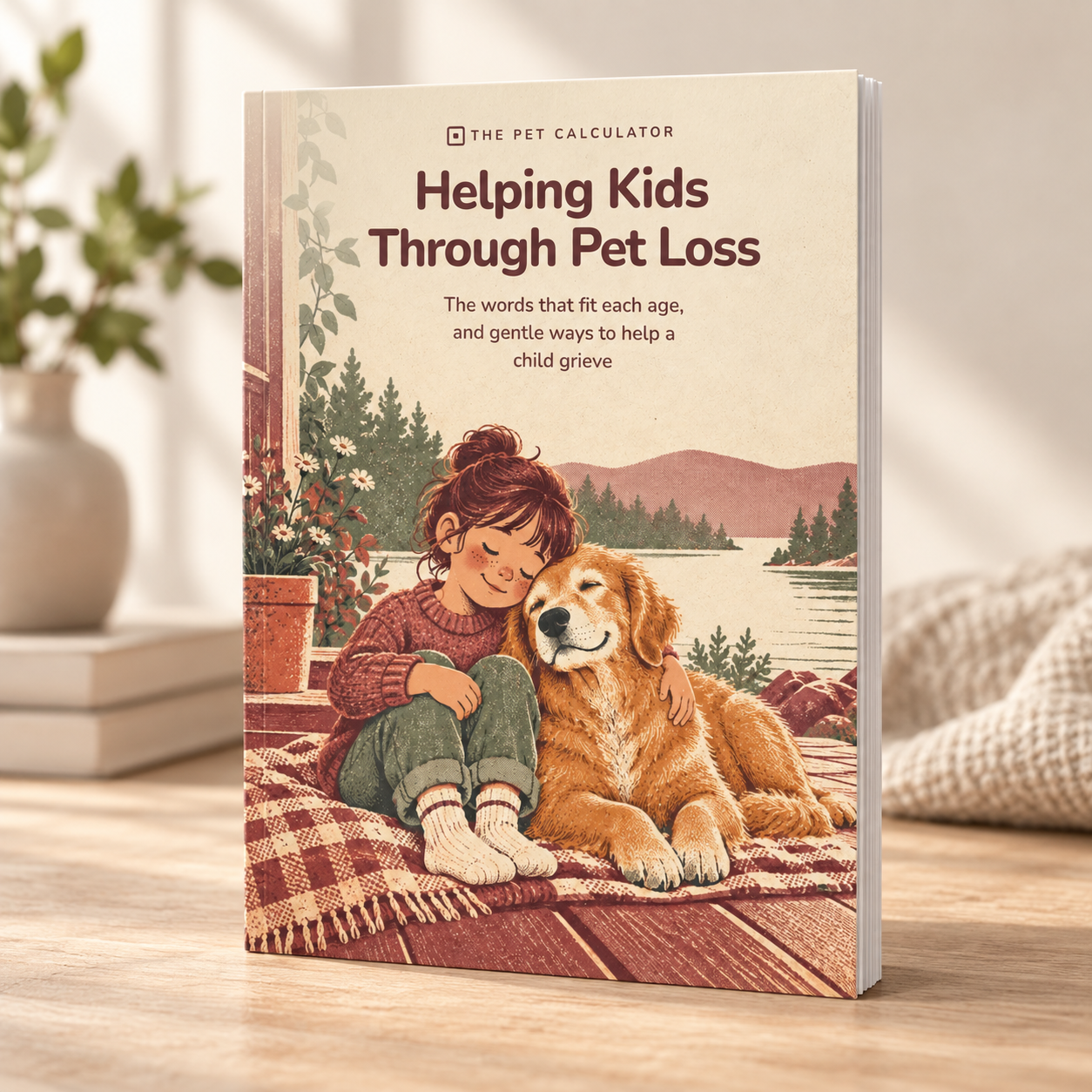
Helping Kids Through Pet Loss
A gentle memory book for children and families.
A draw-and-write keepsake that helps children remember a beloved pet, express difficult feelings, and move through grief at their own pace.