
Last updated: October 3, 2026
Cat Health
Cat Tapeworm Medicine
Spotting rice-like segments near your cats tail means it is time for the right dewormer, and not every wormer treats tapeworm. Here is which active ingredient actually works, how prescription and over-the-counter options compare, and why treating fleas at the same time is the part most people miss.
This guide is general information, not veterinary advice. Dewormer choice and dosage depend on your cats weight and the type of worm. Always read the product label and confirm the right treatment with your veterinarian, and never give a cat a product formulated for dogs without veterinary guidance.
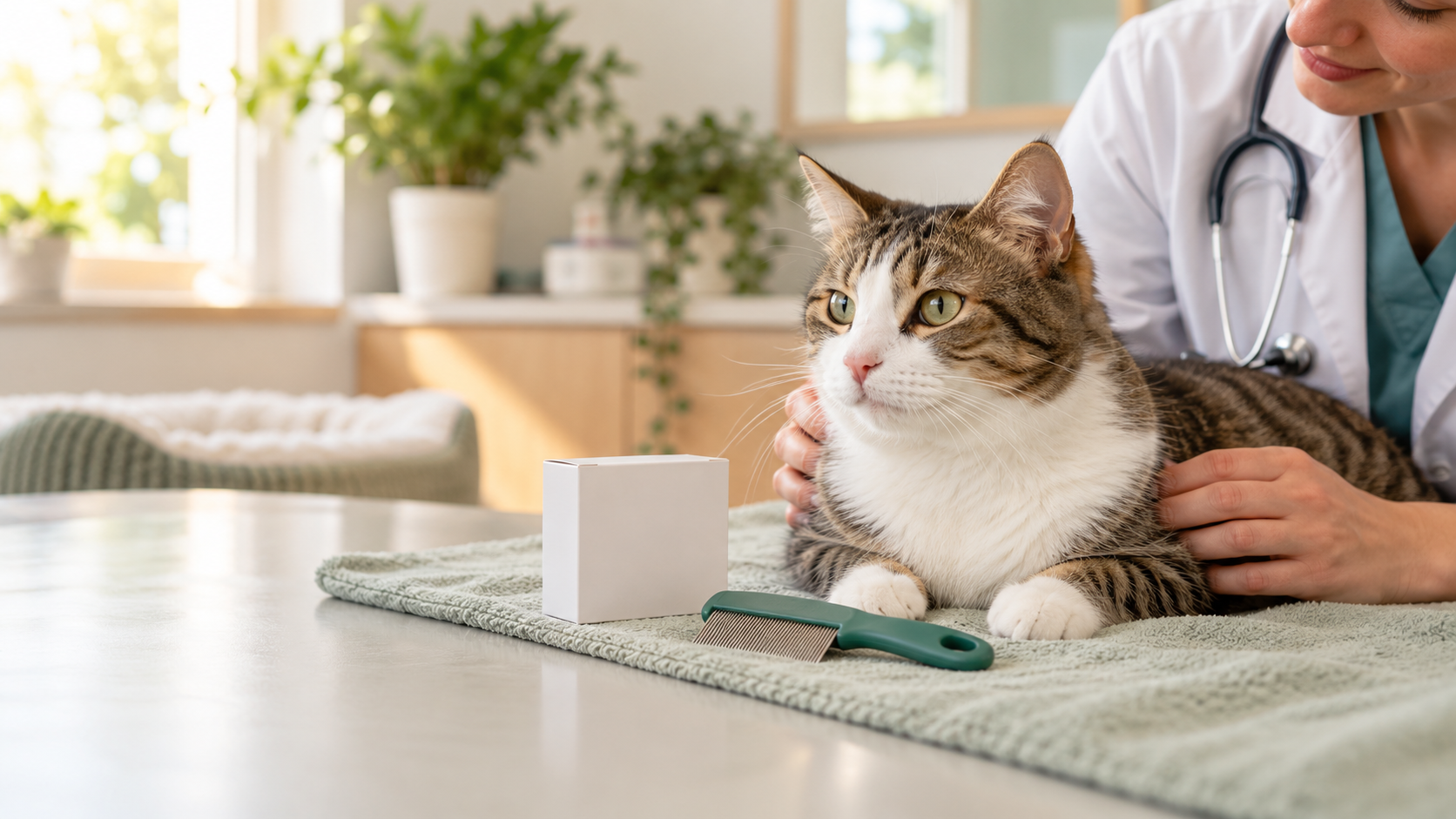
How Cat Tapeworm Medicine Works
Why the active ingredient matters more than the brand
Praziquantel is the key
The active ingredient that reliably kills tapeworm is praziquantel. It works against the common cat tapeworms, including the flea tapeworm, and is the ingredient to look for whether you use a prescription product or an over-the-counter one.
It dissolves the worm
Praziquantel causes the tapeworm to break down inside the gut, so unlike some dewormers you often will not see a whole worm passed afterward. This is normal and does not mean the treatment failed.
Not every wormer counts
Many general dewormers treat roundworm and hookworm but not tapeworm. Fenbendazole treats the Taenia tapeworm but not the flea tapeworm, so checking the label for praziquantel is what ensures you are actually treating the problem.
Dosed by weight
Tapeworm medicines are dosed by body weight, and underdosing can leave the worm alive. An accurate weight and the correct product dose, ideally confirmed by your vet, are what make treatment work the first time.
Cat Tapeworm Medicines Compared
Look for praziquantel to treat the flea tapeworm. Use this as a guide, and confirm the choice with your vet.
| Active ingredient | What it treats | Availability | Notes |
|---|---|---|---|
| Praziquantel | All common cat tapeworms, including the flea tapeworm (Dipylidium) and Taenia | Prescription and in some over-the-counter tapeworm products | The mainstay tapeworm treatment. Given by mouth or by injection at the vet, dosed by body weight. |
| Epsiprantel | Common cat tapeworms | Prescription | A vet-prescribed alternative to praziquantel, given as an oral tablet. |
| Fenbendazole | Taenia tapeworm and several other worms, but not the flea tapeworm | Over the counter and prescription | Useful as a broad dewormer, but it does not treat Dipylidium, the tapeworm cats get from fleas. |
| Combination dewormers | Tapeworm plus roundworm and hookworm, depending on the product | Prescription and some over the counter | Products that pair praziquantel with other ingredients to cover several worms at once. Check the label for praziquantel. |
Dewormers are dosed by weight, so check your cats figure with our cat weight calculator and pet medication calculator, then confirm the dose with your vet.
Prescription Versus Over-the-Counter Options
Both prescription and over-the-counter tapeworm dewormers can work, and the deciding factor is the active ingredient rather than where you buy it. An over-the-counter product that contains praziquantel and is dosed correctly for your cats weight can clear a tapeworm. The pitfalls are choosing a general wormer that does not cover tapeworm, using a product intended for a different worm or species, or guessing the dose, all of which can leave the tapeworm untreated.
A quick vet visit removes the guesswork. Your vet can confirm it really is tapeworm, since a routine fecal test can miss it because the eggs stay inside the segments, and can recommend the right product and dose. This matters most for kittens, senior cats, pregnant or nursing cats, and any cat with a health condition, where a professional choice is safest.
Why You Must Treat Fleas at the Same Time
The single most important thing to understand about cat tapeworm is that the common one comes from fleas. Your cat swallows an infected flea while grooming, and the tapeworm grows from there. So if you treat the tapeworm but the fleas remain, reinfection is almost guaranteed, and you will be back to spotting segments within weeks. Lasting success means tackling both together:
- Give a praziquantel-based tapeworm treatment at the correct dose.
- Start or maintain a vet-recommended flea preventive on your cat.
- Treat every pet in the home, since fleas move between animals.
- Wash bedding hot and vacuum thoroughly to clear fleas from the environment.
For the full picture, our guide to worms in cats explains the different worms and how they are diagnosed, and cat fleas covers breaking the flea cycle. A fast flea knockdown with Capstar for cats can be a helpful first step alongside a longer-term preventive. If you also have a dog, the same flea-and-tapeworm link applies, and our dog tapeworm guide covers it.
Frequently Asked Questions About Cat Tapeworm Medicine
Common questions about which dewormer works, dosing, and fleas
What is the best medicine for tapeworms in cats?
The most effective and widely used tapeworm treatment for cats is praziquantel. It works against the common tapeworms cats get, including the flea tapeworm, and is very reliable when dosed correctly for your cats weight. It comes as a tablet or an injection your vet can give, and it is also found in some over-the-counter tapeworm products and combination dewormers. Epsiprantel is a prescription alternative. Your vet can confirm which product and dose suit your cat.
Does over-the-counter cat tapeworm medicine work?
Over-the-counter tapeworm dewormers can work if they contain praziquantel, the active ingredient that actually kills tapeworm, and if you dose them correctly for your cats weight. The common mistakes are choosing a general wormer that does not treat tapeworm, using a product meant for the wrong worm, or guessing the dose. Read the label to confirm praziquantel is included, follow the weight-based instructions exactly, and if you are unsure, let your vet confirm the diagnosis and recommend a product.
Why does not my usual dewormer get rid of the tapeworm?
Many general dewormers target roundworm and hookworm but do little or nothing against tapeworm, so using one leaves the tapeworm untreated. Fenbendazole, for example, is a common broad dewormer that treats the Taenia tapeworm and other worms but does not treat Dipylidium, the tapeworm cats catch from fleas, which is the most common kind. To treat tapeworm reliably you need a product containing praziquantel, so always check the active ingredient.
How much tapeworm medicine does my cat need?
Tapeworm dewormers are dosed by body weight, so an accurate weight is essential and underdosing can leave the worm alive. The correct amount depends on the specific product, so follow the label precisely or, better, have your vet calculate the dose. This is not a situation for guesswork, and you should never give a cat a product formulated for dogs without veterinary guidance, since some are unsafe for cats.
Why do I need to treat fleas too?
The most common cat tapeworm, Dipylidium caninum, is spread by fleas. A cat swallows an infected flea while grooming, and the tapeworm develops from there. This means that if you treat the tapeworm but leave the fleas, your cat will very likely get tapeworm again. Effective treatment always pairs the tapeworm medicine with flea control on your cat, on other pets, and in the home, so the cycle is broken rather than just interrupted.
What should I expect after giving tapeworm medicine?
Praziquantel dissolves the tapeworm inside the gut, so unlike some dewormers you often will not see a whole worm passed. You may notice segments for a short time as things clear, and most cats have no ill effects, though a few have mild, brief digestive upset. If you keep seeing rice-like segments after treatment, if your cat seems unwell, or if fleas are still present, contact your vet, as your cat may need re-treatment and a stronger flea plan.
Explore More Cat Health Guides
Understand your cat's care and know when to call the vet.
Free cat printables
Keep these cat care guides handy
A rotating selection of practical cat guides chosen from our free printable library.Cat Body Condition Chart
A printable body condition reference for cats.
Cat Quality of Life Checklist
Track the HHHHHMM quality-of-life measures.
Kitten Growth Chart
Week-by-week weight and development milestones.