
Last updated: October 3, 2026
Cat Health
Ringworm in Cats
Despite the name, ringworm in cats is not a worm or a parasite at all. It is a common fungal skin infection, known medically as dermatophytosis, caused by fungi that feed on skin, hair, and nails. It is especially common in kittens, and it is contagious to other animals and to people. Here is how to spot the signs, how a vet confirms it, how it is treated, and how to keep it from spreading through your home.
This guide is general information, not veterinary advice. Every cat is different. If your cat is unwell or you are worried, contact your veterinarian, who can examine your cat and give advice for their specific situation.
Ringworm spreads to people and other pets
Ringworm is a zoonotic fungal infection, which means it passes between cats, other animals, and people. Confirm and treat it with your vet, wash your hands after handling an affected cat, and see a doctor about any spreading, itchy, ring-shaped rash on your own skin.
See your vet promptly if you notice:
- Patches that are spreading or getting worse
- Sores or raw skin from scratching
- A very young, elderly, or immunocompromised cat
- Other pets or people in the home developing skin lesions
Early confirmation and treatment protect your cat and everyone the cat lives with.
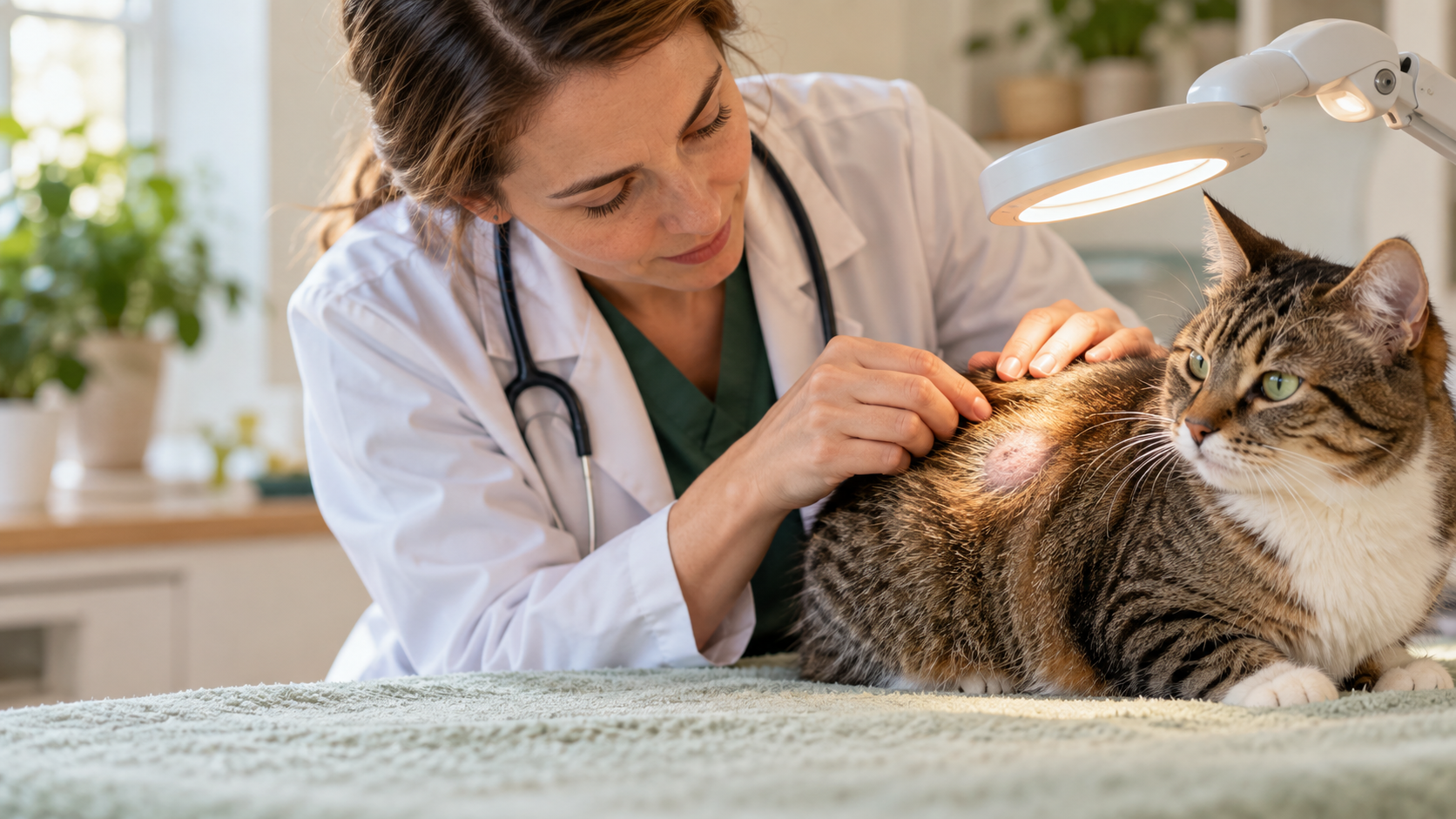
Signs of Ringworm in Cats
What to look for on your cat's skin and coat
Circular patches of hair loss
The classic sign is round, thinning or bald areas, often on the head, ears, and paws. The center of a patch can look scaly. Because many skin problems cause hair loss, this overlaps with other conditions, so a vet should confirm what is really going on.
Scaly, crusty, or flaky skin
Affected skin may look dry and flaky or develop crusts, and it can appear red or inflamed. These changes are not unique to ringworm and overlap with allergies and parasites, which is another reason to have your vet confirm the cause rather than guessing.
Broken or stubbly hairs and a dull coat
Ringworm attacks the hair shafts, so you may see broken, stubbly hairs and a generally dull, unhealthy coat around the affected areas. On its own this can look like other coat problems, so a vet check is the safe next step.
Variable itching
Itchiness varies widely. Some cats are quite itchy, some barely bother the patches, and some carriers show almost no signs at all while still shedding spores. Because the picture is so mixed, only a vet can tell ringworm apart from a look-alike skin problem.
Signs, What They Look Like, and What to Do
Use this as a starting point, not a diagnosis. Your vet can confirm whether ringworm is the cause.
| Sign | What it often looks like | What to do |
|---|---|---|
| Hair loss | Round or patchy bald spots, often starting on the face, ears, or legs | Have your vet examine and test the skin. |
| Scaly or crusty skin | Dry, flaky, or crusty patches, sometimes reddened | Do not treat blind, see your vet. |
| Broken hairs or dull coat | Stubbly, uneven fur around the affected areas | Vet check. |
| Nail or claw changes | Rarely, brittle or deformed claws | Mention it to your vet. |
| Lesions on you or other pets | Ring-shaped, itchy, spreading patches on skin | See a doctor and treat all pets with your vet. |
How Vets Diagnose Ringworm
A Wood’s lamp, a special ultraviolet light, can make some cases of ringworm glow, but not every type fluoresces, so it is only a screening step and cannot rule ringworm in or out on its own. A fungal culture, where a sample of hair and skin is grown in the lab, is the more reliable test, though it can take a couple of weeks. Your vet may also examine plucked hairs under a microscope or use a PCR test for a faster answer.
Confirmation matters because ringworm can look like several other problems. It can resemble allergies, ear mites when the ears and face are involved, flea problems and the skin irritation they cause, or other skin disease entirely. Treating blindly can waste time and let the real cause get worse, so let your vet identify what you are actually dealing with.
Getting a firm diagnosis is even more important in busy households. Kittens, cats from shelters or multi-cat homes, and any cat living alongside other pets are at higher risk, and a quiet carrier can keep an infection circulating. Testing before treating tells your vet whether every animal in the home needs to be checked, so the problem is dealt with once rather than passed back and forth.
Treatment for Ringworm
Treatment is usually a combination approach. Topical antifungals such as medicated creams, shampoos, or lime-sulfur dips are applied to the skin and coat, and many cases also need an oral antifungal medication prescribed by your vet. Your vet will tailor the plan to your cat’s age, health, and how widespread the infection is.
Treatment often continues for several weeks, and it should be finished even after the skin looks better, because spores can linger after the visible signs fade. Stopping early is a common reason ringworm comes back. Because it spreads so easily, treat all pets in the home as your vet advises, even the ones that look perfectly healthy.
A word of caution: do not rely on internet remedies or human antifungal creams without your vet’s guidance. Some products are not safe for cats, some are not strong enough to clear the fungus, and using the wrong thing can mask the problem while the infection keeps spreading. Stick to the plan your vet sets, and follow up if the patches are not improving as expected.
Is Ringworm Contagious? Cleaning the Home
Yes. Ringworm is contagious to other pets and to people. Infected cats shed fungal spores on loose hairs and skin flakes, and those spores can survive in the environment for a long time, sometimes many months. That is why cleaning the home is a key part of clearing an infection and preventing reinfection.
Vacuum often to pick up shed hair, wash bedding regularly, and disinfect surfaces as your vet recommends. Wash your hands after handling your cat or its things, and take extra care around children, elderly people, and anyone who is immunocompromised, since they can be more susceptible. Confining an affected cat to easy-to-clean rooms while it is treated makes the job much more manageable.
Because spores are so hardy, cleaning usually needs to be repeated throughout treatment, not done just once. Focus on the places your cat rests and grooms, launder soft items on the warmest setting they can handle, and throw out anything that cannot be cleaned properly, such as worn scratching posts. This steady routine, alongside the medication, is what finally breaks the cycle.
Prevention and Recovery
Prevention starts with limiting exposure. Quarantine new or affected animals until your vet gives the all clear, practice good hygiene, and keep your cat’s living areas clean. Supporting overall skin and coat health helps too, and good nutrition is part of that, which you can plan with our cat nutrition calculator.
In an otherwise healthy cat, ringworm can eventually resolve on its own, but treatment is still recommended to speed recovery and, just as important, to limit how far it spreads to other pets and people. If your cat seems generally unwell or you are unsure whether the skin changes are ringworm, review our guide to sick cat symptoms and speak with your vet.
Frequently Asked Questions About Ringworm in Cats
Common questions about spotting, treating, and preventing ringworm
What does ringworm look like on a cat?
Ringworm in cats often shows up as round or patchy areas of hair loss, most commonly on the head, ears, and paws. The skin in these areas may look scaly, crusty, or flaky, and sometimes red or inflamed, and the hairs around them can be broken or stubbly. Itchiness varies a lot, and some cats show almost no signs at all. Because these changes overlap with allergies, parasites, and other skin problems, the look alone is not proof, and a vet should confirm it.
Is ringworm in cats contagious to humans?
Yes. Ringworm is a zoonotic fungal infection, which means it can spread from cats to people as well as to other pets. In people it often appears as an itchy, ring-shaped rash on the skin. Wash your hands after handling an affected cat, take extra care around children, elderly people, and anyone who is immunocompromised, and see a doctor about any suspicious rash of your own.
How is ringworm in cats treated?
Treatment is usually a combination of topical antifungals, such as medicated creams, shampoos, or lime-sulfur dips, and, for many cats, an oral antifungal medication prescribed by your vet. It often continues for several weeks and should be finished even after the skin looks normal, because spores can linger. Because ringworm spreads easily, your vet may advise treating all pets in the home and cleaning the environment thoroughly.
How long is a cat with ringworm contagious?
A cat can remain contagious until the infection is properly treated and cleared, which often takes several weeks and sometimes longer. Fungal spores also survive in the environment for months, so a cat can be reinfected from contaminated bedding or surfaces if the home is not cleaned. Your vet may use repeat fungal cultures to confirm when your cat is no longer contagious.
Can ringworm in cats go away on its own?
In an otherwise healthy cat, ringworm can eventually resolve on its own over a period of months. However, treatment is still recommended, because it speeds recovery and, just as important, limits how much the infection spreads to other pets and to people in the meantime. Leaving it untreated also means more spores are shed into the home, which makes reinfection more likely.
Explore More Cat Health Guides
Understand your cat's symptoms and know when to call the vet.
Free cat printables
Keep these cat care guides handy
A rotating selection of practical cat guides chosen from our free printable library.Cat Body Condition Chart
A printable body condition reference for cats.
Kitten Growth Chart
Week-by-week weight and development milestones.
Kitten Calorie Guide
Calorie targets by kitten age and weight.