
Last updated: October 3, 2026
Stainless Steel Cat Water Fountains
Many cats simply do not drink enough, and a water fountain can help by keeping water fresh and moving. This practical guide explains why hydration matters, why stainless steel is a hygienic choice, how it compares to ceramic and plastic, and what to look for. It describes product types generally and does not recommend specific brands or models.
Why Cats Often Drink Too Little, and How a Fountain Helps
Cats evolved from desert-dwelling ancestors and carry a naturally low thirst drive. In the wild, much of a cat's water came from prey, so cats are not built to seek out and drink large amounts of standing water. In a home, that instinct can leave a cat mildly under-hydrated, especially if it eats mostly dry food.
On top of that, many cats are fussy about how their water looks and moves. A lot of cats prefer moving, fresh water over a still bowl that has been sitting all day. A fountain keeps the water circulating and aerated, which can tempt a reluctant drinker to take in more.
Good hydration matters because it supports urinary and kidney health. Cats that take in more water may be less prone to the kind of concentrated urine that contributes to urinary problems. If you want to understand the warning signs, our guides on cat dehydration and a cat drinking a lot of water explain what healthy and unhealthy drinking can look like.
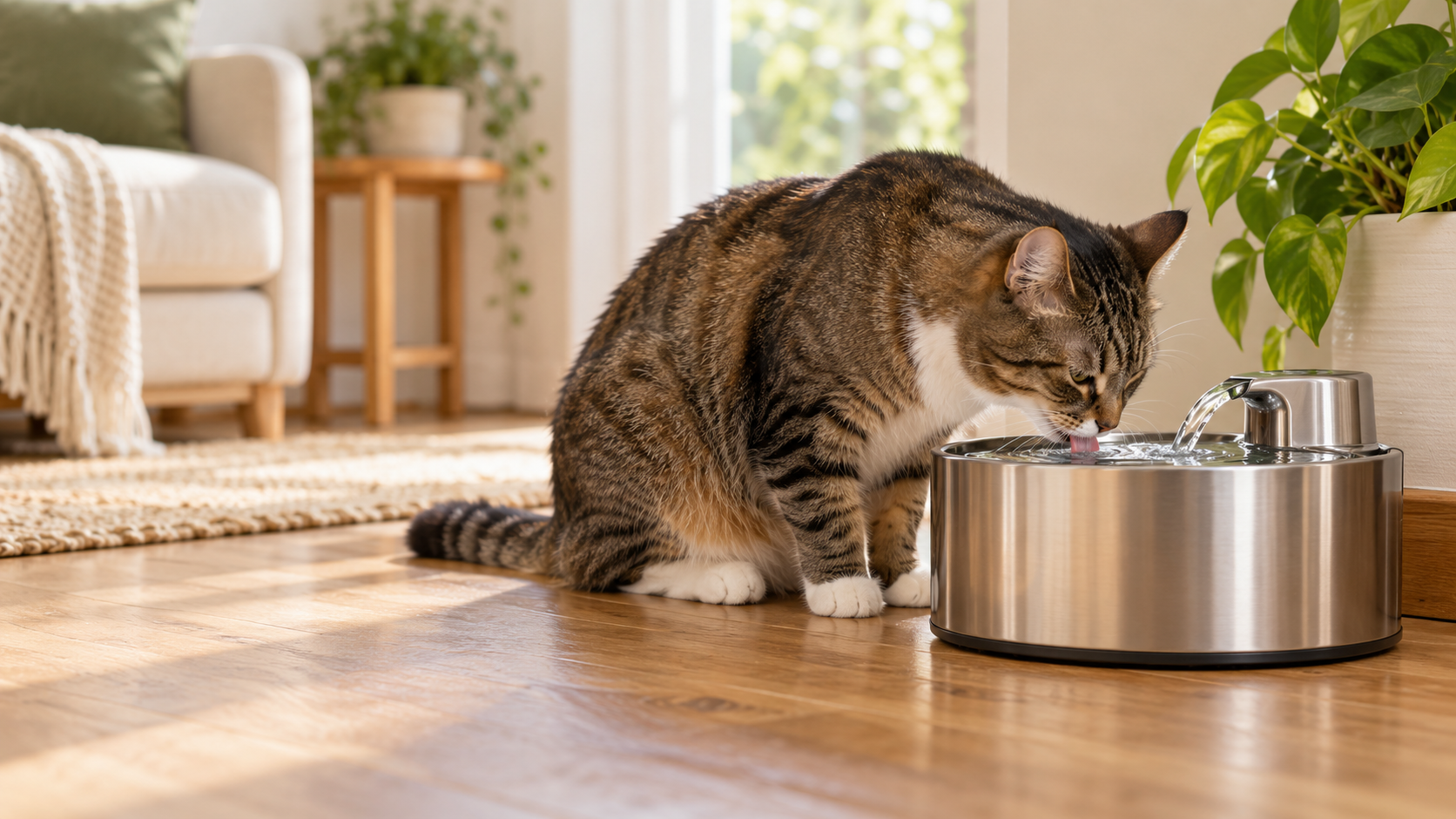
Why Stainless Steel Specifically
A fountain only helps if the water stays clean, and this is where the material really matters. Stainless steel is non-porous, which means its surface does not have the tiny pores and scratches that give bacteria and biofilm a place to grip. Biofilm is the slippery layer that forms in a fountain over time, and it is much harder to build up on a smooth steel surface than on a scratched plastic one.
Stainless steel is also hygienic and durable in day-to-day use. It is dishwasher-safe in most designs, it does not harbor odors, and it does not stain or cloud the way some materials do. Because it resists scratching, it tends to stay easy to clean for years rather than degrading after a few months.
There is also a skin-health angle. Some cats develop feline chin acne, and certain plastics are thought to contribute in sensitive cats. A smooth, non-porous stainless steel bowl is less likely to trigger chin acne than a scratched plastic surface, which is one more reason owners of sensitive cats often prefer it.
Hygiene and cleanliness
Non-porous and smooth, so it resists biofilm and bacteria and is easy to wipe or wash fully clean. It does not hold onto odors, and it is dishwasher-safe in most designs, which makes consistent cleaning far easier.
Durability
Resists scratches, chips, and cracks, so the surface stays smooth over time instead of degrading. A steel bowl typically outlasts plastic and will not shatter the way ceramic can if it is dropped.
Skin-friendly for sensitive cats
A smooth, non-porous surface is less likely to be linked to feline chin acne than some scratched plastics, which is why owners of sensitive cats often choose steel.
Fresh-tasting water
Because it does not absorb odors or flavors, stainless steel keeps water tasting neutral. Fussy cats that reject water from a smelly plastic bowl will sometimes drink readily from steel.
Stainless Steel vs Ceramic vs Plastic
Each fountain material has trade-offs. The table below compares the three most common choices across the factors that matter most for a cat's water source. This is a general comparison to help you weigh the options, not a rating of any specific product.
| Factor | Stainless steel | Ceramic | Plastic |
|---|---|---|---|
| Hygiene | Excellent. Non-porous, resists biofilm and bacteria, does not hold odors. | Very good when the glaze is intact, but a chipped or crazed glaze can harbor bacteria. | Weakest. Scratches easily, and scratches trap biofilm and odors. |
| Durability | Excellent. Resists scratches and will not shatter if dropped. | Scratch-resistant, but heavy and can crack or shatter if dropped. | Lower. Scratches and can become brittle or stained over time. |
| Cost | Mid to higher, but long life can offset the price. | Often the highest, especially for larger designs. | Usually the cheapest up front. |
| Weight and stability | Moderate weight with good stability, harder for a cat to tip. | Heaviest and very stable, but awkward to lift and wash. | Lightest, which makes it easy to move but easier to tip. |
| Chin-acne consideration | Lowest concern. Smooth, non-porous surface. | Low concern when the glaze is smooth and unchipped. | Highest concern in sensitive cats, especially once scratched. |
In short, stainless steel and a well-glazed ceramic are both strong hygienic choices, while plastic asks for more frequent cleaning and replacement. Stainless steel stands out for combining hygiene, durability, and easier handling in one package.
What to Look For in a Stainless Steel Cat Water Fountain
Fountains vary widely in design. Rather than chasing a specific model, focus on the features below, which decide how well a fountain works and how likely you are to keep it clean. These are general qualities to look for across product types.
- Capacity: enough water for your household and how often you want to refill, larger for multi-cat homes.
- Quiet pump: a low-noise pump so the sound does not scare off a shy cat or annoy you.
- Easy to disassemble and clean: few parts, wide openings, and a simple pump you can reach and scrub.
- Replaceable filters: readily available filters and a clear replacement schedule.
- Flow style: a stream, gentle bubble, or free-fall flow, since cats have preferences and some dislike a strong stream.
- Stable base: a weighted or wide base that a cat cannot easily tip or push around.
The single most important quality is how easy the fountain is to take apart and clean. A design that is a chore to clean will not get cleaned often enough, and that undoes every hygiene benefit stainless steel offers.
Cleaning and Maintenance
A fountain is only as healthy as its upkeep. A dirty fountain defeats the entire purpose, because water that sits over slime and buildup is no better than a neglected bowl, and can be worse. The good news is that stainless steel makes this routine straightforward.
- Rinse and refill regularly: change the water and rinse the bowl every day or two so it always tastes fresh.
- Deep clean weekly: take the fountain fully apart and wash every piece about once a week, more often in warm weather or multi-cat homes.
- Replace filters on schedule: swap the filter as the design recommends, since a clogged filter stops doing its job.
- Clean the pump: pull the pump apart and clear the slime that collects inside it, since this is the part most owners forget.
If a fountain becomes a hassle to keep clean, you will use it less, and hydration will suffer. Choose a design you can realistically maintain, and build the weekly clean into your routine.
A Note on Product Recommendations
This guide describes stainless steel cat water fountains as a category and explains how to think about materials, features, and cleaning. It does not name brands, models, or specific products, and it does not provide product recommendations. Use it to understand what generally makes a good fountain, then compare current options for yourself.
This page is general educational information, not veterinary advice, and it does not diagnose or treat any condition. If you have concerns about your cat's drinking or health, talk to your veterinarian.
Does My Cat Need a Fountain?
A fountain is helpful, not mandatory. Many cats drink perfectly well from a clean, wide bowl that is refilled often and placed away from their food and litter. A wide bowl also avoids whisker fatigue, where a narrow dish presses on a cat's sensitive whiskers, so a good bowl is a genuine option, not a fallback.
Where fountains earn their place is with fussy drinkers, cats that clearly prefer running water, and cats prone to urinary issues where extra hydration helps. If your cat ignores standing water but plays with a dripping tap, a fountain is worth trying.
Remember too that diet drives a large share of water intake. Wet food is mostly moisture, so feeding some or all wet food is another effective way to boost hydration. Our guide to wet vs dry cat food covers this trade-off, and the best cat food guide can help you compare complete and balanced options. For cats with existing conditions, our page on cat kidney disease explains why hydration is so important.
Not sure how much your cat should be eating and drinking?
Estimate your cat's daily calorie needs based on weight, activity, and life stage, then pair good food with steady hydration.
Try the Cat Nutrition Calculator →Frequently Asked Questions About Stainless Steel Cat Water Fountains
Common questions about hydration, materials, and keeping a fountain clean
Are stainless steel cat water fountains better than plastic?
For many cats, yes. Stainless steel is non-porous, so it does not develop the tiny scratches and pores that let biofilm and bacteria build up the way plastic can. It is easy to clean, dishwasher-safe in most cases, does not hold onto odors, and is less likely to be linked to feline chin acne than some plastics. Plastic fountains can still work if you clean them often and replace them when they get scratched, but stainless steel tends to stay cleaner with less effort.
Do cats really drink more from a fountain?
Many do. Cats have a naturally low thirst drive inherited from desert-dwelling ancestors, and a lot of cats prefer moving, fresh water over a still bowl. A fountain keeps the water circulating and aerated, which can encourage a fussy drinker to take in more. Not every cat cares, and some do perfectly well with a clean, wide bowl, but for cats that ignore standing water a fountain is often worth trying.
How often should I clean a stainless steel cat water fountain?
Rinse and refill with fresh water every day or two, and do a deep clean about once a week. A weekly clean means taking the fountain apart, washing every piece, and cleaning the pump, which is where slime tends to hide. Replace the filter on the schedule the design suggests. A dirty fountain defeats the entire purpose, so consistent cleaning matters more than any single feature.
Can a water fountain help with my cat’s urinary or kidney health?
Better hydration supports urinary and kidney health, and a fountain can help by encouraging your cat to drink more. It is not a treatment and it does not replace veterinary care. If your cat is drinking much more or much less than usual, straining, or showing other signs, see your vet. A fountain is a hydration aid, not a substitute for diagnosis or treatment.
Does my cat actually need a water fountain?
No cat strictly needs a fountain. A clean, wide, regularly refilled bowl works well for many cats, and feeding wet food also boosts daily water intake. Fountains are most useful for fussy drinkers, cats that prefer running water, and cats prone to urinary issues where extra hydration helps. Think of a fountain as a helpful option to raise water intake, not a requirement.
Help Your Cat Stay Hydrated
Use our free calculators, and talk to your veterinarian about your cat's hydration and health.
Free cat printables
Keep these cat care guides handy
A rotating selection of practical cat guides chosen from our free printable library.Cat Pregnancy Timeline
A week-by-week kittening calendar and checklist.
Kitten Calorie Guide
Calorie targets by kitten age and weight.
Cat Feeding Guide
Portions by weight, age, and life stage.