
Last updated: October 3, 2026
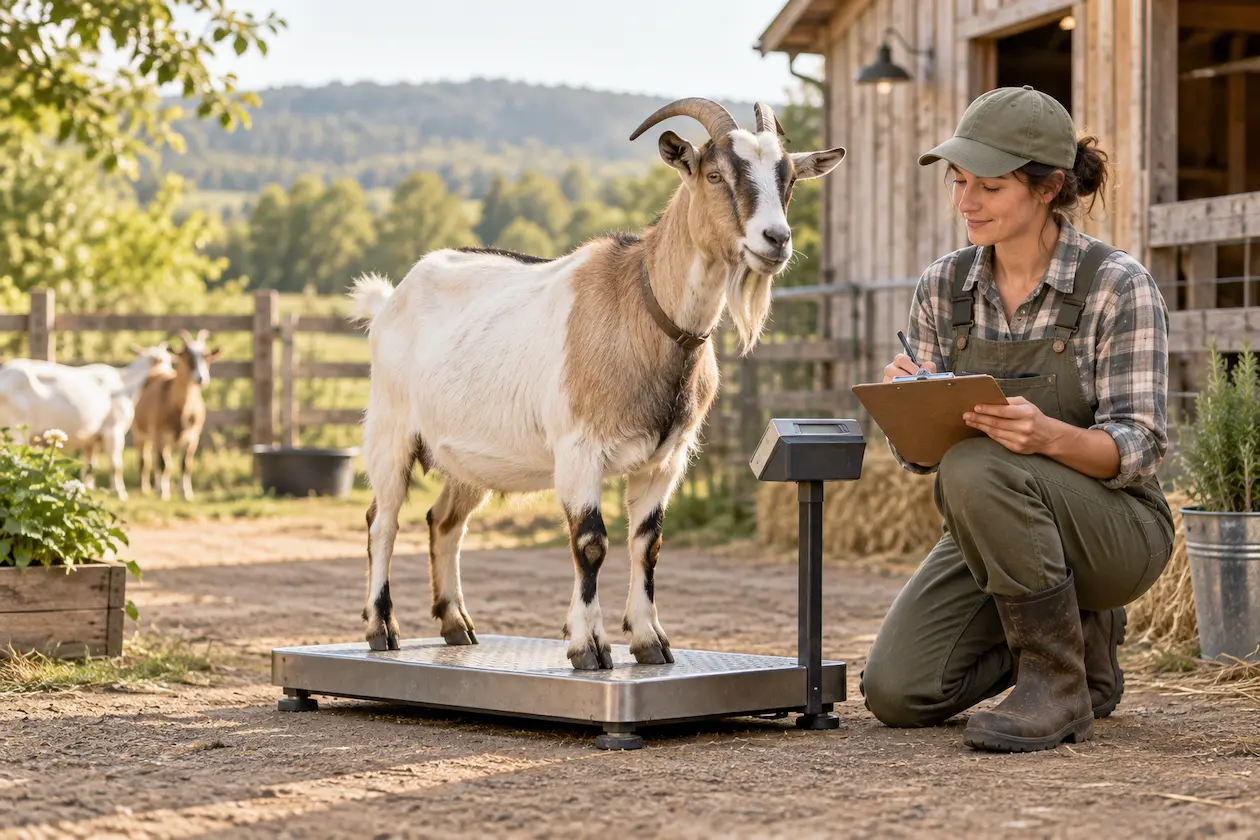
How To Use
Estimate your goat's weight with a soft tape measure, no scale needed. Measure the heart girth (right behind the front legs) and the body length (point of shoulder to pin bone) in inches, and the calculator applies the standard livestock formula.
Quick Steps
- 1 Measure heart girth in inches, the circumference just behind the front legs.
- 2 Measure body length in inches, point of shoulder to the pin bone (rump).
- 3 Click Calculate for the estimated weight in pounds and kilograms.
Goat Weight Calculator
Fill Out The Fields Below
How to Weigh a Goat Without a Scale
Few backyard keepers own a livestock scale, yet you need a reliable weight to dose dewormers and medicines safely and to track growth. The heart-girth method solves this with nothing more than a cloth tape measure, and it is the same technique used across the livestock world.
- Measure the heart girth. Wrap the tape around the body just behind the front legs, snug but not tight, and read the circumference in inches.
- Measure the body length. Measure along the side from the point of the shoulder to the pin bone (the bony point at the rear), in inches.
- Let the calculator do the maths. It applies the formula heart girth squared times body length divided by 300 to estimate the weight in pounds and kilograms.
For the best result, measure when the goat is standing square and calm, and take each measurement twice. The estimate is typically within 5 to 10 percent of true scale weight for a healthy adult goat.
Average Goat Weight by Breed
There is no single average goat weight, because breeds span from 40-pound miniatures to 300-pound-plus meat goats. Use the table to sanity-check your tape estimate against a typical adult for your breed. Bucks usually sit at the top of each range and does toward the bottom.
| Breed | Type | Typical adult weight |
|---|---|---|
| Nigerian Dwarf | Miniature dairy | 45–85 lb |
| Pygmy | Miniature | 40–85 lb |
| Nubian | Dairy | 110–175 lb |
| Alpine | Dairy | 125–170 lb |
| Saanen | Dairy | 135–200 lb |
| Kiko | Meat | 100–250 lb |
| Boer | Meat | 190–340 lb |
Note that the mountain goat, a wild North American species, is a different animal entirely and is not a domestic breed. Wild billies can weigh 100 to 300 lb, but this calculator is designed for domestic goats.
Healthy Weight and Body Condition
Weight alone does not tell the whole story, because frame size varies. Pair the number with a hands-on body condition score, felt over the spine, ribs, and hips on a 1 to 5 scale.
- Too thin (BCS 1–2): Spine and ribs sharp and easy to feel. Check for parasites, dental problems, or underfeeding.
- Ideal (BCS 3): Ribs felt with light pressure, a smooth cover over the back. This is the target for most goats.
- Overweight (BCS 4–5): Ribs hard to feel under fat. Common in wethers and pet goats, and a risk for breeding does.
Kids should gain steadily, roughly 4 to 10 pounds a month depending on breed. Weigh them every couple of weeks to confirm they are on track and to catch any dip early.
Why Accurate Weight Matters
Getting the weight right is not just record-keeping. It directly affects your goat's health and safety.
- Dosing: Dewormers and many medicines are dosed by body weight, and goats often need more per pound than the sheep or cattle label suggests. Guessing risks under-dosing or toxicity, so confirm doses with your vet.
- Growth tracking: Regular weights show whether kids are thriving and whether adults are holding condition.
- Early illness detection: Unexplained weight loss is often the first sign of parasites or disease.
- Breeding management: Does should be at a healthy weight before breeding and monitored through pregnancy.
Planning a breeding? Once your doe is in good condition, our Goat Gestation Calculator turns the breeding date into a kidding due date, and the Homestead Pets hub links our other small-livestock tools.
FAQs
Frequently Asked Questions
How much does a goat weigh?
It depends heavily on breed. Miniature goats such as Nigerian Dwarf and Pygmy weigh about 40 to 85 lb, mid-size dairy breeds like Nubian and Alpine weigh 110 to 175 lb, and large meat breeds such as Boer can reach 190 to 340 lb. The average backyard goat is somewhere in the 100 to 150 lb range.
How do you weigh a goat without a scale?
Use a soft tape measure and the heart-girth method. Measure the girth just behind the front legs and the body length from the point of the shoulder to the pin bone, both in inches, then apply the formula girth squared times length divided by 300. This estimate is usually within about 5 to 10 percent of true scale weight for a healthy adult goat.
What is the average weight of a goat?
Across common breeds, adult does average around 100 to 150 lb and bucks are heavier. But breed drives everything: a Nigerian Dwarf doe might be 60 lb while a Boer buck can top 300 lb, so always compare against your specific breed rather than a single average.
How much does a Boer goat weigh?
Boer goats are a large meat breed. Does typically weigh 190 to 230 lb and mature bucks 240 to 340 lb, making them among the heaviest common goats. Kids grow fast and can reach 50 to 70 lb by weaning.
How much does a Nigerian Dwarf goat weigh?
Nigerian Dwarf goats are small. Adults usually weigh about 45 to 85 lb, with does at the lighter end and bucks heavier. Despite their size they are productive dairy goats, which is part of their popularity with backyard keepers.
Why does my tape estimate differ from the scale?
The heart-girth formula assumes an average, healthy body shape. Heavily pregnant does, very thin or obese goats, and heavily muscled meat breeds can read a little high or low. Use the estimate for tracking trends and for dosing, but confirm on a scale when precision really matters.
Why do I need to know my goat's weight?
Accurate weight is essential for safe medication and dewormer dosing, for monitoring growth in kids, for spotting illness early through weight loss, and for managing body condition in breeding does. Tracking weight every few weeks catches problems long before they become serious.
More Homestead Pet Calculators
Chicken Coop Size Calculator
Plan indoor space, a laying-hen run, nest boxes and roost length, then check usable measurements in an existing coop.
Plan coop fit →Goat Gestation Calculator
Turn a breeding date into a kidding due date, with a breed toggle for Nigerian Dwarf and standard goats plus a stage-by-stage guide.
Calculate kidding date →Rabbit Gestation Calculator
Turn a breeding date into a kindling due date, with the all-important day-28 nest-box reminder and litter timing.
Calculate kindling date →Rabbit Weight Calculator
Check your rabbit against healthy weight ranges for 15+ breeds, from Netherland Dwarf to Flemish Giant.
Check rabbit weight →Pig Gestation Calculator
Turn a breeding date into a farrowing due date, the classic 3 months, 3 weeks, 3 days, for pet and smallholder pigs alike.
Calculate farrowing date →Mini Pig Weight Guide
How big do mini and potbelly pigs really get? Project adult weight from age and see past the teacup myth.
Estimate adult size →Horse Feed Calculator
Work out how much hay and grain to feed your horse a day by body weight, using the 1.5 to 2.5 percent forage rule, with per-feeding amounts and bales per month.
Calculate horse feed →Bird Egg Incubation Calculator
Turn your egg-set date into hatch, lockdown, and candling dates for chickens, ducks, geese, quail, and more.
Calculate hatch date →