
Last updated: October 3, 2026
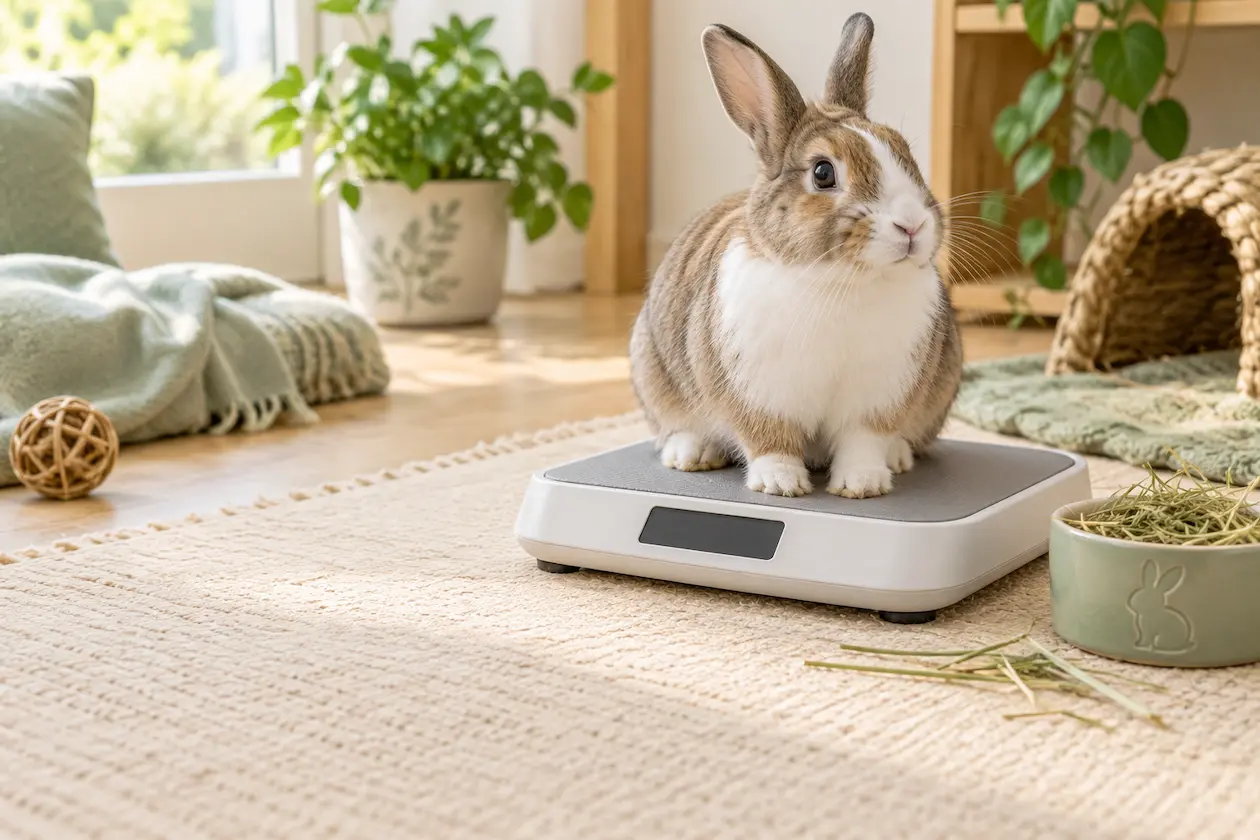
How To Use
Check whether your rabbit is a healthy weight for its breed. Select the breed and enter the current weight in pounds to compare against typical healthy adult ranges. For young rabbits still growing, use this as a target rather than a verdict.
Quick Steps
- 1 Enter your rabbit's current weight in pounds.
- 2 Select your rabbit's breed (use a mixed/unknown size band if unsure).
- 3 Click Calculate to see how it compares to the healthy range.
Rabbit Weight Calculator
Fill Out The Fields Below
How to Use the Rabbit Weight Calculator
Because a healthy weight depends entirely on breed, this tool compares your rabbit to the right range rather than a one-size-fits-all number. Weigh your rabbit on a kitchen or pet scale, ideally in a box so it sits still, then let the calculator do the comparison.
- Enter the weight in pounds. Zero the scale with the empty box, then place your rabbit inside.
- Select the breed. If your rabbit is a mix or you are unsure, pick the small, medium, or large mixed band that best matches its frame.
- Read the result. You will see the healthy adult range, whether your rabbit is under, ideal, or over, and what to do next.
Average Rabbit Weight by Breed
Rabbit breeds range from tiny dwarves to dog-sized giants, so breed is by far the biggest factor in healthy weight. Here are typical adult ranges for popular breeds.
| Breed | Size class | Healthy adult weight |
|---|---|---|
| Netherland Dwarf | Dwarf | 1.1–2.5 lb |
| Lionhead | Small | 2.5–3.75 lb |
| Holland Lop | Small | 2–4 lb |
| Mini Rex | Small | 3–4.5 lb |
| Dutch | Medium | 3.5–5.5 lb |
| Mini Lop | Medium | 4.5–6.5 lb |
| Rex | Large | 7.5–10.5 lb |
| New Zealand | Large | 9–12 lb |
| Flemish Giant | Giant | 13–22 lb |
Is My Rabbit Overweight? Body Condition Score
The scale is only half the picture. Because frame size varies within a breed, run your hands over your rabbit and score its body condition on a 1 to 5 scale.
- Too thin (1–2): The spine, ribs, and hip bones feel sharp and stick out. The rabbit looks bony over the back.
- Ideal (3): Ribs and spine are felt easily with light pressure but are rounded, not sharp, like the back of your hand. There is a slight waist.
- Overweight (4–5): Ribs are hard to feel under fat, the rump is rounded, and a large dewlap or fat pads appear. The rabbit may struggle to groom its rear.
Overweight rabbits face real risks: sore hocks, gut slowdown, and an inability to reach and clean their rear, which in warm weather invites deadly fly-strike. A large dewlap is normal in does and some breeds, but a sudden increase points to weight gain.
Baby to Adult Growth
Baby rabbits grow fast, and how long they grow depends on breed size. Feed unlimited hay and free-choice pellets to a growing rabbit, then transition to a measured adult diet once they mature.
| Size class | Reaches adult weight |
|---|---|
| Dwarf and small breeds | 4–6 months |
| Medium breeds | 6–9 months |
| Large and giant breeds | 12–18 months |
Weigh your rabbit monthly and keep a simple log so you notice trends early. Expecting a litter, or want to plan one? Our Rabbit Gestation Calculator gives the kindling date and nest-box timing, and the Homestead Pets hub links the rest of our tools.
FAQs
Frequently Asked Questions
How much does a rabbit weigh?
It ranges enormously by breed. Dwarf breeds such as Netherland Dwarf weigh about 1 to 2.5 lb, medium breeds like the Mini Lop and Dutch weigh 3.5 to 6.5 lb, and giant breeds such as the Flemish Giant reach 13 to 22 lb. The average pet rabbit is somewhere around 4 to 6 lb.
What is the average weight of a rabbit?
A typical pet rabbit weighs about 4 to 6 lb, but that average hides a huge range. Always compare your rabbit to its own breed rather than to a general average, since a healthy Netherland Dwarf and a healthy Flemish Giant can differ tenfold in weight.
How much does a Flemish Giant rabbit weigh?
The Flemish Giant is the largest common breed, with adults weighing about 13 to 22 lb and some bucks exceeding 20 lb. They are often called gentle giants. Other large breeds such as the New Zealand and Californian weigh around 9 to 12 lb.
Is my rabbit overweight?
Weigh your rabbit and compare it to the healthy range for its breed, then check body condition by hand. You should be able to feel the ribs and spine with light pressure, like the back of your hand. If they are hard to find under a layer of fat, a dewlap becomes very large, or the rabbit cannot groom its rear, it is likely overweight.
How do I help an overweight rabbit lose weight?
Feed unlimited grass hay, which should make up most of the diet, cut pellets right back to a small measured amount, stop all sugary treats and excess fruit, and offer plenty of space to exercise. Reduce weight slowly, because crash diets can trigger fatal gut stasis. Ask a rabbit-savvy vet to guide the plan.
When do rabbits reach their adult weight?
Small and dwarf breeds finish growing by about 4 to 6 months, medium breeds around 6 to 9 months, and giant breeds keep growing until roughly 12 to 18 months. Until then, feed a growing rabbit freely and treat the breed range as a target rather than a limit.
Why does a healthy rabbit weight matter?
Overweight rabbits are prone to sore hocks, an inability to groom that leads to a dirty rear and deadly fly-strike, and gut problems. Underweight rabbits may have dental disease or parasites. Monthly weighing on a kitchen scale is the simplest way to catch either early.
More Homestead Pet Calculators
Chicken Coop Size Calculator
Plan indoor space, a laying-hen run, nest boxes and roost length, then check usable measurements in an existing coop.
Plan coop fit →Goat Gestation Calculator
Turn a breeding date into a kidding due date, with a breed toggle for Nigerian Dwarf and standard goats plus a stage-by-stage guide.
Calculate kidding date →Goat Weight Calculator
Estimate your goat's weight from a tape measure, no scale needed, and compare it to typical adult weights by breed.
Estimate goat weight →Rabbit Gestation Calculator
Turn a breeding date into a kindling due date, with the all-important day-28 nest-box reminder and litter timing.
Calculate kindling date →Pig Gestation Calculator
Turn a breeding date into a farrowing due date, the classic 3 months, 3 weeks, 3 days, for pet and smallholder pigs alike.
Calculate farrowing date →Mini Pig Weight Guide
How big do mini and potbelly pigs really get? Project adult weight from age and see past the teacup myth.
Estimate adult size →Horse Feed Calculator
Work out how much hay and grain to feed your horse a day by body weight, using the 1.5 to 2.5 percent forage rule, with per-feeding amounts and bales per month.
Calculate horse feed →Bird Egg Incubation Calculator
Turn your egg-set date into hatch, lockdown, and candling dates for chickens, ducks, geese, quail, and more.
Calculate hatch date →