
Last updated: October 3, 2026
Dog Health
Dog Throwing Up White Foam
A dog throwing up white foam is a common sight, and most of the time that frothy white liquid points to an empty stomach rather than something dangerous. Here is what white foamy vomit usually means, the everyday causes, how to help a mild case at home, and the emergency signs, including bloat, that mean you should see a vet right away.
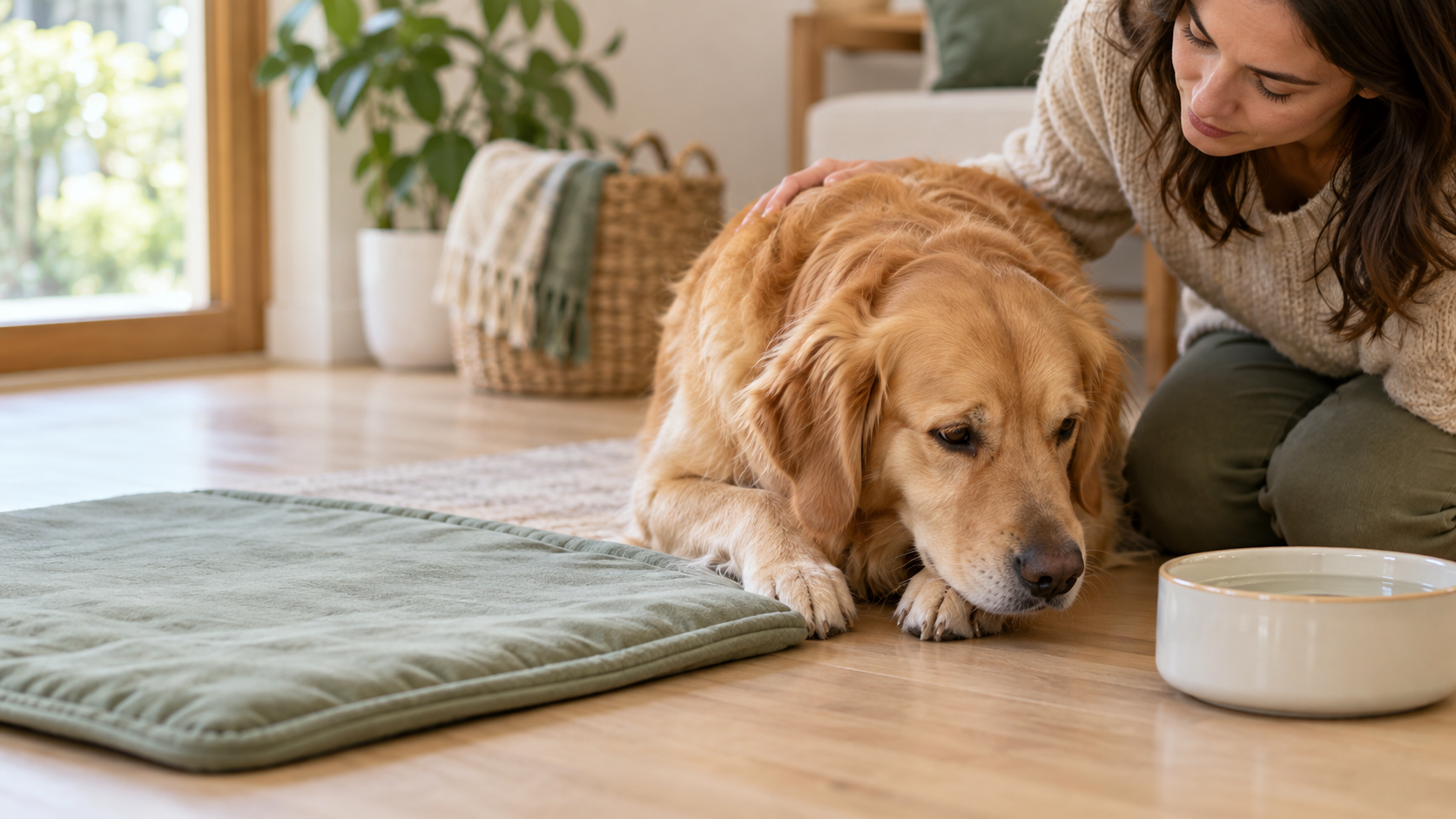
This guide is general information, not veterinary advice. Every dog is different. If your dog is vomiting repeatedly, seems unwell, or you are worried, contact your veterinarian, who can examine your dog and find the cause behind the white foam.
Some white foam vomiting is an emergency. Get to a vet now.
Repeated retching that brings up only white foam, especially alongside a swollen or hard belly, heavy drooling, and restlessness, can be bloat or GDV, a life-threatening emergency. Do not wait and watch. Go to a vet immediately if you notice any of these:
- Repeated unproductive retching with a swollen, hard, or bloated belly, which can signal bloat
- Nonstop vomiting, or a dog that cannot keep any water down
- Collapse, weakness, pale gums, or obvious pain
- Known or suspected poison, toxin, or a swallowed foreign object
- A young or unvaccinated puppy that is vomiting and lethargic, which can be a sign of parvo
When in doubt, phone your nearest emergency vet and go. It is always better to be checked and sent home than to wait too long.
Common Causes of White Foamy Vomit
Most white foam vomiting traces back to a handful of everyday causes
Empty stomach and bile
An empty stomach can bring up frothy white or yellow foam, often first thing in the morning. Vets sometimes call this bilious vomiting. A mild, one-off episode in a bright, well dog that is still eating is usually not serious, but if it keeps happening or your dog seems unwell, it is worth a vet call.
Acid reflux or indigestion
Stomach acid flowing the wrong way, or simple indigestion after a rich meal or a sudden diet change, can irritate the gut and produce a little white foam. An occasional episode is usually mild, but repeated reflux or a dog that seems uncomfortable and off its food should be checked by your vet.
Coughing that looks like vomiting
A honking cough that ends in bringing up white foam can be kennel cough rather than true vomiting. The two are easy to confuse. A persistent cough, especially after boarding or contact with other dogs, is a reason to see your vet.
Dietary indiscretion or eating grass
Scavenging, a change of food, or eating grass can upset the stomach and bring up white foam. This often settles on its own, but call the vet if the vomiting repeats, if your dog is off its food, or if other signs appear.
White Foam Vomit: What Else to Look For
Use this as a starting point, not a diagnosis. When in doubt, or when symptoms repeat, call your vet.
| Possible cause | Other signs | What to do |
|---|---|---|
| Empty stomach or bile | A single episode, with your dog otherwise bright, alert, and still eating normally | Offer a small bland meal and monitor. This is usually the least worrying cause. |
| Repeated retching with a swollen belly | Restless, drooling, and pacing, unable to settle, with a hard or bloated abdomen | Treat as an emergency. Suspect bloat and get to a vet now. |
| Kennel cough | A honking cough that ends in white foam, often after recent boarding or contact with other dogs | Book a vet visit. This is frequently coughing rather than true vomiting. |
| Toxin or foreign object | Drooling, pain, or known access to something swallowed, chewed, or poisonous | Contact your vet urgently, and bring the packaging or plant with you if you can. |
| Puppy vomiting with lethargy or diarrhea | A young or unvaccinated puppy that is flat, off its food, or has diarrhea | Urgent vet visit. Suspect parvo, and phone ahead so the clinic can isolate your puppy. |
When White Foam Is an Emergency
Most white foam vomiting is mild, but a few situations are true emergencies where minutes matter. The most important one to recognize is bloat.
- Bloat and GDV. Repeated, unproductive retching that brings up only white foam, together with a swollen or hard belly, drooling, pacing, and restlessness, can signal bloat or GDV. This is one of the fastest-moving emergencies a dog can face and needs a vet immediately.
- Toxins and poisons. Foaming and drooling after your dog has licked, chewed, or eaten something can be a sign of poisoning. Call your vet or a pet poison line right away, and take the product or plant with you.
- A foreign object. Something stuck in the throat or gut can cause retching, foam, drooling, and obvious distress. This needs urgent veterinary assessment.
- Parvo in puppies. A young or unvaccinated puppy that is vomiting foam and is lethargic, especially with diarrhea, is a red flag for parvo and needs emergency care.
Repeated vomiting of any kind also drains fluids quickly, so watch for dehydration in dogs, which shows up as tacky gums, lethargy, and loss of skin elasticity. Puppies and seniors dehydrate fastest and should be seen sooner.
What to Do at Home for a Mild Case
If your dog throws up white foam once but is otherwise bright, alert, and acting normally, you can usually help at home. The aim is to rest and settle the stomach, then reintroduce food gently:
- Briefly withhold food. For a healthy adult dog, holding off food for a few hours gives an irritated stomach time to settle. Do not fast puppies, seniors, or dogs with health conditions without asking your vet first.
- Offer small amounts of water. Let your dog take small, frequent sips rather than gulping a large bowl straight after vomiting, which can trigger another episode.
- Then feed a small bland meal. Once the stomach has settled, a small, bland meal such as plain boiled chicken and white rice is gentle. Our bland diet for dogs guide walks through how to prepare and feed it.
- Feed smaller meals more often. Splitting the day into smaller meals, with a snack before bed, keeps the stomach from sitting empty overnight, which is what triggers many morning foam vomits.
- Go back to normal food gradually. Once the vomiting has stopped, mix regular food back in over a couple of days rather than switching all at once.
Getting the daily amount right also helps, since both overfeeding and long fasting can upset the stomach. Our dog feeding calculator can help you set sensible meal sizes to spread across the day. If the vomiting repeats, if other signs appear, or if your dog cannot keep water down, stop home care and call your vet.
White Foam vs Yellow Bile
Owners often want to know whether the color of the vomit means something. In short, white foam is mostly frothy saliva and stomach fluid, while yellow is colored by bile from the liver. The two overlap a great deal, and an empty stomach can bring up either one for the same underlying reason. The color on its own does not tell you how serious the situation is.
What matters far more is how your dog is behaving and how often it happens. A bright, playful dog with one small foam vomit is very different from a flat dog that keeps retching. If you are seeing yellow more than white, our companion guide on a dog throwing up yellow covers bile vomiting in more detail, and the same warning signs apply to both.
Frequently Asked Questions About Dogs Throwing Up White Foam
Common questions about white foamy vomit, home care, and when it needs a vet
Why is my dog throwing up white foam?
White foam is usually a mix of saliva and a little stomach fluid, and the most common reason is simply an empty stomach, where bile and acid froth up and irritate the lining. This often happens in the morning or after a long gap between meals. Other causes include acid reflux, indigestion, dietary indiscretion, eating grass, and a honking cough such as kennel cough that ends in foam and can look like vomiting. A single episode in a bright, well dog is usually mild, but repeated foam, a swollen belly, or a flat dog needs a vet.
Is a dog throwing up white foam an emergency?
Sometimes yes. Repeated retching that brings up only white foam, especially with a swollen or hard belly, drooling, and restlessness, can be bloat or GDV, which is a life-threatening emergency. Nonstop vomiting, an inability to keep water down, collapse or weakness, a suspected poison, or a young unvaccinated puppy that is vomiting and lethargic are all reasons to see a vet right away. A single foam vomit in a dog that is otherwise happy and eating is usually not an emergency, but when in doubt, call.
Should I feed my dog after it vomits white foam?
For a single episode in an otherwise well adult dog, it often helps to briefly withhold food for a few hours to let the stomach settle, while offering small amounts of water. After that, offer a small, bland meal such as plain boiled chicken and white rice rather than a large portion of regular food. If the vomiting repeats, if your dog cannot keep water down, or if other signs appear, stop home care and call your vet instead.
What is the difference between white foam and yellow vomit?
White foam is mostly frothy saliva and stomach fluid, while yellow vomit is colored by bile, a digestive fluid from the liver. In practice the two overlap, and an empty stomach can bring up either white or yellow froth for very similar reasons. The color alone does not tell you how serious it is. What matters more is how often it happens and whether your dog is bright and eating or instead unwell, in pain, or unable to keep water down.
When should I take my dog to the vet for vomiting?
Call your vet if the vomiting repeats or will not stop, if your dog cannot keep water down, if there is blood, if the belly looks swollen or hard, or if your dog is lethargic, weak, collapsed, or in pain. Suspected poison or a swallowed object, and any vomiting in a young or unvaccinated puppy, also warrant prompt care. Puppies and senior dogs have less reserve and dehydrate faster, so they should be seen sooner rather than later.
Explore More Dog Health Guides
Understand your dog's symptoms and know when to call the vet.
Free dog printables
Keep these dog care guides handy
A rotating selection of practical dog guides chosen from our free printable library.Dog Quality of Life Checklist
Track the HHHHHMM quality-of-life measures.
Raw Feeding Reference Card
A printable BARF and 80/10/10 portion guide.
Dog Feeding Guide
Portion guidance by weight, age, and life stage.